
Lieferung heute & morgen

Qualitätsgarantie

Willkommens-Angebote freischalten: KOSTENLOSE Lieferung | Bis zu 80 % RABATT | Kostenlose 30-Tage-JoyPlus-Testphase
App herunterladen
The selection of planters is vast, and finding the right model to match both your decor and your plant's needs can be a challenge. A modern planter is more than just a container; it's a design element that significantly shapes the aesthetic of a room or outdoor area. This article serves as a guide, presenting objective criteria to help you with your selection. We also showcase a curated selection of models that stand out for their design and material properties.
Before you make a decision, several functional and design aspects should be considered. These criteria will help you find a product that is durable and fits harmoniously into your home.
The material determines not only the look but also the location and longevity of the planter.
The dimensions of the planter should suit both the plant and the space. A large plant pot can create a strong visual impact as a standalone piece in an empty corner or an entryway. Smaller pots, on the other hand, are well-suited for grouping on windowsills or shelves. A tall, narrow planter visually elongates a room, while a wide, low container creates a calm, grounded atmosphere.
The intended location is crucial for functionality. For outdoor use, a drainage hole at the bottom is essential to prevent waterlogging during rain. Some models offer pre-drilled spots that can be easily punched through if needed. For an indoor planter, a sealed bottom or the use of a matching saucer is the norm to protect floors and furniture from water. Many people use a decorative cachepot for this purpose, into which the actual plant pot with drainage holes is placed.
Here, we present three models that feature distinct designs and material concepts, suitable for various applications.

Why it stands out The ABDERA planter combines a slim, tall silhouette with a subtle, light beige colour. Its height of 58 cm makes it an elegant eye-catcher without being obtrusive. The material, a mix of stone, polyresin, and fibreglass, gives it a natural stone look while remaining lightweight.
Advantages
Who is it for? This model is a great choice for those looking for a tall yet understated large planter for an entryway, a patio, or as a vertical accent in a living room. Its versatility for indoor and outdoor use offers maximum flexibility.
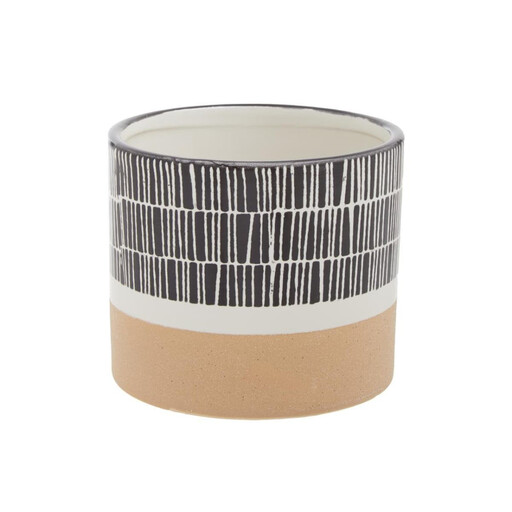
Why it stands out The Jada planter makes a bold, graphic statement. The black and white striped pattern gives the classic, round ceramic pot a modern yet timeless touch. With its compact dimensions, it is a decorative accessory that integrates effortlessly into various interior styles.
Advantages
Who is it for? Ideal for design enthusiasts who want to create accents with a small decorative cachepot. It fits perfectly into modern, minimalist, or even boho-style living spaces.

Why it stands out This model is a classic pot with a stand. The round, green plant pot rests on a delicate, four-legged iron stand with crossed struts. This design elevates the plant and creates an airy, light appearance that is particularly advantageous in smaller rooms.
Advantages
Who is it for? Perfect for anyone looking for a stylish solution for a corner in the living room, next to an armchair, or on a sheltered balcony. This metal planter is an excellent choice for bringing plants to eye level without needing a sideboard or shelf.
Was the right model for your project not among these recommendations? There is a wide variety of other shapes, materials, and sizes to discover.
? Explore our full range of Outdoor Home & Garden Planters here
1. What makes a planter weather-resistant? A weather-resistant planter is made from materials that are resistant to the main elements: UV radiation, moisture, and frost. Materials like fibreglass composites, high-quality plastic, powder-coated metal, and specially fired, frost-proof ceramics are suitable for this. They are less prone to fading in the sun, do not become porous from rain, and will not crack in freezing temperatures.
2. Do indoor planters need drainage holes? Not necessarily. Many decorative indoor pots are used as a cachepot. This means the plant remains in its original plastic pot with drainage holes and is placed inside the larger, sealed cachepot. This protects furniture and floors from water. After watering, any excess water should be removed from the cachepot to prevent root rot.