
Lieferung heute & morgen

Qualitätsgarantie

Willkommens-Angebote freischalten: KOSTENLOSE Lieferung | Bis zu 80 % RABATT | Kostenlose 30-Tage-JoyPlus-Testphase
App herunterladen
By Joybuy Product Recommendation Officer, 29 August 2026
A stylish planter can transform a room and give your houseplants the perfect showcase. Yet, finding the right model is often more challenging than it seems. Online images can be deceiving, and an appealing exterior often conceals functional flaws. Before you make a decision you'll later regret, you should know the most common pitfalls when selecting modern planters.
Many buyers focus solely on design, overlooking crucial quality features. This often leads to three problems:
A thoughtful purchase considers both aesthetics and functionality. This guide will show you which parameters truly matter.
To avoid buyer's remorse, you should check three core aspects. These will help you objectively assess the quality and suitability of a planter and find a model that is both visually stunning and meets the needs of your plants.
The material determines not only the appearance but also the weight, durability, and maintenance of a planter.
A large cachepot should not only suit the plant but also the room. Before buying, measure the diameter of your plant's current pot. The new cachepot should be about 2–4 cm larger in diameter to provide enough space for the roots and ensure easy handling.
Pay attention to the listed product dimensions (Height x Diameter). Compare these measurements with the intended location. A tall, narrow planter has a different visual effect than a wide, low one. For flower pots for houseplants that stand on the floor, sufficient height is important to create a visual presence.
A modern cachepot should do more than just look good. The most important functional feature is the drainage hole at the bottom. It prevents waterlogging, which is one of the most common causes of death for houseplants. If a pot lacks such a hole, it can only be used as a cachepot, into which a smaller pot with drainage is placed. Some decorative flower pots come with a matching saucer, providing a clean and practical solution.
Based on the criteria mentioned, we have identified a few models that are suitable for different needs and living situations.
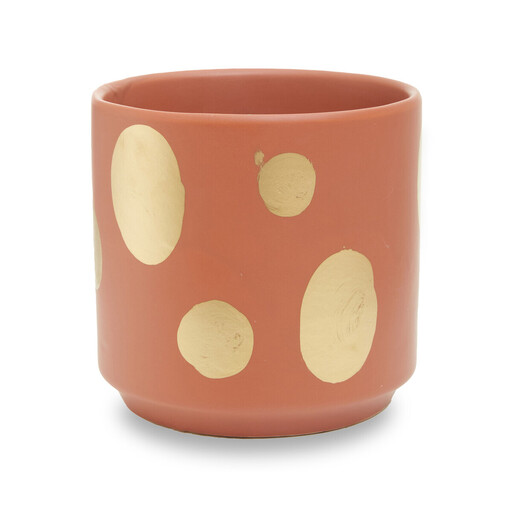
Why This Fits Their Persona: Ideal for shelves, side tables, or windowsills where a compact yet expressive pot is needed. The design adds a luxurious accent without overpowering the space.
The material is solid stoneware, not just a thin coating. The clear dimensions (H14 x D14 cm) prevent surprises with sizing. A drainage hole is included.
Unique design with gold accents on a terracotta finish. Its compact size makes it highly versatile.
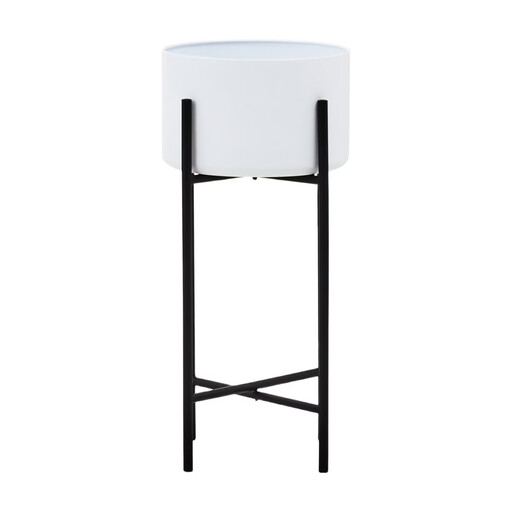
Why This Fits Their Persona: Perfect for users who want to stylishly showcase a large houseplant like a Monstera or Fiddle Leaf Fig. The elevated design creates a focal point in a living room or entryway.
The crossed iron stand ensures high stability and avoids the risk of tipping with top-heavy plants. The design is minimalist and functional, without superfluous details.
The stand elevates the plant off the floor, which simplifies cleaning and allows for better air circulation. The contrast between the white pot and black stand is timelessly modern.

Why This Fits Their Persona: For decor enthusiasts who view the planter as a standalone decorative object. This model is a statement piece that radiates warmth and elegance.
The artisanal craftsmanship ensures a unique look that stands out from mass-produced items. The material is durable stoneware. With a diameter of 18 cm, it is a genuinely large cachepot.
The combination of a speckled terracotta finish and gold accents creates a visual centrepiece. The integrated drainage hole combines sophisticated design with proper plant care.
We have compiled a complete, up-to-date list of products that fully meet these strict selection criteria and UK safety regulations.
1. Does every modern planter need a drainage hole? For direct planting, a drainage hole is essential to prevent root rot from waterlogging. If a planter doesn't have a hole, it should be used as a cachepot. This means you place the plant in a separate, smaller plastic pot with drainage holes inside the decorative cachepot.
2. How do I choose the right size for a cachepot? Measure the diameter of your plant's current pot. The new cachepot should be 2 to 4 centimetres larger in diameter. This gives the roots room to grow and makes watering easier. Also, pay attention to the height to ensure the proportions are right and the inner pot doesn't stick out over the edge of the cachepot.
3. What material is best for an indoor planter? Glazed ceramic, stoneware, and high-quality plastics are very well-suited for indoor use. They are waterproof and protect your floors and furniture. Metal planters are also a good choice, as long as they are rustproof or have a protective coating. Untreated terracotta pots are porous and can release moisture into their surroundings, which is why they should always be placed on a waterproof saucer.