
Lieferung heute & morgen

Qualitätsgarantie

Willkommens-Angebote freischalten: KOSTENLOSE Lieferung | Bis zu 80 % RABATT | Kostenlose 30-Tage-JoyPlus-Testphase
App herunterladen
A planter needs to look good, suit the plant and work reliably in its intended spot. When searching for modern planters for indoors and outdoors, glossy product images don’t always lead to the right buying decision. Often, important details such as drainage options, material properties or the actual size only become apparent after purchase.
An attractive outdoor planter isn’t automatically weatherproof. Metal can rust with prolonged exposure to moisture, ceramic can be damaged by frost, and decorative finishes can fade under UV light. For balconies, patios or entrance areas, you should look for specific information on UV resistance, moisture resistance and temperature tolerance.
A decorative outer pot without a drainage hole protects furniture and floors from water, but can lead to waterlogging if used for direct planting. Conversely, a planter with a drainage hole is only suitable for indoor use if you use a saucer or a waterproof inner pot. So check whether the hole is present, can be drilled afterwards, or can be sealed with a plug.
The height of a planter says little about the usable planting area. A tall planter may be narrow inside or simply serve as a decorative shell. What matters are external dimensions, internal dimensions, opening diameter, volume and weight. On windy balconies, a stable base is also crucial.
For living rooms, home offices and windowsills, lightweight indoor planters, flower pots and decorative outer pots with easy-care surfaces are ideal. A planter with a stand raises plants higher and can create a clear vertical structure in small rooms.
For patios and balconies, stability, material durability and sensible water drainage are what count. A weatherproof planter should be suitable for UV light and moisture according to the product specifications. In regions with frost, you should also check whether the container needs to be protected or stored indoors during winter.
An indoor planter for a windowsill should neither obstruct the view nor restrict movement space. For larger plants, wide bases are sensible. Tall planters need a level surface and should be positioned so they cannot easily tip over. For artificial plants, the container can be chosen more for its design; for real plants, you also need to consider root space, drainage and water volume.
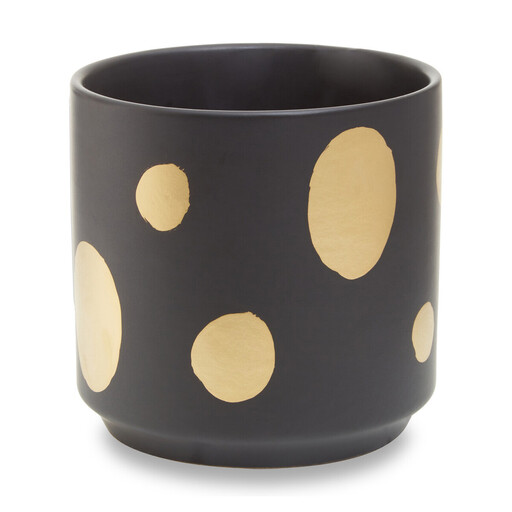
Why this product suits the profile: This compact indoor planter, 14 cm high and 14 cm in diameter, is ideal for small plants on a desk, shelf or windowsill.
The clearly stated dimensions prevent the container from being misjudged for larger plants. According to the product information, it can be cleaned with a soft cloth.
Stoneware construction, black finish with metallic-looking speckles and a compact design.

Why this product suits the profile: This 58 cm tall, round planter combines a subtle beige colour with a material blend of stone, polyresin and fibreglass.
The drainage hole is pre-formed and can be drilled open if needed. A plug allows it to be sealed when the container is used as a decorative outer pot.
31 litre capacity, UV and weather resistant according to the product information, and suitable for both indoor and outdoor use. Dry indoor storage is recommended during winter.

Why this product suits the profile: These clear glass containers are designed for cuttings, small flower arrangements and hydroponic decoration on a table, shelf or windowsill.
The product information specifies the included components: five differently shaped mushroom glass vases. This allows you to understand the actual delivery contents before purchase.
Handcrafted borosilicate glass, transparent design and use as a propagation station, hydroponic planter or decorative vase.
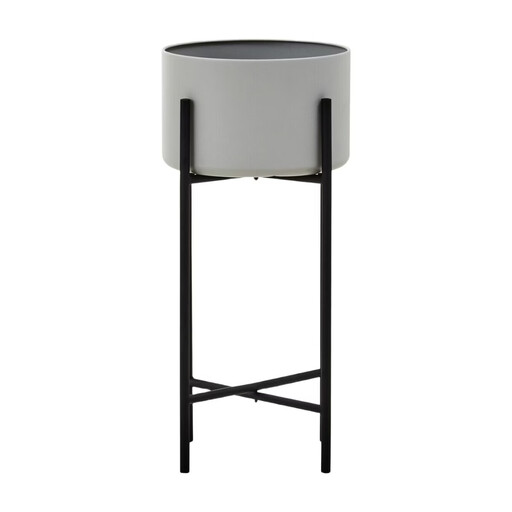
Why this product suits the profile: At 55 cm high and 28 cm wide, this tall planter is suitable for larger floor areas, such as in a hallway, on the patio or in a sheltered entrance area.
The dimensions and weight of 9 kg are clearly stated. The required assembly is also indicated, so the space needed can be realistically planned.
Grey planter made of iron with a black, crossed four-leg stand and a clear, straight-lined design.
We have put together a complete, regularly updated list of products that fully meet these strict selection criteria and the safety regulations in force in the EU.
Before placing a real plant inside, check that the inner pot fits into the container and can catch excess water. For a container without a drainage hole, a separate plastic pot is recommended rather than planting directly into it.
On balconies and patios, the surface should be level and load-bearing. Tall planters can be more stressed by wind. With a lightweight model, a suitable, stable inner pot can improve stability. Glass vases belong in a spot where they won’t be knocked by doors, pets or frequent movement.
For artificial plants, decorative containers without drainage are often sufficient. The internal volume can be adjusted with a suitable insert or filling material so that the plant stands upright.
For a balcony, a stable base, suitable external dimensions and information on UV and moisture resistance are important. For real plants, the model should also have controllable drainage. In frosty conditions, protected storage is recommended depending on the material.
Use an inner pot with drainage holes and place it on a saucer or suitable liner. The water should not sit permanently in the outer pot. For a planter with a sealable hole, the plug can be inserted or removed depending on use.
The lifespan depends on the material, location, care and weather conditions. Ceramic and glass should be protected from impacts. Metal containers need a suitable location and should be regularly checked for moisture damage. For weatherproof materials, the respective manufacturer’s specifications apply; extreme winter conditions may still require protected storage.