
Lieferung heute & morgen

Qualitätsgarantie

Willkommens-Angebote freischalten: KOSTENLOSE Lieferung | Bis zu 80 % RABATT | Kostenlose 30-Tage-JoyPlus-Testphase
App herunterladen
A cluttered entryway, overflowing piles of shoes in the hall—it's a common problem in many homes. The right shoe rack promises a quick fix, but the selection is vast, and not every solution delivers on its promise. Before you make a hasty decision that leads to instability or a lack of space, it's crucial to know the most common pitfalls. This guide will help you make an informed choice and find a durable, practical shoe storage solution for your home.
Many products look practical at first glance but reveal their weaknesses only in daily use. Pay special attention to these three points to avoid a purchase you'll regret:
To make the right choice, focus on objective features that meet the needs of your household.
The material is a key determinant of your shoe rack's durability and stability.
Always check the manufacturer's specified maximum load capacity per shelf. An included anti-tip kit for wall mounting is an important safety feature, especially in households with children.
Measure the available space precisely before making a decision. Consider not only the width and height but also the depth.
Consider what additional features would be useful for you. A hall tree with a shoe rack combines multiple functions in one piece of furniture, creating a cohesive look in the entryway. A simple shoe organizer that hangs on a door can be a clever solution when absolutely no floor space is available. Many modern racks are also designed for tool-free, snap-together assembly, which significantly simplifies setup.
Here are some recommendations tailored to specific needs and living situations.

Why This Fits Their Persona: Ideal for small apartments or narrow entryways. With a depth of just 28 cm and a tall design, it makes optimal use of vertical space without blocking the walkway.
The frame made of metal tubes offers greater stability than all-plastic models. The open design with non-woven fabric shelves ensures good ventilation and prevents moisture buildup.
Tool-free assembly via a snap-together system; can be flexibly split into two smaller racks; includes an anti-tip kit for added safety.
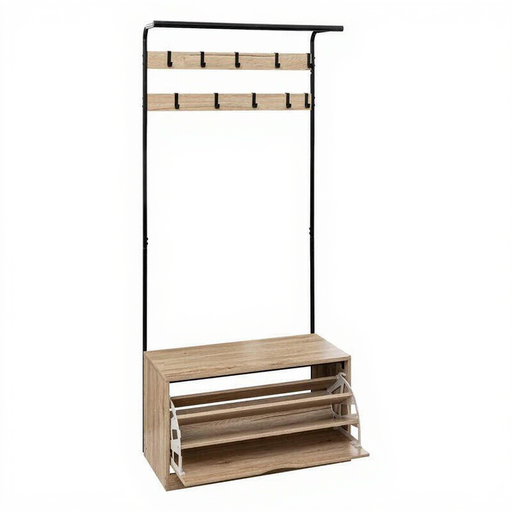
Why This Fits Their Persona: A complete solution for the hallway that combines a coat rack, bench, and shoe storage. Perfect for anyone looking for a tidy and functional all-in-one solution.
The iron and MDF construction is designed for multifunctionality. According to the manufacturer, the bench has a load capacity of up to 100 kg, which indicates a robust and stable build overall.
3-in-1 functionality (coat rack, bench, shoe rack); creates a cohesive and tidy look in the entryway; provides a practical seat for putting on and taking off shoes.

Why This Fits Their Persona: The ultimate solution when not a single inch of floor space can be sacrificed. Ideal for the inside or outside of closet doors, in pantries, or in dorm rooms.
Completely bypasses the capacity illusion: the 24 separate pockets offer a clear, defined capacity for individual shoes. The breathable mesh fabric prevents odor buildup.
Requires zero floor space; tool-free installation by simply hanging it over a door; creates hidden, out-of-sight organization.
For particularly tight spaces, hanging racks offer a clever alternative. Discover our selection of over-the-door shoe racks that take up no floor space.
1. How much weight can a shoe rack hold? The load capacity varies greatly depending on the material and construction. Simple snap-together racks made of metal and non-woven fabric often have a maximum static load capacity of 5 kg per tier. More robust models made of thicker metal or engineered wood can support 10 kg or more per shelf. Always check the manufacturer's specifications and distribute the weight evenly by placing heavier shoes on the lower tiers.
2. How do you assemble a shoe rack so it doesn't wobble? Ensure the rack is on a level surface. For screw connections, tighten all screws firmly, but avoid overtightening. With snap-together systems, it's important that all tubes are pushed all the way into the connectors. For tall, narrow racks, using the included anti-tip kit to secure it to the wall is the most important step to prevent wobbling or tipping.
3. Is a metal shoe rack suitable for the hallway? Yes, a metal shoe rack is an excellent choice for the hallway, provided it is of high quality. A powder coating or paint finish will reliably protect the metal from rust, even if you occasionally place damp shoes on it. The open structure of metal racks also promotes air circulation, which helps shoes dry faster and reduces odor buildup.