
Lieferung heute & morgen

Qualitätsgarantie

Willkommens-Angebote freischalten: KOSTENLOSE Lieferung | Bis zu 80 % RABATT | Kostenlose 30-Tage-JoyPlus-Testphase
App herunterladen
A modern side table is more than just a surface for your belongings. It's a design statement that merges functionality and aesthetics in your living room or bedroom. However, the selection is vast, and not every model that looks appealing online proves its worth in daily use. Certain design flaws or material weaknesses often only become apparent after the purchase. This guide will show you what to look for to make an informed decision and avoid common purchasing pitfalls.
When researching online, buyers often encounter products that are visually impressive but have functional weaknesses. Pay close attention to these three points to avoid disappointment:
To avoid a bad buy, you should focus on objective and measurable criteria. The following three aspects are crucial for the longevity and functionality of your new piece of furniture.
The frame is the foundation of any table. For an industrial-style side table or a minimalist design, a black metal side table often forms the base. Two factors are important here:
Consider carefully what purpose the table will serve. If it's intended as a modern nightstand next to the bed, a nightstand with drawers is a sensible choice for storing personal items out of sight. If it's purely for surface space in the living room, an open design may suffice.
The right size and shape are essential for harmonious integration into your space. For example, a small, round side table can look great in tight corners or between two armchairs, as it has no sharp edges and appears less bulky.
The following models have been selected based on the objective criteria mentioned above and are suited to different user profiles and interior styles.
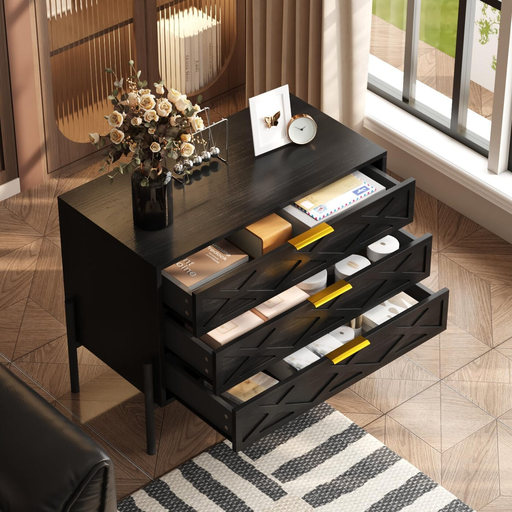
Why This Fits Their Persona: Ideal for those seeking a modern nightstand or a side table with maximum storage. The black and gold design with a geometric pattern is stylish, while the three drawers create order in the bedroom or living room.
The MDF and metal leg construction provides a stable base, avoiding the problem of wobbly furniture. The scratch-resistant surface is also low-maintenance and durable.
Offers generous, enclosed storage with three drawers. Its dimensions (approx. 75 x 60 x 39 cm) make it a substantial piece of furniture.

Why This Fits Their Persona: Perfect for anyone looking for an unobtrusive, flexible, and small round side table. Ideal for tight spaces, as a plant stand, or as a minimalist surface next to an armchair.
Its proportions (40x40 cm) are deliberately compact and practical for small niches. The simple construction of a metal frame and MDF top is robust and avoids flaws from complex but poorly executed features.
Very lightweight (1.75 kg) for maximum flexibility. The 16 mm thick legs provide good stability for the specified maximum load of 10 kg.

Why This Fits Their Persona: For design lovers looking for an eye-catcher. The fish scale pattern, navy blue colour, and champagne-coloured metal legs stand out from standard furniture and make a deliberate statement.
This model combines a unique design with thoughtful functionality. Details like rounded corners for safety and a handle that can be mounted on either side show that attention was paid to more than just aesthetics.
Striking design with a textured surface. Its compact dimensions (50x35x35 cm) make it a versatile nightstand or side table.
We have compiled a complete, up-to-date list of products that fully meet these strict selection criteria and safety standards.
The ideal height for a side table depends on the height of your sofa's armrest. For comfortable use, the tabletop should be at the same level as or up to 5 cm below the armrest. Measure this height before making a purchase decision.
Functionally, there is often an overlap. A nightstand is specifically designed for the bedroom and frequently offers enclosed storage like drawers (e.g., a modern nightstand). A side table is more versatile and is often used in living areas, where design and a simple surface may be the priority. However, many models can be used for both purposes.
Care is generally straightforward. Wipe the metal legs and the tabletop with a soft, slightly damp cloth. Avoid aggressive cleaning agents, especially on foiled or lacquered surfaces. For metal frames, be sure to avoid standing water to prevent corrosion. Also, regularly check that all screws are tight.