
Lieferung heute & morgen

Qualitätsgarantie
App herunterladen
Kategorien
Defining a modern sideboard goes beyond mere aesthetics. This term describes a piece of furniture characterised by a combination of clean lines, functional design, and a deliberate mix of materials. Unlike a classic credenza, the focus is on minimalism and practicality, allowing it to integrate seamlessly into contemporary living spaces. Selecting the right model depends on specific requirements for storage space, dimensions, and material quality.
The decision to purchase a new piece of furniture should be based on an analysis of its technical specifications and its suitability for the intended space. The following criteria are relevant for your selection.
Modern sideboards are often made from engineered wood composites like medium-density fibreboard (MDF) or particleboard. These materials offer high dimensional stability and load-bearing capacity. The quality of the surface finish is crucial for durability and ease of maintenance.
A living room cabinet with storage must be well-designed. The type of compartments and doors determines its practical usability in daily life.
The size of the sideboard must be appropriate for the room. A piece that is too large can feel overwhelming, while one that is too small can get lost.
Based on an analysis of design, materials, and functionality, we present two models that meet different requirements for a modern sideboard.
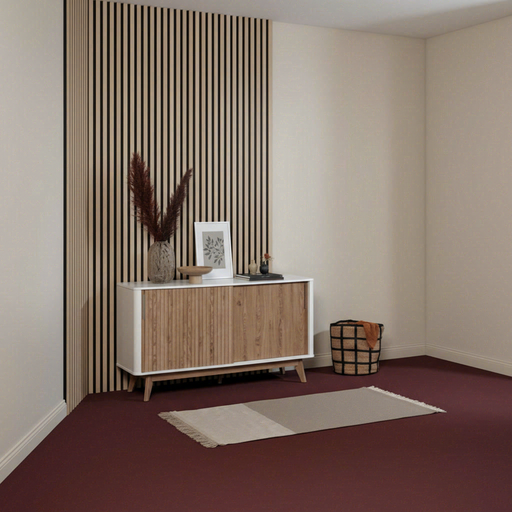
Why we're featuring this product: The "WAVE SBS 145" model by Jahnke combines a bright, welcoming aesthetic with thoughtful functional details. The fronts, with their wave-like 3D texture and realistic wood look, create a distinctive design accent. Particularly noteworthy are the practical sliding doors, which allow access to the contents without taking up additional space in the room.
Advantages (Pros):
Who it's for: This white and wood sideboard is suitable for those seeking a piece of furniture with a natural yet modern appeal. It is an excellent choice for living rooms or bedrooms where space in front of the cabinet is limited and a flexible, organised storage solution is required.
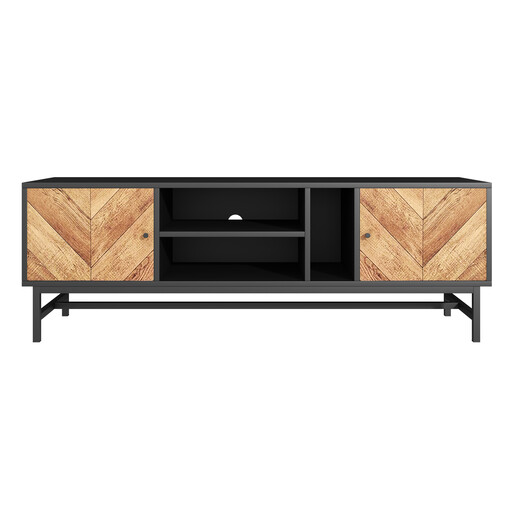
Why we're featuring this product: This modern lowboard is distinguished by its clean, graphic design. The black carcass creates a strong contrast with the wood-effect doors, whose inverted V-shaped pattern accentuates the unit's lines. The well-conceived compartment layout, combining closed cabinets with both horizontal and vertical open sections, offers versatile organisational possibilities.
Advantages (Pros):
Who it's for: This model is designed for users who prefer a functional TV unit with an expressive, minimalist design. It fits well in environments where clearly defined storage for various items is needed and a strong visual accent is desired.
The models featured represent two specific styles of modern sideboards. However, the spectrum of designs, materials, and sizes is far broader. If these products do not exactly match your vision, you can find a wider selection of alternatives covering different styles and functional requirements in our Modern Wood Furniture category.
1. What is the difference between a sideboard, a lowboard, and a chest of drawers? The terms are often used interchangeably but refer to different heights and proportions. A lowboard is low (typically under 60 cm) and wide, often used as a TV unit. A sideboard is mid-height (approx. 70-90 cm) and also wider than it is tall. A chest of drawers is generally taller and narrower than a sideboard and is primarily equipped with drawers.
2. How high should a modern sideboard be? The ideal height depends on its intended use. As a modern credenza in a dining room or hallway, a height of 80-90 cm is practical, as the surface is easily accessible for placing items. When used as a TV stand, the top edge of the unit should be positioned so that the centre of the television screen is at eye level when you are seated. This usually corresponds to a furniture height of 50-60 cm.
3. What is a low-maintenance material for a sideboard? Furniture made from engineered wood with a melamine resin coating is particularly easy to maintain. The sealed surface is resistant to moisture and can be easily cleaned with a damp cloth. Harsh cleaning agents should be avoided to prevent damage to the coating.