
Lieferung heute & morgen

Qualitätsgarantie

Willkommens-Angebote freischalten: KOSTENLOSE Lieferung | Bis zu 80 % RABATT | Kostenlose 30-Tage-JoyPlus-Testphase
App herunterladen
A modern sofa should suit your living space, be comfortable and stand up to everyday use. But cloud sofas, corner sofas, 2-seater sofas and sofa beds differ in more than just design and price. Their dimensions, upholstery, covers, weight capacity and assembly requirements all affect how well they’ll suit your household in the long term.
Three things are particularly likely to lead to the wrong purchase:
Measure more than just the available wall space: check doorways, staircases, lifts and the distance from other furniture, too. When choosing a sofa for a small room, seat depth and overall depth are just as important as width.
As a practical guide:
Also check that the stated number of seats matches the actual seating width. Wide armrests can reduce the usable space.
The density of foam sofas is often given in kilograms per cubic metre. A model with 32D foam, for example, indicates a particular material density, but that alone doesn’t guarantee personal comfort or a specific lifespan. Foam thickness, back cushions, suspension and daily use all play a part, too.
A frameless sofa isn’t necessarily unstable. What matters is the specific information provided about the foam, shape retention and permitted load. If a product is listed as supporting ‘200 kg per seat’, check whether this really applies to each seat or to the sofa as a whole.
For a corner sofa with a spring core or pocket springs, the frame, springs and upholstery construction are important technical features. Any stated maximum load of 150 kg should be interpreted according to the manufacturer’s instructions and must not be exceeded.
A chenille sofa or corduroy sofa feels soft and textured, but depending on the weave, dust and pet hair may be more noticeable. If you have children or pets, these details are particularly important:
A sofa that doesn’t require assembly means you’ll need fewer tools, but it won’t necessarily reach its final shape straight away. If it’s delivered in several packages, check that they’ve all arrived before you start setting it up.
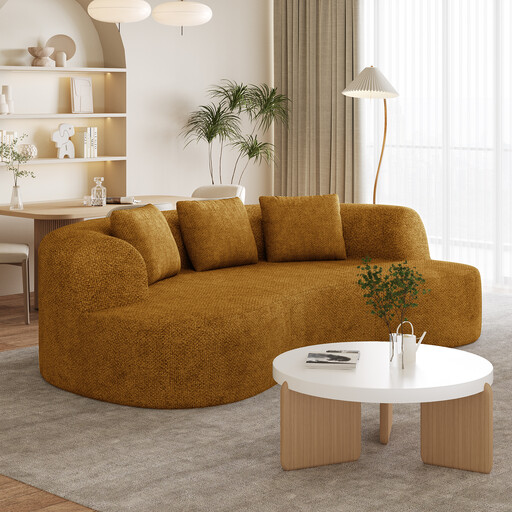
Why this product suits this type of buyer: At 168 cm wide and 90 cm deep, it’s well suited to compact homes, flats or your first living room of your own.
The compact dimensions are clearly stated. Delivery without assembly and the estimated recovery time of around 24 to 72 hours make it easier to plan the set-up.
Chenille cover, curved shape, three scatter cushions and a static load capacity of 270 kg, according to the product details.
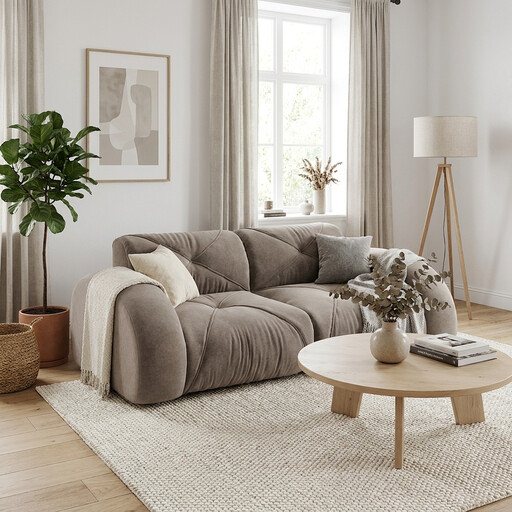
Why this product suits this type of buyer: The frameless sofa combines a single-piece 32D foam core with a modular design, making it well suited to flexible living spaces.
The product description gives details of the material and dimensions, as well as a load capacity of up to 200 kg per seat. This makes it easy to check the key details before buying.
Chenille cover, single-piece foam core, rounded edges and the option to expand the sofa, according to the product description.
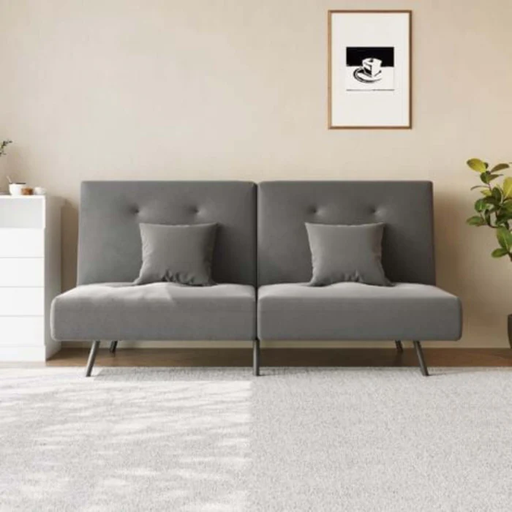
Why this product suits this type of buyer: Its three-in-one design as a sofa, lounger and double bed makes it a good fit for guest rooms, student flats and homes that regularly welcome overnight guests.
The sleeping area is listed as 180 × 105 × 38 cm. The adjustable backrests, side pockets and assembly instructions are also described in detail.
Three backrest positions, a sofa bed function, side pockets and a stated load capacity of 280 kg.
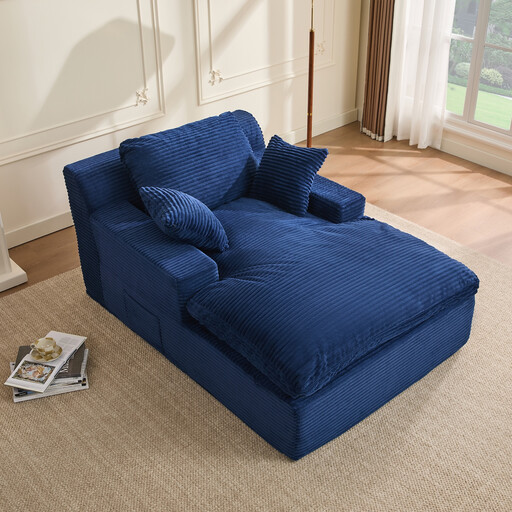
Why this product suits this type of buyer: This compact chaise longue is designed for studios, small flats or rooms where you need a flexible lounging space.
At 160 cm long and requiring no assembly, this model suits smaller spaces. Allow up to 72 hours for it to regain its shape before use, as stated in the product details.
Frameless design, side pockets, corduroy cover, thick foam padding and a combined seating, lounging and sleeping function.
We’ve put together a complete, regularly updated list of products that meet these strict selection criteria and fully comply with the safety regulations in force in the EU.
Make sure there’s enough room to move around in front of the sofa. As a practical guide, allow around 60 to 80 cm for a comfortable walkway. If your sofa has a bed function, you’ll also need to allow for its full extended depth. Check that doors, drawers and windows can still open fully, too.
You can’t reliably determine a sofa’s lifespan from its design alone. It depends on factors such as how often it’s used, body weight, upholstery construction, care and exposure to sunlight. Specific details about foam density, suspension, frame, load capacity and cover care are more useful than marketing terms. Regularly plumping loose cushions and cleaning the sofa according to the care instructions can help maintain its shape and finish.
It depends on how the sofa is made. Many models are designed for occasional overnight guests or as a flexible extra bed. If you plan to use the sofa as a bed every day, pay particular attention to the sleeping area, firmness, suspension, folding mechanism and the type of use recommended by the seller. A ‘sofa with bed function’ label alone doesn’t tell you how comfortable it is to sleep on or whether it’s suitable as a permanent bed.