
Lieferung heute & morgen

Qualitätsgarantie

Willkommens-Angebote freischalten: KOSTENLOSE Lieferung | Bis zu 80 % RABATT | Kostenlose 30-Tage-JoyPlus-Testphase
App herunterladen
Finding the right TV unit can be a challenge. It needs to be sturdy and functional, but also blend seamlessly into your home's interior design. Creating a modern TV lowboard setup means striking a balance between aesthetics and practicality. As your Joybuy Product Recommendation Officer, I've made it my mission to provide you with clear guidance. This article introduces various models and offers practical criteria to help you choose the perfect piece of furniture for your home.
Before you make a decision, a few basic considerations will help. The following points summarise the most important aspects of finding a TV unit that meets your needs for size, function, and style.
Proportions are crucial. A lowboard should always be wider than the television that sits on it. This not only ensures stability but also creates visual balance. As a rule of thumb, plan for at least 10 cm of extra space on each side of the TV. For a TV cabinet for up to a 65-inch screen, which has a diagonal of about 165 cm, the device itself is typically 145 cm wide. A lowboard with a width of 160 cm or more is a great choice here. Also, consider the size of your room to ensure the furniture doesn't look overwhelming or lost.
A clutter-free living room significantly contributes to a relaxing atmosphere. A TV unit with storage is therefore essential for neatly organising game consoles, receivers, remote controls, and cables. Think about what you need to store:
The design of the lowboard should complement your personal interior style. The choice of material and colour is central to this:
Additional features like a TV stand with LED lighting can also provide atmospheric, indirect light and turn the unit into a real focal point in your living room TV furniture setup.
Based on the criteria mentioned, we have compiled a selection of TV units that stand out for their specific features and designs.
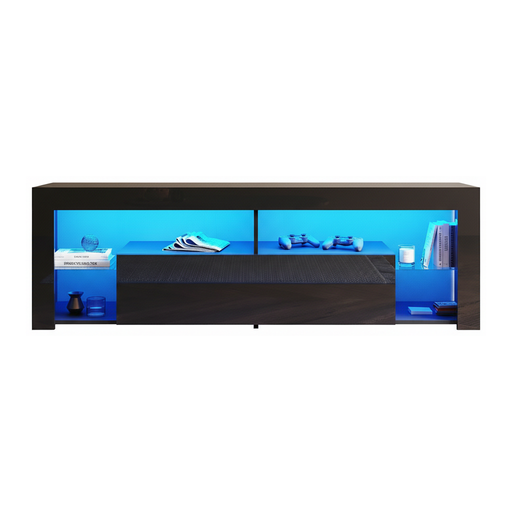
Why it stands out: This model combines a minimalist aesthetic with modern technology. The high-gloss black surface, made of melamine-coated chipboard (MFC) and medium-density fibreboard (MDF), reflects light and makes the room appear larger. The highlight is the integrated LED lighting, which can be set to 16 different colours to create a custom atmosphere.
Advantages:
Who is it for? For anyone who prefers a clean, modern design and wants to enhance their living room with a functional piece of furniture that offers atmospheric lighting.
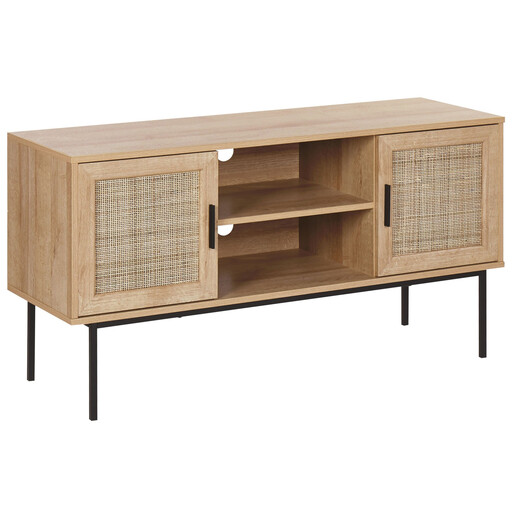
Why it stands out: The PASCO TV stand brings a touch of Boho-chic to any room with its rattan weave doors and light wood effect. The combination of natural materials and slender, black metal legs creates an exciting contrast. This piece is more than just a stand—it's a design statement in its own right.
Advantages:
Who is it for? Ideal for lovers of natural interior design who appreciate a warm, cosy atmosphere and are looking for a piece of furniture with a distinctive design.
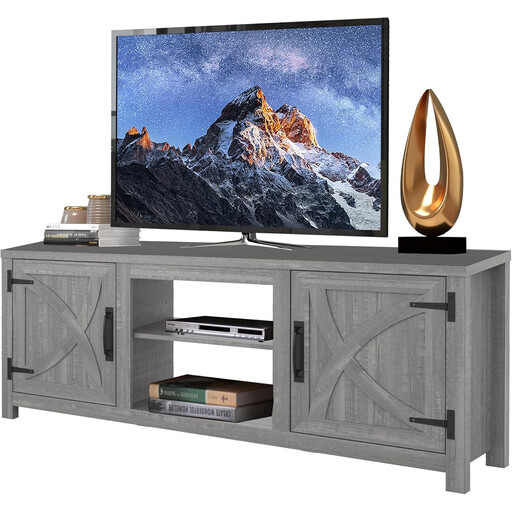
Why it stands out: This TV unit in a modern farmhouse style is distinguished by its striking barn door design. The grey finish and black metal hardware give it a rustic yet contemporary character. The door can be moved flexibly, allowing you to conceal either the middle or the outer compartments.
Advantages:
Who is it for? For those who love the modern farmhouse look and are seeking a practical, flexible storage solution with a special design accent for their living room or bedroom.
The selection of TV units is vast, covering numerous styles, materials, and sizes. If you haven't found the right fit among the models presented or want to get a broader overview, it's worth taking a look at other alternatives.
Discover our entire collection of MDF TV Units and find the perfect piece for your home.
The ideal height for a TV lowboard ensures that the centre of the television screen is at eye level when you are sitting on the sofa. Typically, the top surface of the lowboard is between 40 cm and 60 cm high. Measure your seated eye level to determine the optimal height for you.
The choice of material depends on your desired style, durability requirements, and budget. MDF (medium-density fibreboard) and chipboard are very common as they are versatile, stable, and available in many finishes like high-gloss or wood-effect. Solid wood is more durable and unique in its grain but also more expensive. Metal elements are often used for frames or accents to create an industrial look.
Yes, that's an excellent fit. A television with a 65-inch screen diagonal has a device width of approximately 145 cm. A 160 cm wide lowboard therefore provides a stable base and ensures visually appealing symmetry, with about 7.5 cm of free space on each side of the device.