
Lieferung heute & morgen

Qualitätsgarantie

Willkommens-Angebote freischalten: KOSTENLOSE Lieferung | Bis zu 80 % RABATT | Kostenlose 30-Tage-JoyPlus-Testphase
App herunterladen
A new TV stand should give your living room a modern, uncluttered look. However, the sheer number of options can quickly become overwhelming. Often, it's only after the purchase that you discover the chosen piece, while visually appealing, is impractical for daily use. Certain design flaws and overhyped features can cause a TV cabinet to create more problems than it solves. This guide will help you identify the crucial criteria and make an informed decision.
Many buyers focus primarily on design and price, overlooking functional shortcomings that only become apparent with daily use. Here are three typical problems:
To avoid the problems mentioned above, you should check three technical aspects before buying. These define the durability and functionality of your new TV furniture.
The stability of a TV cabinet depends directly on its material and construction. Pay attention to the following points:
A modern sideboard must do more than just hold the TV. It is the hub for your entire entertainment system.
The design should support functionality, not hinder it.
Instead of an overwhelming list, here are three models tailored to specific user profiles that successfully avoid common weaknesses.
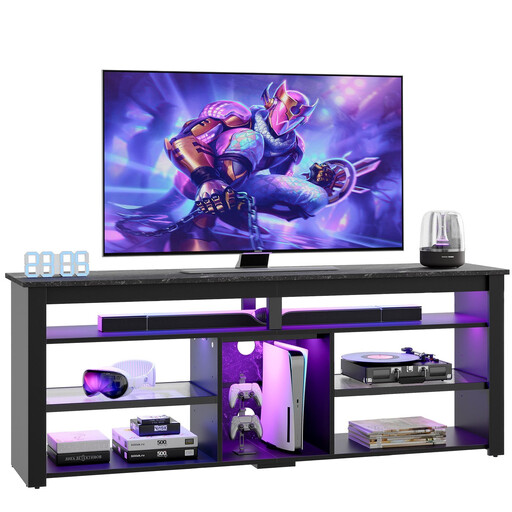
Why This Fits Their Persona: This model is tailored to the needs of gamers. Its 160 cm width provides ample space for large screens, while the open structure and adjustable acrylic shelves ensure optimal ventilation for consoles like the PS5. The integrated RGB LED lighting with 366 modes creates an immersive atmosphere.
It solves the problem of impractical storage with a thoughtful layout featuring open compartments and adjustable shelves specifically designed for tech equipment.
High weight capacity of 80 kg (approx. 176 lbs) according to the manufacturer; customizable LED lighting via remote control; raised upper tier for a soundbar.
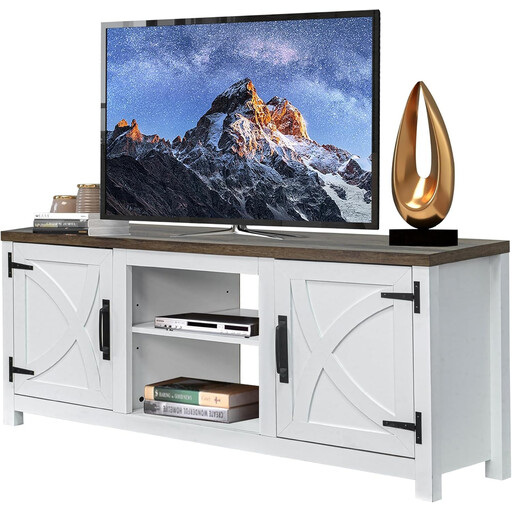
Why This Fits Their Persona: Ideal for anyone who values a tidy living room. The combination of open compartments and two closed storage areas behind a farmhouse-style sliding door conceals accessories and cables. The white, matte finish is easy to clean and complements many interior styles.
Its solid MDF construction and a specified weight capacity of 54 kg (approx. 119 lbs) prevent instability. The enclosed storage ensures a permanently tidy appearance, bypassing the problem of visible cable clutter.
Flexible storage thanks to adjustable shelves; low-maintenance matte surface; suitable for TVs up to 65 inches.
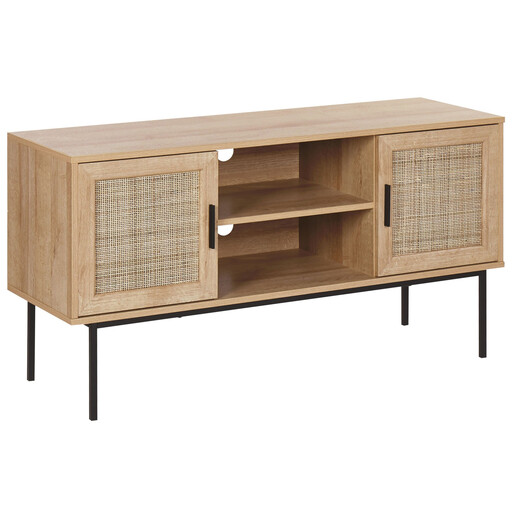
Why This Fits Their Persona: This TV stand brings a touch of boho style to the living room with its light wood-effect finish and woven rattan doors. It's a stylish alternative to often sterile, modern designs and creates a warm, inviting atmosphere. The black metal legs provide a modern contrast and stability.
It avoids the trap of high-maintenance glossy surfaces by using a wood-effect fibreboard and natural rattan. Practical cable cutouts on the back ensure tidy cable management.
Unique design with natural materials; sturdy metal legs for stability; combination of open and closed compartments.
We've compiled a complete, up-to-date list of products that fully meet these strict selection criteria and UK/EU safety regulations.
The ideal height depends on your seating height. As a rule of thumb, the center of the TV screen should be at eye level when you are sitting on the sofa. This typically corresponds to a height of 90 to 100 cm (approx. 35-39 inches) from the floor. Measure your eye level while seated and subtract half of your TV's height to determine the optimal height for the top of your stand.
That depends on the quality of the particleboard and the construction of the furniture. The crucial factor is the maximum weight capacity specified by the manufacturer. Always check this value and compare it with the weight of your TV plus any additional devices. For wide stands (over 150 cm / 59 inches), a central support leg is a key indicator of sufficient stability.
Look for a model with integrated cable management holes in the back panel. These allow you to run cables invisibly behind the furniture to the power outlets. Additionally, you can use cable ties, cable sleeves, or adhesive cable channels to bundle and organize the wires behind your devices. A stand with closed compartments or drawers also helps to conceal the cabling.