
Lieferung heute & morgen

Qualitätsgarantie

Willkommens-Angebote freischalten: KOSTENLOSE Lieferung | Bis zu 80 % RABATT | Kostenlose 30-Tage-JoyPlus-Testphase
App herunterladen
A modern wall light can combine accent lighting with practical indoor illumination in your living room, bedroom, hallway or home office. Options range from a classic E27 wall light to an LED wall light with an integrated warm white light source. However, differences in connection type, light output, dimensions and IP rating are not always immediately clear from product descriptions.
If you choose based only on colour or shape, it’s easy to overlook important details. Three common buying mistakes are especially worth avoiding:
With an E27 wall light, you can replace the bulb. This makes it easier to adjust the brightness and colour temperature, provided the light and bulb are compatible. For example, Atmosphera Keli models are listed with an E27 fitting, a maximum bulb wattage of 40 watts and a 1.80-metre cable. The bulb is not included.
An LED wall light with an integrated light source, on the other hand, has a built-in LED. Check the wattage, lumens, colour temperature and dimmability. Warm white light at 3000 kelvin is often a good choice for a cosy wall light in the living room or bedroom. A workspace may call for different levels of brightness and light distribution.
Measure the available wall space before you buy. A compact wall light around 12 centimetres wide is well suited to narrow spaces beside a bed, door or shelf. Longer models can make more of a design statement on wider stretches of wall.
Light distribution is just as important:
A wall light with a plug, cable or fixed connection needs to suit your installation setup. For screw mounting, the wall plugs, wall material and load capacity must all be suitable. Fixed-wiring should be carried out by a suitably qualified person. Switch off the circuit before carrying out any electrical work.
The IP rating is essential for bathrooms, kitchens and other areas with higher levels of moisture. If the product details state “no IP rating”, use the light only in dry indoor spaces. A CE mark is shown in the product details, but this doesn’t replace checking that the specific light is suitable for its intended location.
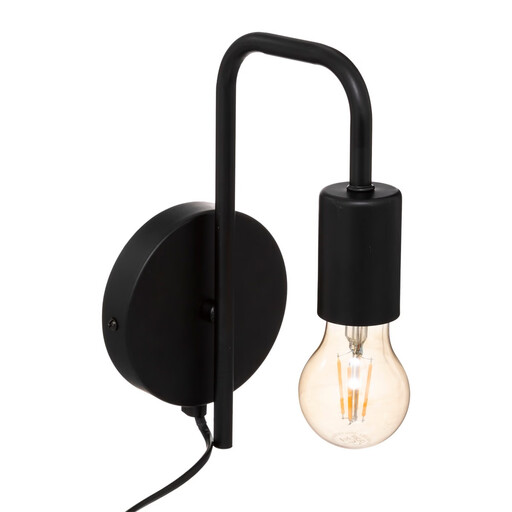
Why this product suits this profile: This black metal wall light takes an E27 bulb and, according to the product details, is suitable for bedrooms, living rooms, kitchens and dining rooms. Its compact dimensions make it a good fit for smaller wall spaces.
The fitting and maximum wattage of 40 watts are clearly specified. The product details also make it clear that the bulb is not included and the light is non-dimmable.
E27 fitting, black metal, 1.80-metre cable and screw mounting; the bulb can be replaced.
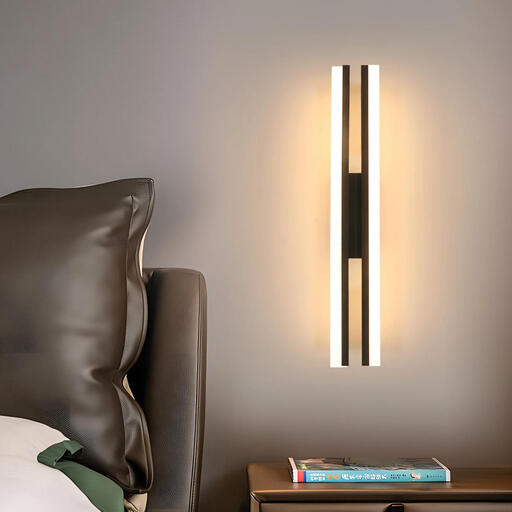
Why this product suits this profile: This rectangular black LED wall light with an acrylic body is designed for modern, minimalist and Scandinavian-style interiors. It can be mounted vertically or horizontally.
The flexible mounting options are clearly described. Before buying, check that the integrated LED and stated wattage meet your lighting needs.
Acrylic cover, black finish and two mounting options for walls in living rooms or bedrooms.
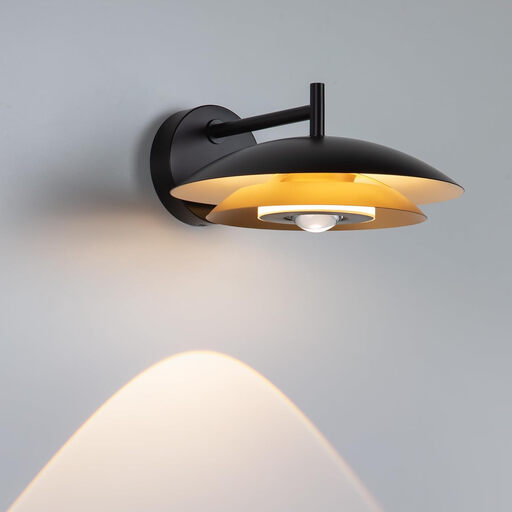
Why this product suits this profile: According to the product details, this gold wall light with a clear glass globe is suitable for living rooms, bedrooms, hallways and specified bathroom applications. It is hardwired and can be used with dimmable bulbs and a compatible dimmer.
Dimming requires a dimmable bulb and a compatible dimmer. The installation guidance also specifies that electrical components must be kept dry and notes the maximum bulb wattage.
Gold-coloured metal, a clear glass globe that casts light in all directions and hardwired installation.
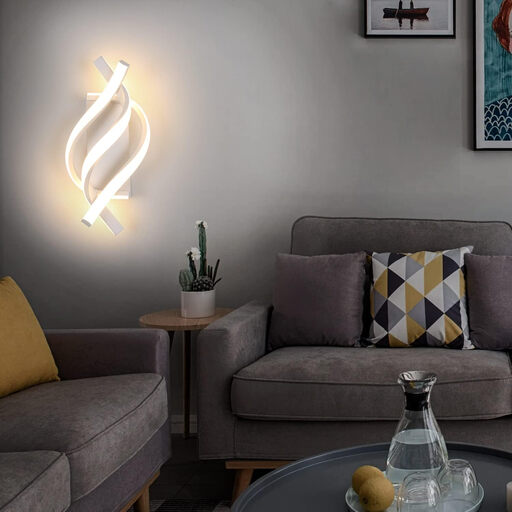
Why this product suits this profile: The white aluminium design emits warm white light at 3000 kelvin and suits living rooms, bedrooms, hallways, stairwells and entrance areas. Its integrated LED is designed for steady use without a dimmer.
The product details specify an integrated LED, 3000 kelvin and non-dimmable operation. This makes it clear before you buy that the brightness can’t be adjusted.
Aluminium body, warm white light at 3000 kelvin and mounting options for a range of dry indoor spaces.
For an LED wall light, energy use depends mainly on its stated wattage and how many hours a day it’s switched on. A 16-watt light used for five hours a day consumes 0.08 kilowatt-hours per day. To work out the actual cost, multiply this figure by your electricity rate.
With an E27 wall light, energy use depends on the bulb you fit. An LED bulb may use less power than a traditional bulb, but it must be compatible with the fitting and within the maximum permitted wattage. Wattage alone doesn’t tell you how bright a bulb is; you’ll also need to check its lumen rating.
We’ve put together a complete, regularly updated list of products that meet these strict selection criteria and fully comply with the safety regulations in force in the EU.
It depends on the design and how you’ll use it. Beside a bed, the light should be within easy reach and shouldn’t shine directly into your eyes. In a hallway, leave enough clearance around doors and walkways. For a wall-mounted reading light, take your intended sitting or lying position into account.
You can only assess its expected lifespan from the manufacturer’s information. With an integrated LED, the light source often can’t be replaced in the same way as an E27 bulb. Before buying, check whether details are provided about lifespan, warranty and replaceability.
Colour isn’t what determines whether a light is suitable. The key factors are the installation location, electrical design and IP rating. If there’s no IP rating, don’t install the wall light where it could be splashed with water. Local installation requirements also apply when connecting it to the mains.