
Lieferung heute & morgen

Qualitätsgarantie

Willkommens-Angebote freischalten: KOSTENLOSE Lieferung | Bis zu 80 % RABATT | Kostenlose 30-Tage-JoyPlus-Testphase
App herunterladen
A modern wall mirror can help define a room, reflect light and add a decorative touch. But some buying decisions can lead to unnecessary hassle later: the mirror doesn’t fit the intended wall, the fixing isn’t suitable for the wall surface, or the shape looks different in the room than you expected.
If you’re looking for a wall mirror for your living room, bedroom, hallway or entrance, don’t focus solely on colour and design. The key things to consider are dimensions, fitting type, material details and how you’ll actually use it.
The dimensions given usually describe the mirror itself. When planning where to put it, you’ll also need to allow for skirting boards, furniture, light switches and the space required between the mirror and the wall. For example, a 50 x 70 cm wall mirror needs a clear area larger than the mirror itself.
Orientation matters too. An elongated mirror may look better horizontally or vertically, depending on whether you want to make a wall look wider or draw attention to the room’s height.
A mirror designed to hang on a wall isn’t automatically suitable for every type of wall. Concrete, brick, plasterboard and stud walls all require different wall plugs and screws. If these aren’t included, you’ll need to choose fittings that are suitable for your wall.
With glass products in particular, the fixings must be secure to prevent the mirror from tilting or falling. A leaning mirror needs a stable position and shouldn’t be placed where it could easily be knocked.
Gold, silver and frameless designs can look different depending on the wall colour, lighting and nearby furniture. A gold metal wall mirror can add warmth to a traditionally decorated hallway, while a silver wall mirror or frameless mirror may work better with minimalist or Scandinavian-inspired interiors.
If you’re considering an unusual shape, check the product details carefully. An irregular mirror can make a decorative feature, but may offer less usable reflective surface than a rectangular model.
For decorative purposes, compact dimensions such as 50 x 70 cm are often enough. This size works well on smaller walls, above a chest of drawers or beside a coat stand. If you want to see your whole body, you’ll need a full-length mirror with enough height.
Before ordering, mark out the dimensions on the wall with masking tape. This makes it easier to see whether the mirror will look in proportion to your sofa, sideboard or door.
A frameless mirror tends to blend subtly into modern rooms. Round, arched or irregular designs make a more defined decorative statement. Simple outlines, light-coloured walls and pared-back frames often suit Scandinavian interiors.
It’s important to distinguish between the shape of the glass and the shape of the frame. The description “gold metal wall mirror” could refer to a visible metal frame or to individual metal details. Check the specific material description on the product page before you buy.
Check the following:
Use mild cleaning products. Abrasive products can damage the surface. After cleaning, it’s a good idea to wipe away any moisture with a soft cloth.
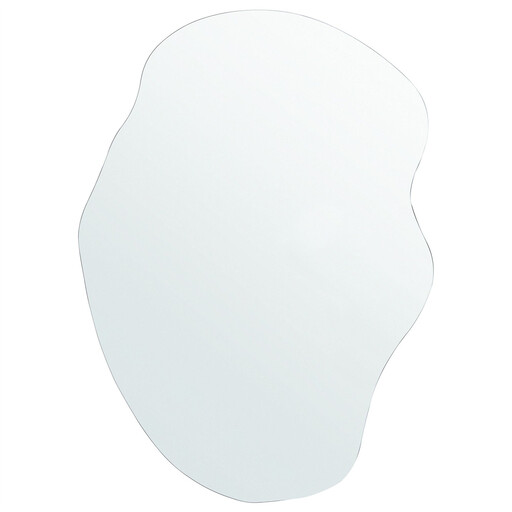
Why this product suits this type of buyer: Its compact size makes it suitable for smaller walls, hallways or above a chest of drawers. The irregular silver design works well with minimalist and Scandinavian-inspired interiors.
The stated dimensions of 50 x 70 x 1 cm make it easier to plan where to hang it. There are hooks on the back for horizontal or vertical fitting.
Frameless glass, a product weight of 2 kg and two possible orientations according to the product details.
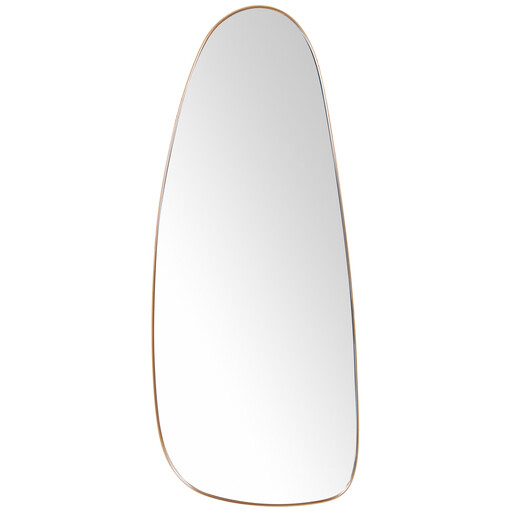
Why this product suits this type of buyer: Its slim, portrait format is a good choice for entrances, hallways or narrow sections of wall. The gold finish adds a noticeable accent without needing a wide wall space.
The stated width of 39 cm and height of 95 cm help you plan precisely for narrow wall spaces. Before fitting it, check your wall type against the fixing details.
Slim format, gold finish and described as a metal wall mirror in the product details.
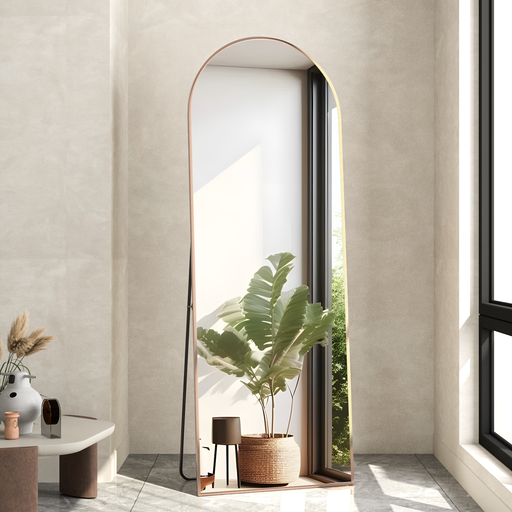
Why this product suits this type of buyer: This model is designed for use as a full-length mirror. According to the product name, it can be used with its stand, hung on the wall or leaned against it.
At 150 cm high, it offers a larger viewing area than a compact decorative mirror. Depending on how you position it, you’ll need to check that it’s stable and that any wall fixing is secure.
150 x 60 cm, an arched shape and several intended ways to use it according to the product name.
We’ve put together a complete, regularly updated list of products that meet these strict selection criteria and fully comply with the safety regulations in force in the EU.
Compact or tall, portrait-format designs are practical for narrow hallways. A 39 x 95 cm mirror takes up less wall width than a large mirror. Before fitting it, check that it won’t interfere with doors, your coat stand or the width of the passage.
Use wall plugs and screws that suit both the wall material and the weight of the mirror. Make sure the hooks are properly seated on the fixing points. If you’re unsure, ask a suitably qualified person to fit it.
Its lifespan depends on the glass, frame, fixings, cleaning and where it’s placed. Keeping it in a dry indoor space, fitting it securely and using mild cleaning products will help reduce everyday wear. Avoid direct heat, excessive moisture and knocks.