
Lieferung heute & morgen

Qualitätsgarantie

Willkommens-Angebote freischalten: KOSTENLOSE Lieferung | Bis zu 80 % RABATT | Kostenlose 30-Tage-JoyPlus-Testphase
App herunterladen
Choosing a new motorcycle helmet is a critical decision that directly impacts your safety and comfort. A modular helmet with a sun visor, in particular, promises flexibility for commuters and touring riders alike. However, the market is saturated with models whose marketing promises often fall short. Before you make a decision, it's wise to understand the most common pitfalls that can lead to a poor purchase.
As your Joybuy Product Recommendation Officer, I will help you define objective criteria for your selection and distinguish crucial features from mere marketing claims.
The 3 most common mistakes when buying a helmet:
To avoid a bad purchase, you should focus your attention on verifiable technical specifications. These three points are decisive for a helmet's function and safety.
The ECE 22.06 standard is the current gold standard for helmet safety in Europe. Unlike its predecessor, 22.05, this testing procedure includes:
A helmet with this certification offers a demonstrably higher level of protection. Therefore, explicitly look for the ECE 22.06 certification mark on the helmet or in the product description.
A dual-visor helmet combines a clear main visor with an internal, tinted sun visor. Here are the quality indicators:
A modular helmet (flip-up helmet) offers the ability to lift the entire chin bar. This is particularly practical in city traffic or during short stops. A full-face helmet with a sun visor, on the other hand, provides the structural stability of a single-piece shell.
Regardless of the type, the following comfort features are important for a motorcycle helmet for touring or daily use:
Based on the objective criteria mentioned above, we have identified several models that are well-suited for specific requirement profiles.
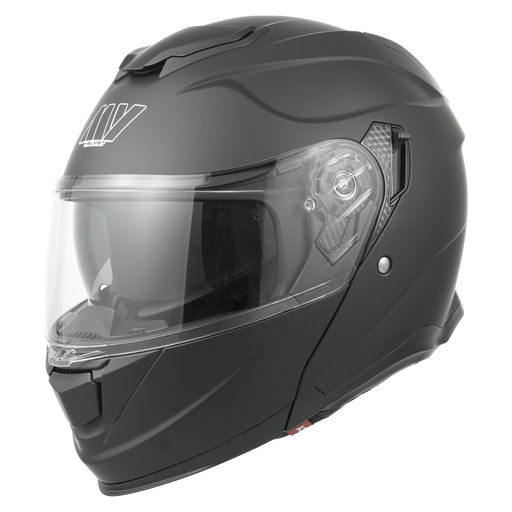
Why This Fits Their Persona: Ideal for urban traffic. The flip-up chin bar makes it easy to communicate at traffic lights or petrol stations, while the integrated sun visor reacts quickly to changing light conditions—perfect for rides through tunnels or tree-lined avenues.
The sun visor's mechanism is designed for easy, one-handed operation, thus avoiding the problem of sticky or hard-to-reach controls.
Meets the ECE 22.06 standard and features preparation for communication systems, making it a future-proof choice.
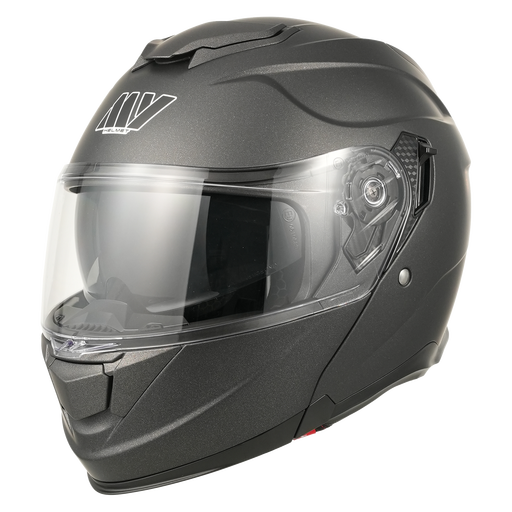
Why This Fits Their Persona: On long distances, comfort and connectivity are key. The comfortable inner lining stays dry even after hours of riding. The dedicated cutouts for a Bluetooth headset allow for easy installation for navigation and communication.
The Bluetooth preparation is more than just a hole: the dedicated slots under the cheek pads are positioned to prevent pressure points.
The combination of an ABS outer shell and an EPS buffer layer ensures high shock absorption, a crucial factor for long-haul rides.
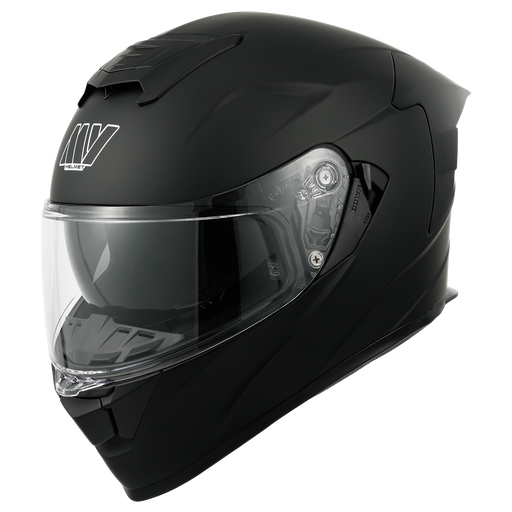
Why This Fits Their Persona: For riders who prefer the maximum structural integrity of a full-face helmet but don't want to sacrifice the convenience of a sun visor. This helmet offers both in one package.
This model bypasses the pitfall of outdated standards by consistently meeting the current Motorcycle Helmet ECE 22.06 standard, thus offering a contemporary level of protection.
Combines the protective performance of a full-face helmet with the convenience of an integrated visor. The inner lining is removable and washable for easy maintenance.
We have compiled a complete, up-to-date list of products that fully meet these strict selection criteria and German safety regulations.
Using a flexible measuring tape, measure the circumference of your head at its widest point, about one centimetre above your eyebrows and ears. Compare this value (in cm) with the helmet manufacturer's sizing chart. A new helmet should fit snugly and not shift when you move your head, but it must not cause any pressure points.
The ECE 22.06 standard is significantly stricter. It tests for impact protection at more points, at different speeds, and, for the first time, also considers rotational forces that occur during an oblique impact. Helmets certified to this standard offer a higher level of protection, tested according to modern scientific findings.
Theoretically, yes, but it is not recommended. Helmets without special Bluetooth preparation do not have space for speakers, which can lead to painful pressure points on the ears. Furthermore, improperly removing padding can compromise the helmet's protective function. Models with dedicated cutouts ensure a safe and comfortable installation.