
Lieferung heute & morgen

Qualitätsgarantie

Willkommens-Angebote freischalten: KOSTENLOSE Lieferung | Bis zu 80 % RABATT | Kostenlose 30-Tage-JoyPlus-Testphase
App herunterladen
A cluttered hallway, mountains of shoes by the door, or a lack of storage in the kids' room – these are common problems for anyone living in a rental or a small space. A modular shelf often seems like a quick and affordable solution. However, the market is flooded with products that promise more than they deliver. Before you make a decision you'll later regret, it's crucial to understand the typical weaknesses.
As your Joybuy Product Recommendation Officer, I'm here to help you separate the wheat from the chaff. In this guide, I'll show you what to look for to find a sturdy and truly flexible modular shelving system that will make your daily life easier, not create new frustrations.
Many low-cost shelving systems look appealing online but prove to be impractical after assembly. Pay close attention to these three weaknesses to avoid a bad purchase:
To avoid the problems mentioned above, you should check three core aspects before buying. These objective criteria will help you realistically assess the durability and functionality of a shelving system.
The material is the foundation of stability and longevity. Common options include:
A critical, often overlooked value is the maximum load capacity per compartment. A reputable manufacturer will specify this value in kilograms (kg). It tells you whether the shelf is suitable only for light shoes or also for heavy binders.
A modular shelving system is only as good as its connectors. Systems with simple plug-in connectors made of thin plastic tend to be unstable. Look for connectors made of robust ABS plastic that securely grip the panels or grids.
Also, check if the system allows for flexible arrangements. Can you arrange the compartments horizontally and vertically? Can individual cubes be used separately? This flexibility is particularly valuable for renters who need to adapt space-saving furniture to new room sizes after a move.
A good shelving system solves a specific problem. Think carefully about what you need it for:
Instead of general recommendations, we present specific solutions tailored to particular living situations and needs.
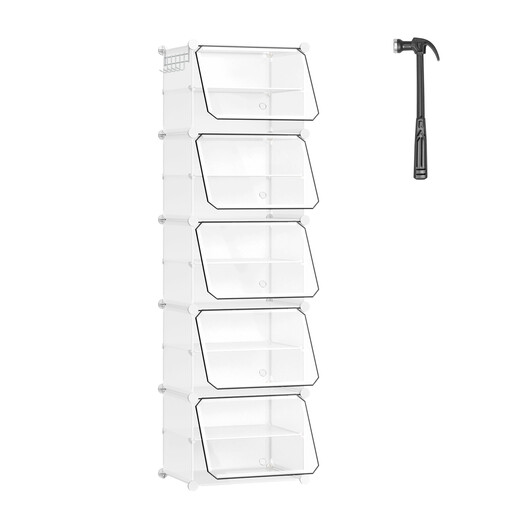
Why This Fits Their Persona: Ideal for a first apartment or for those who move frequently. The system is cost-effective and, thanks to its DIY approach, can be adapted to almost any space, whether in a narrow hallway or under a sloped ceiling.
It bypasses the "misleading modularity" trap. The cubes can actually be assembled horizontally, vertically, or as separate units. The ABS connectors provide sufficient stability for the intended purpose (shoes, light items).
True modular freedom and tool-free assembly (rubber mallet included). Integrated hooks and doors enhance its functionality as a hallway organisation system.
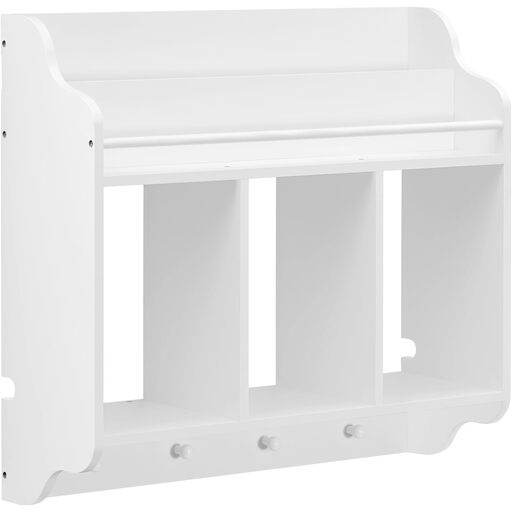
Why This Fits Their Persona: This shelf was specifically designed for the needs and safety of a child's room. It creates order for books and toys without taking up valuable floor space.
It addresses the "unstable construction" trap through secure wall mounting. Furthermore, safety features like rounded corners and a bar on the top shelf have been explicitly integrated to prevent items from falling.
Safety-oriented design with rounded corners. Multifunctional with open compartments, a book ledge, and four hooks for bags or jackets. The material (E1 grade MDF) is robust and easy to clean.
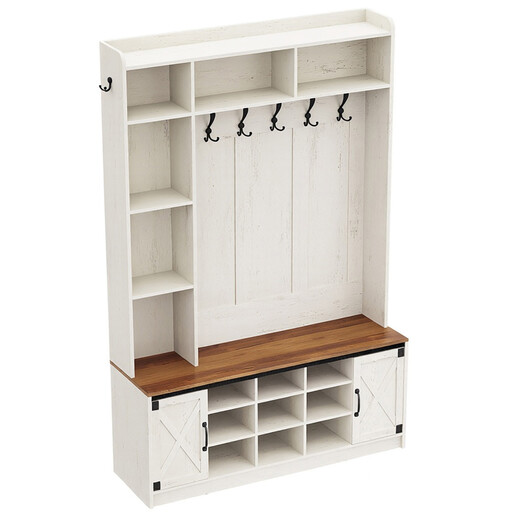
Why This Fits Their Persona: For anyone seeking a comprehensive solution for a disorganised entryway. This piece of furniture replaces a separate coat rack, shoe shelf, and bench, bundling all functions into one space-saving design.
It solves the problem of instability with a solid construction of engineered wood and steel. According to the manufacturer, the bench can support up to 150 kg, providing a reliable, stable function that goes beyond a simple shelf.
A 6-in-1 complete solution that saves space and money. The adjustable shelves offer flexibility for boots or storage boxes. The integrated RGB lighting is an added feature to enhance the hallway area.
We've compiled a complete, up-to-date list of products that fully meet these strict selection criteria and relevant regulations.
The load capacity varies greatly depending on the model and material. Simple cube systems made of PP plastic often hold 5 to 10 kg per compartment. Shelves made of MDF or metal can support significantly more. Always check the maximum load capacity specified by the manufacturer to avoid overloading and instability.
With many systems, especially common cube shelves, this is possible by purchasing another compatible set. The connectors generally allow for seamless expansion. For fixed furniture pieces like a coat rack with a bench, expansion is usually not intended.
That depends on the system. Most DIY shelves made of plastic cubes are tool-free and come with a small rubber mallet. For more complex or wall-mounted systems like a wall shelf for the child's room, you will typically need a screwdriver and, for wall mounting, a drill. A look at the product description or assembly instructions before purchase will clarify this question.