
Lieferung heute & morgen

Qualitätsgarantie

Willkommens-Angebote freischalten: KOSTENLOSE Lieferung | Bis zu 80 % RABATT | Kostenlose 30-Tage-JoyPlus-Testphase
App herunterladen
A modular shelf promises the perfect solution for organization and flexibility: customizable storage that grows with your needs. But the market is flooded with options, and not every shelving system delivers on its promise. Many buyers only realize after assembly that their new piece of furniture is wobbly, can't be expanded as desired, or the surface already shows scratches after just a few weeks.
As your Joybuy Product Recommendation Officer, I'm here to help you navigate these pitfalls. Instead of being swayed by marketing promises, we'll focus on the critical features that define a good modular shelf. Here are the three most common mistakes and how to avoid them.
To prevent a bad purchase, you should check three core technical aspects. These determine the longevity, safety, and practical utility of your new shelf.
The material is the foundation of any shelf. The maximum load capacity per shelf is a critical piece of information from the manufacturer that you should never ignore, especially if you're looking for a modern bookshelf or an office file shelf.
The way individual modules are connected determines the stability of the entire shelving system.
A truly expandable shelf is one where you can buy matching elements later on. Check if the manufacturer offers individual shelf cubes or expansion sets and whether they are part of an established product series. This is the only way to ensure that your modular shelving system remains adaptable to future needs.
Based on these objective criteria, we have identified a few products that represent well-thought-out solutions for specific requirement profiles.
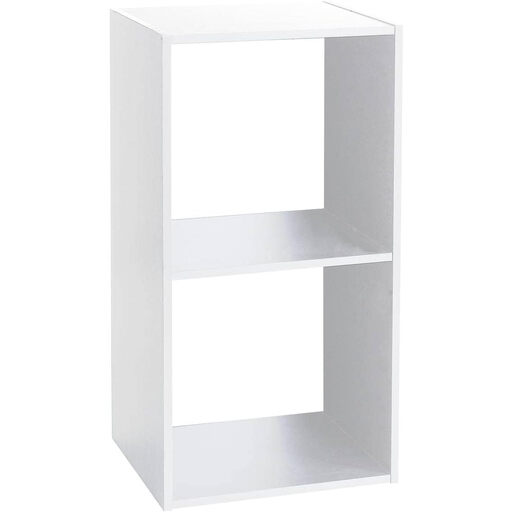
Why This Fits Their Persona: Ideal for students or a first apartment. It offers a clean, modern storage solution for books and decorative items in a small footprint without breaking the budget. The simple white design blends seamlessly into many interior styles.
The compact, low-profile design with two compartments avoids the stability trap, as it's designed for lighter loads. The smooth painted surface is easier to maintain than a cheap foil finish.
Compact dimensions (67.5 cm height) for niches and small spaces; straightforward assembly.
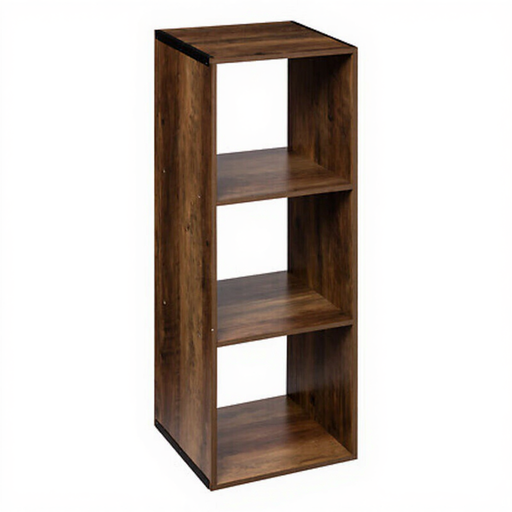
Why This Fits Their Persona: Perfect for anyone looking to make a deliberate aesthetic statement in their living room or home office. The industrial-style wooden shelf design combines a warm wood look with a sturdy frame, offering a good balance of display area and storage space.
The construction of wood fiber within a solid frame provides higher structural integrity than simple interlocking systems. The instructions explicitly recommend wall mounting, which addresses the stability aspect.
Clearly defined industrial look; good use of space through vertical orientation (100.5 cm height).
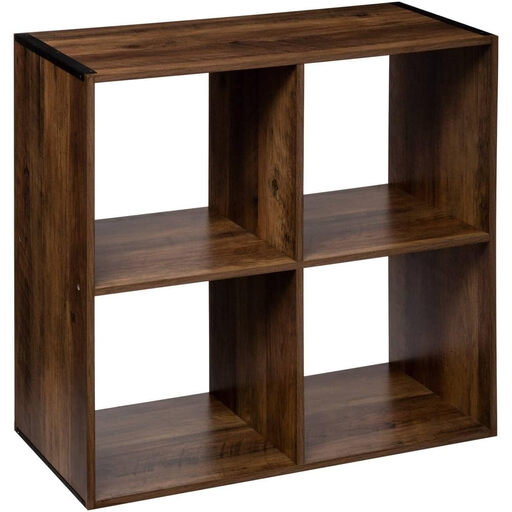
Why This Fits Their Persona: Ideal for shared apartments or growing home offices where space requirements can change. This modular shelving system can be configured as a single storage shelf, a sideboard, or combined with other units to create a larger shelving wall.
It addresses the "dead-end modularity" trap by being designed as a foundational building block. The symmetrical cube shelf structure (2x2 compartments) allows for logical and stable expansion. Included anti-tip hardware underscores the focus on safety.
Versatile configuration; classic cube shape for easy combinations; can also function as a room divider.
You can find a curated selection of shelving systems that meet our criteria for stability, material quality, and true modularity in our complete overview.
1. How much weight can a modular shelf hold? The load capacity varies greatly depending on the material and construction. Always check the manufacturer's specification for the maximum load capacity per shelf. As a rule of thumb: simple plastic interlocking systems are suitable for light decorative items, while screwed systems made of MDF or thick particleboard can also support heavy books and folders.
2. Do I need to anchor a modular shelf to the wall? Yes, a wall anchor is strongly recommended for any shelf taller than approx. 75 cm to prevent it from tipping over. This is a critical safety measure, especially in households with children. Many products already include a suitable anti-tip kit.
3. Can I combine modules from different manufacturers? This is generally not recommended. Dimensions, connection systems, colors, and surface textures are almost never compatible. To create a truly expandable shelf that also forms a visually cohesive unit, you should stick to one product line from a single manufacturer.