
Lieferung heute & morgen

Qualitätsgarantie

Willkommens-Angebote freischalten: KOSTENLOSE Lieferung | Bis zu 80 % RABATT | Kostenlose 30-Tage-JoyPlus-Testphase
App herunterladen
By Joybuy Product Recommendation Officer, August 29, 2026
A cluttered hallway with scattered shoes is a daily nuisance in many homes. A modular shoe rack system promises a quick, flexible, and modern solution. However, the market is flooded with options that seem practical at first glance but quickly turn out to be a bad investment. Before you decide on a model, it's crucial to understand the common weaknesses that often only become apparent after the purchase.
Many buyers report three central problems that negate the benefits of such a rack:
A well-considered choice based on objective criteria will protect you from these pitfalls and ensure that your new hallway shoe storage serves its purpose for the long term.
To find a durable and functional modular shoe rack, you should examine three core technical aspects. These features distinguish a reliable system from a short-lived product.
The overall stability of a modular system depends directly on the quality of its individual parts. Pay attention to the following specifications:
The main advantage of a DIY shoe rack is its adaptability. A good system offers more than just a rigid assembly guide. Check if the system allows you to:
Modern modular systems often offer more than just storage space. Features like doors or hooks significantly increase their practical utility.
Based on these objective criteria, we have identified several models that offer a suitable solution for different needs and living situations.
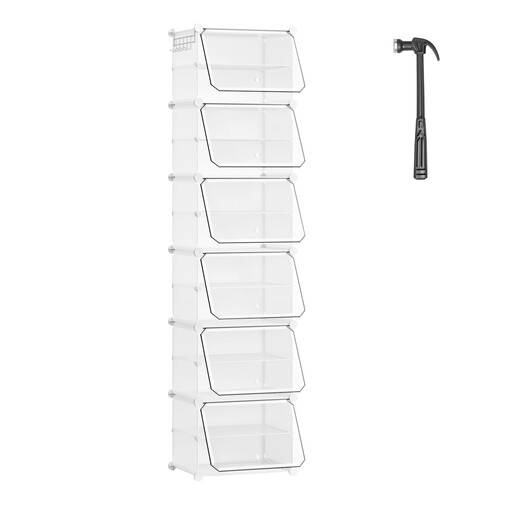
Why It's a Match: Ideal for individuals with a growing shoe collection and various shoe types. Its high modularity allows for assembly in different shapes to make the most of space in a hallway, bedroom, or even an attic.
The construction with a metal frame and ABS connectors counteracts typical instability. By allowing partition walls to be omitted, it bypasses the problem of compartments being too small for boots.
Flexible assembly options; includes doors, 5 side hooks, and an anti-tip device for enhanced safety and functionality.
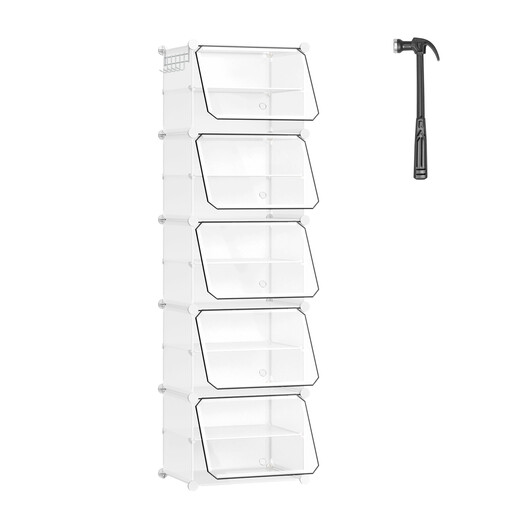
Why It's a Match: Perfect for renters in apartments with limited space. The compact cube shape with 10 compartments provides an organised yet space-saving shoe rack solution for an entryway or bedroom.
The doors conceal the shoes and create a tidy facade, avoiding the messy appearance of open, overloaded racks. The sturdy cube structure ensures good foundational stability.
Compact design with doors for a clean look; includes hooks to maximise storage in a small footprint.
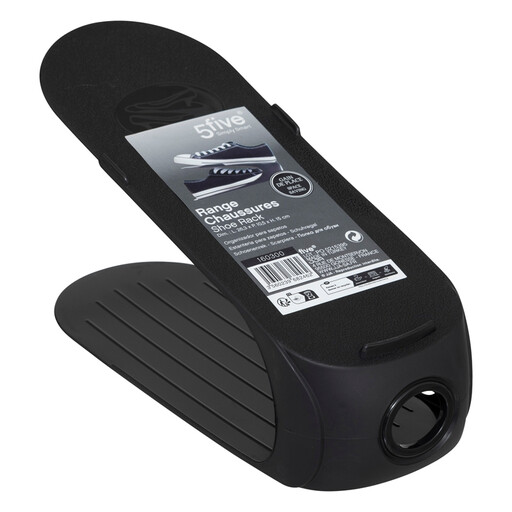
Why It's a Match: For anyone who lacks space for a new piece of furniture but wants to maximise storage in existing shoe cabinets or wardrobes. These holders effectively double the available space.
This product is a specialised solution, not a complete shelving system. It completely bypasses the problems of instability and complex assembly by performing one simple but effective function.
Halves the space required per pair of shoes; stackable design made of sturdy polypropylene; ideal for flat shoes and sneakers.
We've compiled a complete, up-to-date list of products that fully meet these strict selection criteria and relevant regulations.
Stability largely depends on the material quality and correct assembly. Look for systems with metal-reinforced panels and connectors made of ABS plastic. Assembly should be done carefully according to the instructions; a rubber mallet helps to lock the connections firmly in place. Models with an anti-tip device offer additional security. Distribute the weight evenly across the compartments, especially with heavy shoes.
Yes, this is one of the main advantages of many modular systems. During assembly, you can strategically omit horizontal panels to create taller compartments. This allows boots, ankle boots, or high-top sneakers to fit without issue. Before purchasing, check the product description to see if this flexible configuration is explicitly supported.
Assembly is generally straightforward and requires no special tools. The elements simply click together. Many manufacturers include a small rubber mallet to ensure all panels are seated firmly in the connectors. Depending on the size of the rack and your experience, you should plan for 20 to 40 minutes for assembly.