
Lieferung heute & morgen

Qualitätsgarantie

Willkommens-Angebote freischalten: KOSTENLOSE Lieferung | Bis zu 80 % RABATT | Kostenlose 30-Tage-JoyPlus-Testphase
App herunterladen
Living spaces are becoming increasingly compact, whether in a city apartment, a student dorm, or a home office. This often brings the challenge of keeping personal items, office supplies, or clothing organised without making rooms feel cluttered. A modular storage system offers a versatile solution to manage clutter and efficiently use the available space.
This article introduces various approaches to modular systems and provides practical guidance to help you choose the right solution for your needs.
The decision for a particular system depends on your individual requirements for material, flexibility, and use. The following points can serve as a guide.
The material determines not only the look but also the durability and the appropriate location for use.
The key benefit of a modular shelving system lies in its adaptability. Before buying, check how easily the system can be expanded or reconfigured. Systems consisting of individual, connectable cubes or boxes allow you to adjust the layout at any time to new spatial conditions or growing needs. This way, you can gradually create more storage space without having to immediately invest in a large, rigid piece of furniture.
Assembly plays a crucial role, especially for those who move frequently or want the ability to quickly redesign their space. Some systems require more complex, tool-based assembly, while others rely on simple click-in connectors or folding mechanisms. A foldable storage cabinet, for example, can often be set up and taken down in minutes without any tools, making it a practical solution for temporary or flexible needs in an office organisation system or in rental apartments.
Here is a selection of products that represent different approaches to modular storage.
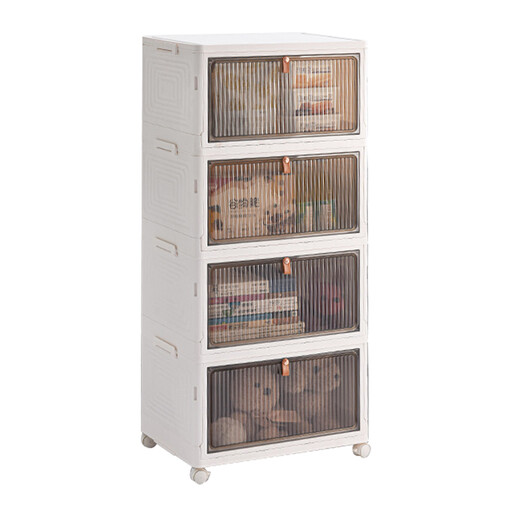
Why it stands out: This system combines the stability of a cabinet with the flexibility of a folding mechanism. Assembly is tool-free; the individual tiers are simply unfolded and locked into place. The magnetic, transparent doors provide a quick overview of the contents without needing to be opened.
Pros:
Who is it for? Individuals looking for a quick-to-deploy and flexible storage solution. Ideal for use in a bedroom, children's room, or as an expandable office organisation system.
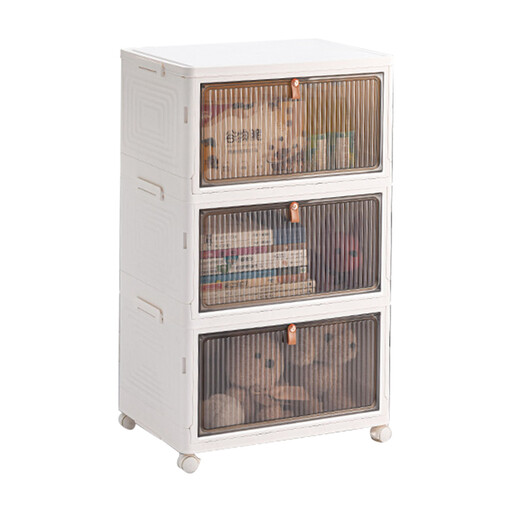
Why it stands out: As a more compact version of the 4-tier model, this unit offers the same functional benefits in a lower profile. It is perfectly suited for use under desks, in alcoves, or as the base for a growing modular system.
Pros:
Who is it for? Students in dorms, professionals in home offices with limited space, or as an entry-level solution for anyone wanting to leverage the benefits of stackable storage boxes in a cabinet form.
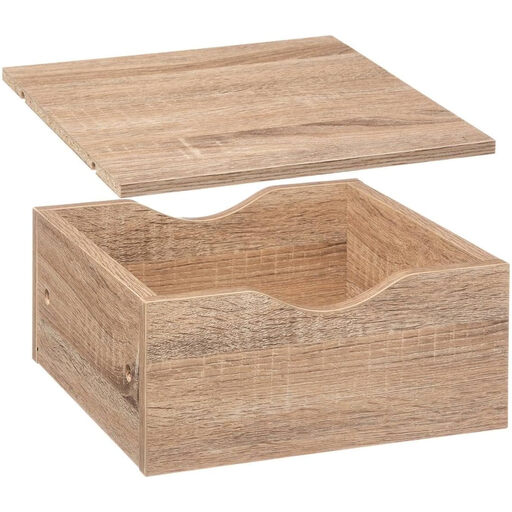
Why it stands out: This product follows the classic storage cube approach. Made from MDF wood composite, it offers a residential look and a sturdy construction. As part of the "Mix n'Modul" series, it is designed to be combined with other elements to create a custom shelving wall.
Pros:
Who is it for? Users who prefer a durable and aesthetically pleasing solution for their living room or office and value the appearance of wood composites. Ideal for creating a bookshelf or a file archive.
The products presented here are just a sample of the possibilities. If you are looking for other configurations, especially systems with doors that provide a tidy, closed-front look, you can find a wider selection in our category.
? Discover more modular cube storage units with doors here
The main advantage is flexibility. A modular storage system can be adapted to the specific dimensions of a room, expanded or downsized as needed, and easily transported during a move. Conventional cabinets, on the other hand, are rigid in their size and shape.
The load capacity varies by manufacturer and model. It is important to consult the manufacturer's specifications. They are generally designed for storing items like clothing, shoes, office supplies, or light pantry goods. For very heavy objects like tools, you should consider heavy-duty boxes specifically designed for that purpose.
Combining systems from different manufacturers is generally not recommended. The dimensions, connecting elements, and design are usually not compatible, which can lead to instability and a mismatched look. For a stable and cohesive result, it is best to stick with elements from the same product series.