Joybuy Insights

Moka Pot Buyer’s Guide: Avoid Pitfalls and Choose the Right Maker

By Joybuy Product Recommendation Officer, July 29, 2026

The classic stovetop espresso maker, also known as a moka pot, is an icon of Italian coffee culture and a popular method for brewing strong, aromatic coffee at home. However, the purchasing process has several pitfalls that often lead to disappointment and an unused gadget in the kitchen cabinet. Before you make a decision, you should be aware of the most common mistakes to make an informed choice that suits your needs and your kitchen setup.

The three most common misconceptions when buying a moka pot are:

  1. The Induction Trap: Many buyers assume that any new pot will work on a modern induction cooktop. However, classic aluminium models are not magnetic and are therefore unsuitable—a fact often discovered only after unboxing.
  2. The Cup Size Misunderstanding: The "6-cup" specification on the packaging regularly causes confusion. This refers to small espresso cups (approx. 30–50 ml), not standard coffee mugs. Therefore, someone buying a pot for two people who each want a large cup of coffee will often need a model designed for 6 or more espresso cups.
  3. Improper Material Care: The choice between aluminium and stainless steel directly impacts cleaning and longevity. Using dish soap on traditional aluminium pots can damage the material and negatively affect the coffee's taste.

What Really Matters When Choosing: The Core Parameters

To find the right Italian coffee maker, you should focus on three objective criteria. These will help you see through marketing hype and choose a durable product.

1. Stovetop Compatibility: The Deciding Factor for Your Kitchen

The most important criterion is compatibility with your stovetop.

  • Traditional Stovetops (Gas, Electric, Ceramic): Almost all models are suitable for these, especially traditional aluminium ones like the Bialetti Moka Express. Aluminium conducts heat very well and is lightweight.
  • Induction Cooktops: For an induction moka pot, you need a model with a ferromagnetic base. Pure aluminium pots will not work. Look for models explicitly labelled as "induction-compatible." These are either made entirely of stainless steel or have a bi-metal base that combines a stainless steel layer with an aluminium top. Always check the manufacturer's specifications for stovetop suitability before purchasing.

2. Material Choice: Aluminium vs. Stainless Steel

The choice of material affects taste, maintenance, and durability.

  • Aluminium: The traditional material for a moka pot. It is lightweight and budget-friendly. Proponents argue that a patina of coffee oils builds up inside over time, which enhances the flavour. These pots are not dishwasher-safe and should only be rinsed with plain water to preserve this layer.
  • Stainless Steel: A stainless steel moka pot is more robust, corrosion-resistant, and taste-neutral. Most stainless steel models are dishwasher-safe, which simplifies cleaning. They are often the first choice for induction cooktop users and for those seeking a particularly durable and low-maintenance espresso pot.

3. The Right Size: How Many Cups Do You Really Need?

Capacity is specified in espresso cups. To find the right size, base your decision on your coffee consumption.

  • 1–2 cups: Ideal for a single espresso in the morning.
  • 3–4 cups: Well-suited for one person who wants a larger amount of coffee (similar to an Americano), or for two people each having an espresso.
  • 6-cup moka pot: A common size for two-person households where each person wants to fill a normal coffee mug. A 6-cup model produces about 270–300 ml of coffee.
  • 9–12 cups: Suitable for families or for serving guests.

Recommended Products by User Profile

Here are some models tailored to specific user profiles and their requirements.
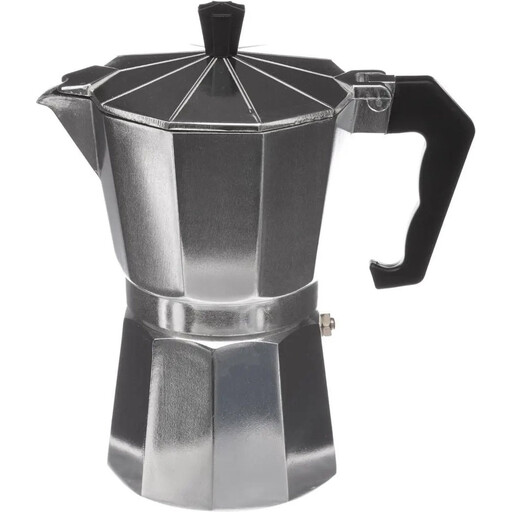
MATCH FOR: Budget-Conscious Beginners
Secret de Gourmet Aluminium Moka Pot - Silver, 6 Cups, 300 ml

Secret de Gourmet Aluminium Moka Pot - Silver, 6 Cups, 300 ml

Why This Fits Their Persona: Ideal for coffee lovers who want to enter the world of moka pots with a classic model without a large investment. The 6-cup size is perfect for daily use by one or two people.

How It Avoids the Trap

This model is designed for traditional stovetops (gas, electric, ceramic), thus avoiding the induction trap. The clear 300 ml capacity specification helps bypass the cup-size misunderstanding.

Key Advantage & Pros

Offers a classic design and proven functionality at an attractive price point. The aluminium material ensures fast and even heat distribution.
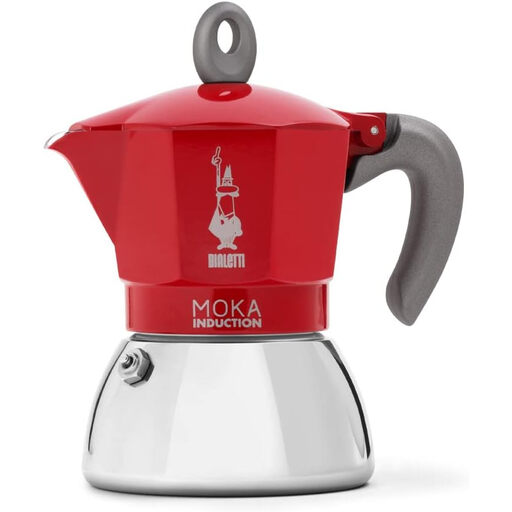
MATCH FOR: Modern Kitchen Owners
Bialetti Moka Induction Moka coffee pot - For all heat sources - Suitable for making 4 Cups - Red

Bialetti Moka Induction Moka coffee pot - For 4 Cups - Red

Why This Fits Their Persona: Perfect for users with an induction cooktop who don't want to give up the traditional brewing method and iconic design of Bialetti. The combination of stainless steel and aluminium merges functionality with tradition.

How It Avoids the Trap

Solves the core problem of incompatibility. The bi-metal stainless steel base is explicitly designed for induction hobs, while the aluminium top maintains the traditional coffee-making process.

Key Advantage & Pros

Universal compatibility with all stovetop types, including induction. It combines proven Bialetti quality with modern kitchen technology.
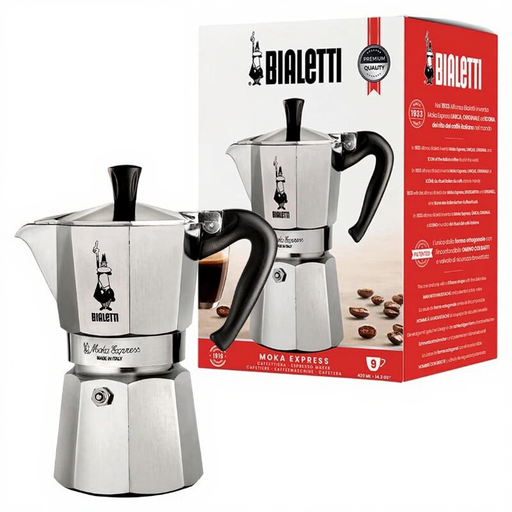
MATCH FOR: Traditionalists and Purists
Bialetti Moka Express Moka Kettle Coffee Pot - For open flame/electric stove - Suitable for making 3 Cups Silver

Bialetti Moka Express Moka Pot - For 3 Cups, Silver

Why This Fits Their Persona: For anyone who wants to celebrate the authentic, unadulterated Italian coffee ritual. The Bialetti Moka Express is the original, since 1933, and a design classic that stands for tradition and quality.

How It Avoids the Trap

As the original model, it is clearly defined for use on classic stovetops. Purists are familiar with the properties of aluminium and the correct, gentle cleaning method.

Key Advantage & Pros

The iconic octagonal design ensures optimal heat distribution. According to Bialetti, its quality is underscored by the patented safety valve and its manufacturing in Italy.

Looking for More Options?

We've compiled a complete, up-to-date list of products that fully meet these strict selection criteria and rigorous safety standards.

Frequently Asked Questions (FAQ)

Why does the coffee from my moka pot taste bitter?

A bitter taste can have several causes. It's often due to brewing for too long on excessive heat. As soon as the coffee begins to gurgle and rise into the top chamber, the pot should be removed from the hot surface. Otherwise, the coffee will be "scorched." Other reasons can include coffee grounds that are too fine or cleaning an aluminium pot with dish soap, which removes the protective patina and can lead to a metallic taste.

Can I use an aluminium stovetop pot on an induction cooktop?

No, a conventional stovetop pot made of aluminium is not magnetic and therefore will not work on an induction cooktop. There are special adapter plates that can serve as an intermediary, but their efficiency is often reduced. For regular use on an induction hob, we recommend purchasing a model explicitly declared as induction-compatible, made of stainless steel or with a bi-metal base.

How do I clean my moka pot correctly without damaging it?

The correct cleaning method depends on the material.

  • Aluminium pots: After cooling, unscrew the pot and rinse all parts with warm water only. Do not use dish soap or abrasive sponges. Dry all parts thoroughly before reassembling.
  • Stainless steel pots: These are generally easier to care for. Many models can be cleaned in the dishwasher, but it is advisable to check the manufacturer's instructions. Washing by hand with a mild dish soap is also a safe method. The safety valve should be checked regularly to ensure it is not blocked.