
Lieferung heute & morgen

Qualitätsgarantie

Willkommens-Angebote freischalten: KOSTENLOSE Lieferung | Bis zu 80 % RABATT | Kostenlose 30-Tage-JoyPlus-Testphase
App herunterladen
A moka pot brews coffee under pressure on the hob and is part of traditional Italian coffee culture in many households. Retailers also market these appliances as stovetop espresso makers, stovetop coffee makers, moka pots or espresso makers for the hob. However, these terms do not always indicate identical features.
If you are looking to buy a moka pot, there are three common mistakes you should avoid above all: choosing a model that is incompatible with your hob, selecting the wrong cup size and choosing a material that does not suit your daily routine.
Not every Italian coffee pot works on an induction hob. Classic aluminium models generally require a gas, electric or ceramic hob. For induction, you need a magnetic stainless steel base or a model that is specifically labelled as induction-compatible.
Some aluminium models mention an additional adaptor plate. This is not automatically included in the box. Before buying, check the product description and the information about compatible hob types.
With a moka pot, the specification “1 cup”, “3 cups” or “6 cups” usually refers to small Italian espresso cups, not large coffee mugs.
As a practical guide, depending on the model:
A 1-cup stovetop espresso maker is suitable for one person or for taking on the go. For two people, a 2- or 3-cup espresso maker is often a good fit. Families and households with several coffee drinkers may wish to consider a 6-cup stovetop coffee maker. Wherever possible, fill the pot with the intended amount, as a larger pot will not automatically brew smaller portions evenly.
An aluminium espresso maker is widely used for classic models and is generally not suitable for the dishwasher. Depending on its design, a stainless steel espresso maker may be better suited to an induction hob, but it is not automatically dishwasher-safe either.
For many products, cleaning with clean water and drying all individual parts thoroughly is recommended. According to manufacturers’ instructions, washing-up liquid or the dishwasher may affect the material, seals or the flavour of the coffee. You should also check the seal, filter and safety valve regularly.
Look for clear information stating whether the model is suitable for:
A moka pot for induction usually has a stainless steel boiler or a suitable magnetic base. Depending on the version, the classic aluminium Bialetti Moka Express is not directly suitable for induction. The product details should therefore explicitly state whether an adaptor is required.
The nominal cup count is more important than the pot’s external size. A stated capacity of 300 ml does not necessarily correspond to six large cups; it usually means six small portions. You should therefore also check the capacity in millilitres.
1- or 2-cup models are suitable for singles. Couples often choose a 3-cup espresso maker. A 6-cup moka pot holding around 270 to 300 ml is better suited to several people or to those who want to serve a larger quantity at once.
Fill the water up to the mark or just below the safety valve. Put the coffee grounds in the filter without pressing them down firmly. Screw the pot together securely and heat it at a medium temperature. Once the characteristic brewing sound has stopped, turn off the heat.
An undamaged safety valve, a heat-resistant handle and sufficient clearance between the handle and the flame are important. Never leave the moka pot unattended while it is in use, and only open it once it has cooled down.
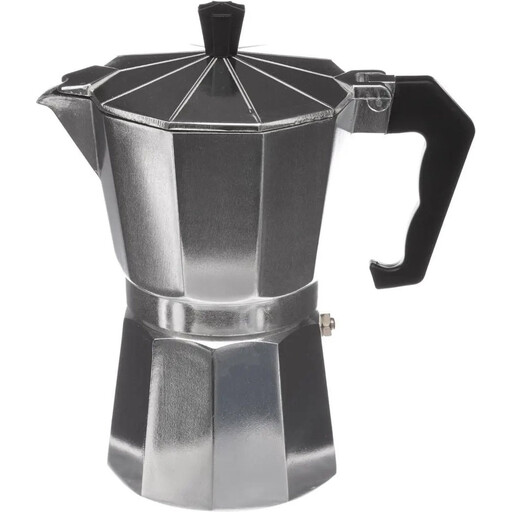
Why this product suits this profile: With a capacity of approximately 300 ml, this aluminium moka pot is suitable for gas, electric, ceramic and halogen hobs. It is therefore a good choice for households without induction that want to prepare several small portions.
The information about compatible hob types and the 300 ml capacity makes it easier to check suitability before buying. Its lack of induction compatibility prevents unrealistic expectations.
Aluminium body, 300 ml capacity and hand washing with mild soap according to the product description.
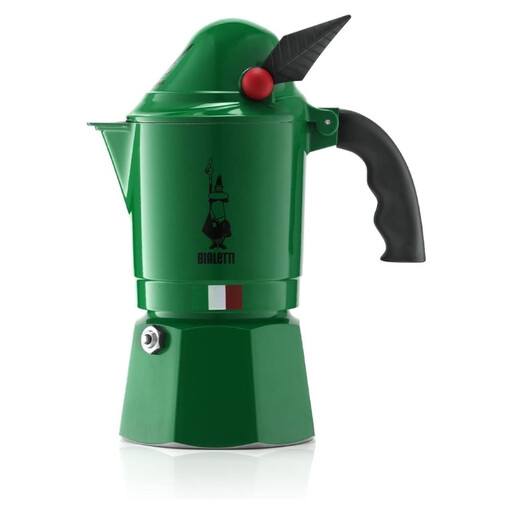
Why this product suits this profile: The 3-cup version is designed to make approximately 130 ml of coffee and is made from aluminium according to the product description. It is aimed at couples or individuals who prefer a compact, classic Bialetti pot.
The cup size is accompanied by an approximate millilitre measurement. According to the description, a Bialetti adaptor plate is required for induction hobs.
3-cup format, ergonomic handle and integrated safety valve according to the product details.
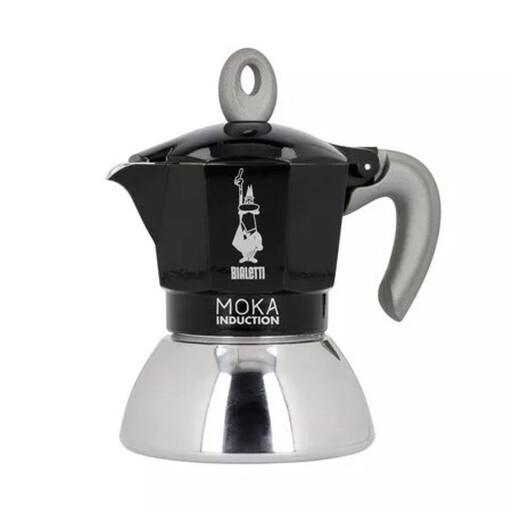
Why this product suits this profile: The Moka Induction is suitable for gas, electric and induction hobs and offers a capacity of 300 ml. This makes it an appealing option for households with different hob types or for anyone who wants to prepare a larger portion of coffee.
Its induction compatibility is stated explicitly. At the same time, the product description specifies that the pot is not dishwasher-safe.
A combination of stainless steel and aluminium components, 300 ml capacity and manual operation.
We have put together a complete, regularly updated list of products that fully meet these strict selection criteria and the safety regulations applicable in the EU.
For consistent results, follow these steps:
For camping enthusiasts, a small 1- or 2-cup espresso maker is a practical choice, provided the cooking surface you use is compatible with the pot. Direct compatibility is particularly important when using an induction hob.
In German shops, both terms are often used interchangeably. A moka pot brews coffee at a higher pressure than a filter coffee machine, but it does not necessarily reach the technical conditions of a portafilter machine. The result is a strong coffee in the style of an Italian espresso.
Choose a model whose product details explicitly state that it is suitable for induction hobs. A classic aluminium espresso maker is not automatically compatible. Some Bialetti Moka Express models require an additional adaptor plate.
Its service life depends on the material, care and condition of the seal, filter and safety valve. If there is visible damage, a porous seal or a blocked valve, the pot should no longer be used. Regular hand washing and thorough drying help preserve the individual components.