
Lieferung heute & morgen

Qualitätsgarantie

Willkommens-Angebote freischalten: KOSTENLOSE Lieferung | Bis zu 80 % RABATT | Kostenlose 30-Tage-JoyPlus-Testphase
App herunterladen
Buying a new stovetop espresso maker seems simple, but many coffee lovers are disappointed shortly after their purchase. An unsuitable model quickly ends up in the back of a cupboard because it doesn't work on the stove, the coffee tastes bad, or the size is impractical for daily needs. Before you make a decision, you should know the three most common pitfalls that lead to buyer's remorse.
This guide will help you avoid these mistakes and find the perfect Moka pot for your needs.
To choose the right Moka pot, you should check three core technical aspects. These determine its functionality, durability, and the taste of your coffee.
The material of the Moka pot is more than just a matter of aesthetics. It has a direct influence on the coffee's aroma and maintenance.
The most critical technical question is compatibility with your type of stove. While gas and electric (ceramic) stoves work with almost all models, induction cooktops require a special pot.
The size specification on a Moka pot is one of the most common reasons for dissatisfaction. The stated number of cups refers to small Italian espresso cups (approx. 30–50 ml per cup), not standard coffee mugs (approx. 150–200 ml).
Assess your needs realistically to avoid having to brew multiple batches in a row.
Here are some recommendations tailored to different user profiles and their requirements.
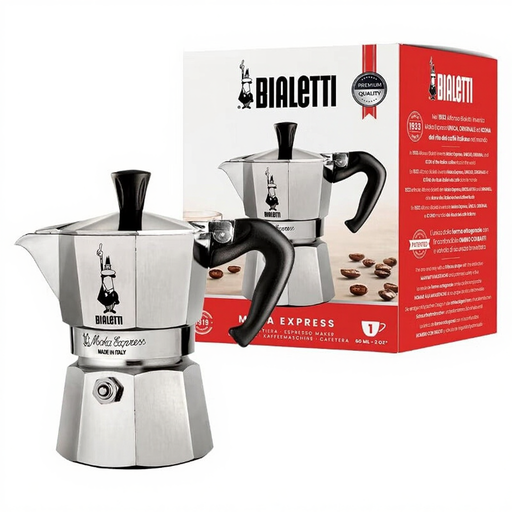
Why This Fits Their Persona: For purists who appreciate the authentic ritual and traditional taste of an Italian Moka. The iconic design and aluminum material represent the classic brewing method. The 6-cup size is practical for daily use.
This model bypasses the material misunderstanding by deliberately using traditional aluminum, which develops a patina for a full-bodied aroma when cared for correctly (rinse with water only).
According to the manufacturer, Bialetti, the octagonal design ensures optimal heat distribution. The result is a strong, aromatic coffee, just as it has been prepared in Italy for decades.
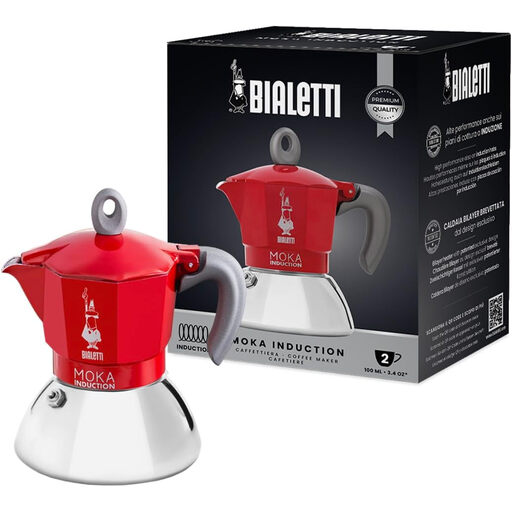
Why This Fits Their Persona: Perfect for the modern household with an induction cooktop. This model combines the classic octagonal aluminum top with a stainless steel boiler, making it suitable for all stove types, including induction.
Directly solves the induction trap problem. You don't have to sacrifice the traditional Moka experience just because you have a modern stove. The compatibility is clearly stated.
The bi-layer technology of the boiler (steel on the outside, aluminum on the inside) ensures efficient heat distribution on induction fields while preserving the characteristic flavor.
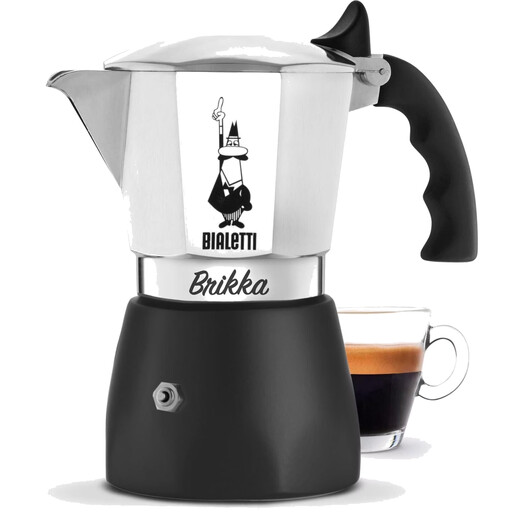
Why This Fits Their Persona: For coffee drinkers who want a crema from their stovetop pot that rivals one from a portafilter machine. The Brikka is specially designed to produce coffee with a thick, hazelnut-brown layer of foam.
This model counters the expectation that a Moka pot can't produce crema. It delivers a result that is closer to an espresso from a more expensive machine, without the complexity and price.
The patented pressure valve creates higher pressure than conventional Moka pots. This leads to a more intense extraction and the characteristic crema formation.
We've compiled a complete, up-to-date list of products that fully meet these strict selection criteria and safety standards.
Cleaning depends on the material. An aluminum Moka pot should only be rinsed with warm water after it has cooled down and then dried thoroughly. Do not use soap, as it attacks the flavor-enhancing patina. Stainless steel models are less sensitive and can often be cleaned with mild soap, but always check the manufacturer's instructions. The dishwasher is off-limits for most models.
A bitter taste can be caused by coffee grounds that are too fine, tamping the grounds too firmly in the filter, or heating the pot for too long. Remove the pot from the stove as soon as the characteristic gurgling sound begins. A metallic taste often occurs with new aluminum pots or if they have been cleaned with soap. For the first 2-3 uses, brew with water only or with coffee grounds that you then discard to "season" the pot.
Although often called "stovetop espresso," the coffee from a Moka pot is not technically a true espresso. A Moka pot generates a pressure of about 1.5 to 2 bars, whereas a professional espresso machine operates at 9 bars or more. The result from the Moka pot is a very strong, concentrated coffee that sits somewhere between filter coffee and espresso, but it typically lacks the same dense crema and complexity of a true espresso (with the Brikka models being an exception).