
Lieferung heute & morgen

Qualitätsgarantie

Willkommens-Angebote freischalten: KOSTENLOSE Lieferung | Bis zu 80 % RABATT | Kostenlose 30-Tage-JoyPlus-Testphase
App herunterladen
A Moka pot is compact, manually operated and does not require an electric pump. However, models vary considerably in hob compatibility, capacity, materials and cleaning requirements. If you focus only on colour or brand name, you could easily buy a pot that is not compatible with your hob or that makes considerably more coffee than you need.
The term “espresso maker” is commonly used by retailers. Technically, however, a Moka pot produces a strong moka coffee, not espresso made with a portafilter machine. The design and intended use are therefore the most important factors when choosing one.
A classic aluminium Moka pot will normally work on gas, electric and ceramic hobs, but not directly on induction. Aluminium is not detected by an induction hob in the same way as magnetic stainless steel. Some classic Bialetti models require a separately available adapter.
If you have an induction hob, you should therefore specifically look for an induction espresso maker. Models with a stainless steel base or stainless steel boiler are structurally better suited to this type of hob. Even so, always check that “suitable for all hob types” is stated in the specific product description.
With Moka pots, one “cup” usually means a small Italian coffee cup of around 30 to 50 ml. A 1-cup Moka pot therefore does not automatically produce a large mug of coffee. Depending on the model, around 40 to 60 ml is typical, while a 3-cup Moka pot often holds around 130 ml and a 6-cup Moka pot approximately 260 to 300 ml.
The water reservoir should not be filled halfway according to how much coffee you need. The pot is designed for its stated capacity. For one person, a small size is usually more practical than a large pot containing surplus coffee.
Many Moka pots, particularly aluminium models, should only be washed by hand with clean water. Product data may inconsistently state that a model is “dishwasher-safe” in one place and “not dishwasher-safe” in another. The care instructions provided by the manufacturer are the ones that matter.
With aluminium, aggressive cleaning products can alter the surface. For an Italian coffee maker with a sealing ring and safety valve, it is best to take all parts apart once cool, rinse them with water and allow them to dry completely.
Aluminium conducts heat quickly and is widely used for classic Moka pots. It is lightweight, but not every aluminium model is suitable for induction. Stainless steel is corrosion-resistant and is often used in modern induction models. Some products combine an aluminium upper section with a stainless steel boiler.
More important than making a general judgement about the material are hob compatibility, the seal, safety valve, handle and availability of spare parts. A heat-resistant handle should be a safe distance from the heat source and provide a secure grip.
The stated millilitre capacity is more useful for comparison than the cup count. As a general guide:
These quantities apply to the design of the individual pot. A 6-cup stovetop coffee maker is therefore not automatically a flexible option for two small servings.
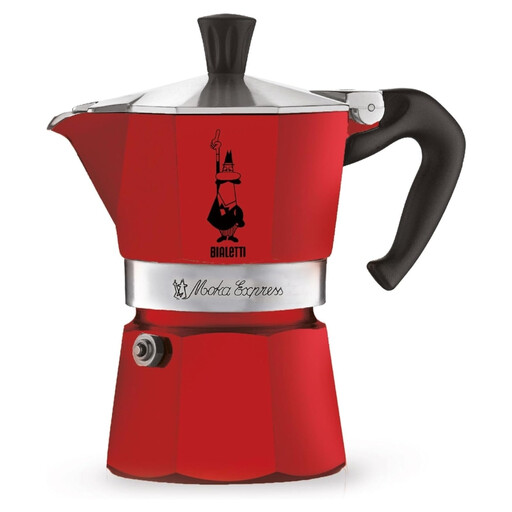
Why this product suits this profile: This compact aluminium pot is designed for a small serving and works manually on gas and electric hobs. It is ideal for households wanting to try the Moka pot method without investing in an electric machine.
The stated 1-cup size clearly limits the brewing quantity. Important: according to the product information, this aluminium model is not suitable for induction.
Aluminium body, manual operation and a small capacity for individual servings. It must be cleaned by hand.
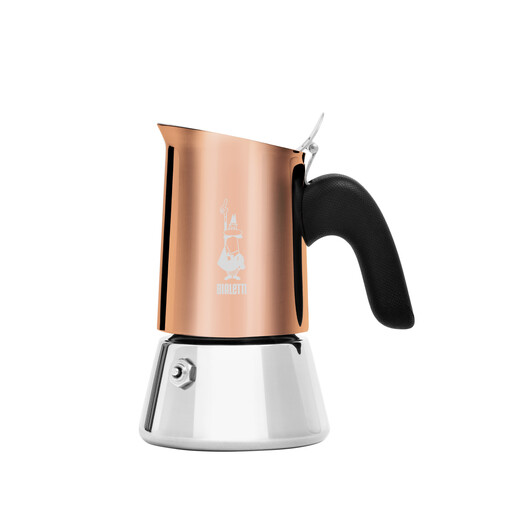
Why this product suits this profile: According to the product description, this model is made from 18/10 stainless steel and is suitable for all hob types, including induction. Its 2-cup size is a good fit for smaller households with different hobs.
Its induction compatibility is explicitly stated. This removes any uncertainty about whether a classic aluminium body will work directly on an induction hob.
18/10 stainless steel, manual brewing and suitability for gas, electric, ceramic and induction hobs according to the product information.
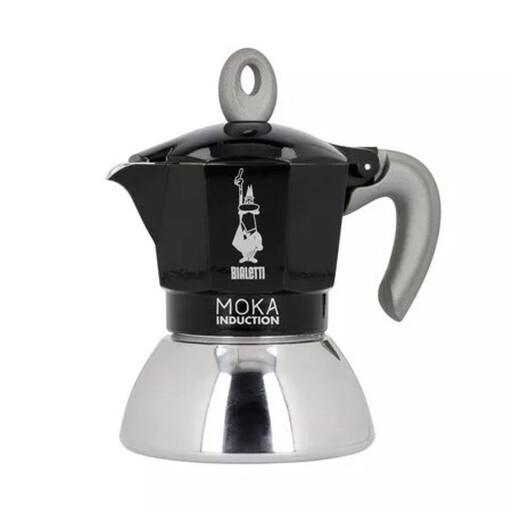
Why this product suits this profile: With a capacity of around 300 ml, this stovetop coffee maker is designed for several small servings. According to the product information, it is suitable for electric, gas and induction hobs.
The larger capacity means you do not need to brew several times when serving multiple people. Its stated hob compatibility also includes induction.
300 ml capacity and a body made from stainless steel and aluminium according to the product data. The pot is not dishwasher-safe.
A Moka pot is not designed for coffee capsules or unsuitable liquids. The safety valve must not be blocked.
We have put together a complete, regularly updated list of products that fully meet these strict selection criteria and the safety regulations applicable in the EU.
Only models explicitly stated to be induction-compatible should be used directly on an induction hob. Depending on the manufacturer, classic aluminium Moka pots require a suitable adapter. Stainless steel models or variants with a stainless steel boiler are often designed for induction.
Its lifespan depends on the material, frequency of use, seal and care. With regular use, the sealing ring and filter screen should be checked and replaced if worn. The pot should not be heated when empty and should be dried completely after cleaning. The manufacturer’s instructions and the statutory guarantee remain decisive.
The pot itself does not need to be connected to a power supply. Energy is only used to heat the water on the hob. Running costs therefore mainly consist of ground coffee and the energy consumption of the particular hob. Choosing a suitable serving size helps avoid unnecessary quantities and reheating.