
Lieferung heute & morgen

Qualitätsgarantie

Willkommens-Angebote freischalten: KOSTENLOSE Lieferung | Bis zu 80 % RABATT | Kostenlose 30-Tage-JoyPlus-Testphase
App herunterladen
A Moka pot lets you prepare coffee manually on the hob, without capsules or an electric brewing system. However, models vary considerably in terms of hob compatibility, capacity, material and care requirements. If you focus only on the colour or brand name, you could easily buy a stovetop coffee maker that is not suitable for your hob or everyday needs.
A classic aluminium pot such as the Bialetti Moka Express will generally work on gas, electric and ceramic hobs. Aluminium alone is not sufficient for an induction hob, however. Some models require a separate adapter plate, while others have a stainless steel boiler or an induction-compatible base.
Before buying, always check the specific statement “suitable for induction”. A general reference to several hob types is not a substitute for this information.
With a Moka pot, “1 cup” normally means a small portion, not a large mug of coffee. Depending on the model, capacities are approximately:
Check the actual capacity in millilitres before buying. If you want a large mug of coffee in the morning, you may need a larger pot or several brewing cycles.
Many Moka pots are not dishwasher-safe. Cleaning products can damage surfaces or leave residues that affect the flavour. Aluminium and stainless steel models should therefore generally be rinsed with water and dried thoroughly. For individual products, the manufacturer may recommend gentle hand washing. The instructions on the relevant product page should always be followed.
With an espresso maker for a gas hob, the flame should not extend beyond the base. For an espresso maker for an electric hob or ceramic hob, a flat, stable base is useful. If you have an induction hob, look specifically for an espresso maker for induction.
Models with stainless steel boilers are often designed for induction. With a classic aluminium pot, an adapter plate may be required. The size of the hob also matters: the heating area should match the diameter of the pot’s base.
Aluminium is widely used for traditional Moka pots and is comparatively lightweight. Stainless steel offers a different material option and is found in many induction-compatible models. Also look for:
A pot with a reusable filter produces no capsule waste during regular use. This makes the Italian coffee maker a manual alternative for households that want to control the brewing process themselves.
The size should match your actual consumption. A 1-cup Moka pot is suitable for singles who only want to prepare a small portion. Two cups are ideal for couples or two small servings. Three cups are suitable for moderate requirements. A 6-cup Moka pot with a capacity of around 300 ml makes sense when several people will be drinking coffee one after another.
The pot should not be partially filled unless the manufacturer expressly permits this. Water is usually filled up to the safety valve mark, while the ground coffee is placed loosely in the filter without tamping it down.
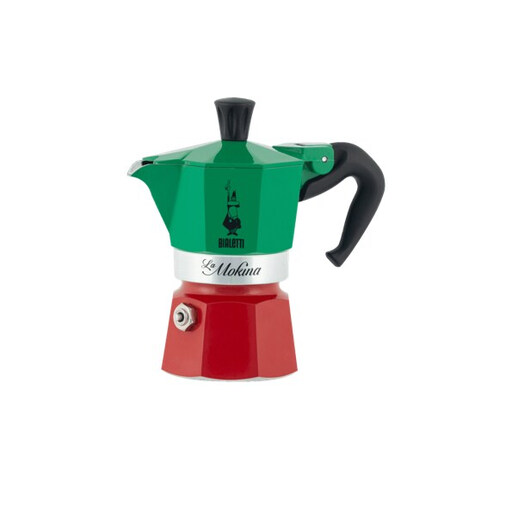
Why this product suits this profile: With a capacity of 40 ml, this aluminium model is designed for one small serving. It is suitable for singles with gas, electric or ceramic hobs who are looking for a compact stovetop coffee maker.
Its lack of induction compatibility is clearly stated. This makes it easy to check whether the model is suitable for your hob before buying.
40 ml capacity, aluminium body and a dismantlable design for hand cleaning.
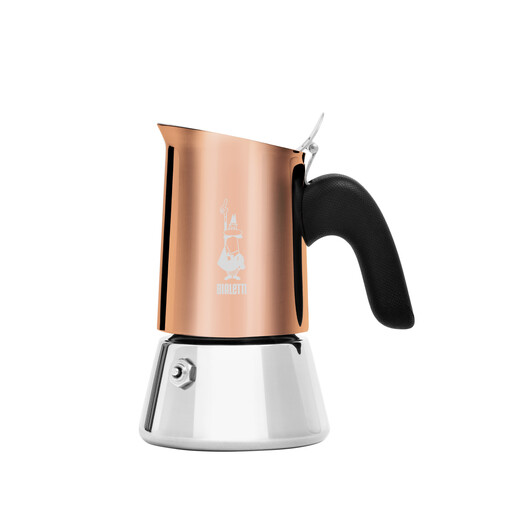
Why this product suits this profile: This 2-cup pot made from 18/10 stainless steel is suitable for households looking for a compact, manual solution with induction compatibility.
The product description expressly states that it is suitable for all hob types, including induction. Hand cleaning is also specified.
18/10 stainless steel, 2-cup design and use on induction, gas, electric and ceramic hobs.
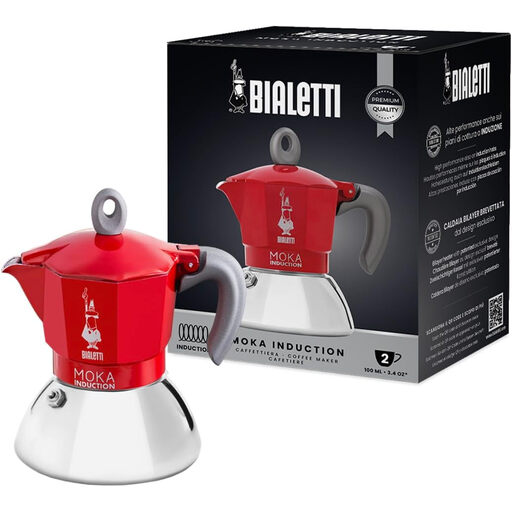
Why this product suits this profile: This manual 2-cup pot combines an aluminium upper section with a stainless steel boiler and, according to the product information, is suitable for all hob types.
The material combination and stated induction compatibility reduce the risk of ordering a classic aluminium pot for the wrong hob.
90 ml output, reusable filter and manual operation without capsules.
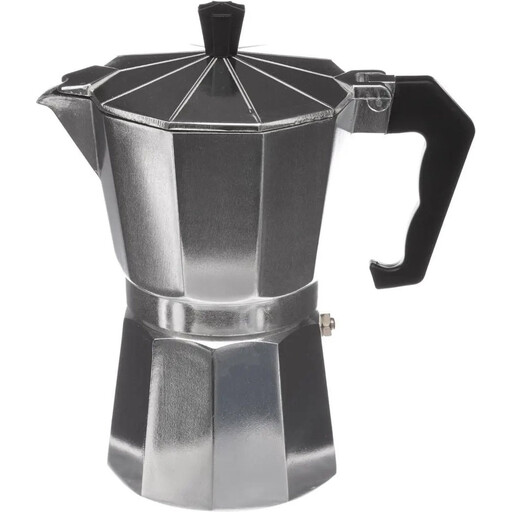
Why this product suits this profile: With a capacity of around 300 ml, it is suitable for several small servings. According to the product information, it can be used on gas, electric, ceramic and halogen hobs.
The cup count is given together with the capacity in millilitres. This makes it easier to assess your requirements than relying on the description “6 cups” alone.
300 ml capacity, aluminium construction and stated use on several non-induction hob types.
We have put together a complete, regularly updated list of products that fully meet these strict selection criteria and the safety regulations applicable in the EU.
The pot becomes hot during use. Only use the handle after removing it from the hob, and do not open the chamber while it is under pressure.
Not every model is. Classic aluminium pots, such as many versions of the Bialetti Moka Express, generally require an adapter plate. An espresso maker for induction is expressly described as induction-compatible in the product description and often has a stainless steel base or stainless steel boiler.
Its lifespan depends on the material, sealing ring, filter screen and care. A Moka pot without cracks or deformation can be used for a long time. Seals and filters are wear parts and should be checked and replaced if necessary when there is visible wear, leakage or a change in brewing performance.
Ongoing costs depend on the type of coffee, dosage and purchase price. Ground coffee generally produces no capsule waste, while buying a stovetop coffee maker is a one-off expense. There are also no electricity costs for an integrated heating system, as the pot is heated on your existing hob.