Developers who work with multiple windows
If you want to keep your editor, local data view, documentation and app preview visible at the same time, choose a screen size and resolution that suit your window layout and text scaling.


A 27-inch QHD monitor can be a good fit if you want to view code, documentation and an app preview side by side. If you’d like more vertical space or a sharper image, compare 3:2 models and 4K displays. Then check text readability at your preferred scaling, the space available on your desk, and whether the monitor and computer have the video, data and charging features you need. Local storage of lending data is handled by the app on your computer, not by the monitor.
If you want to keep your editor, local data view, documentation and app preview visible at the same time, choose a screen size and resolution that suit your window layout and text scaling.
If you regularly use a laptop with your monitor, check that the connections support video, peripherals and the power your laptop needs.
For longer working sessions, the right screen position and a display free from distracting reflections are important factors. Germany’s ASR A6 guidelines from the Federal Institute for Occupational Safety and Health apply to workplaces and teleworking environments within their scope.
| What matters when buying | What to check | Who it matters to |
|---|---|---|
| Space for code and previews | Compare the native resolution, aspect ratio and text scaling on the computer you plan to use. | If you want to read your editor and app preview at the same time, a suitable window layout matters more than a high pixel count alone. Around 36 % of consumers prioritise screen space. |
| Connections and laptop charging | Check the video input, USB-C DisplayPort Alt Mode or Thunderbolt, and stated charging power against your computer. | If you want to connect your laptop to the monitor and possibly charge it, check the capabilities of both devices. Around 29 % of consumers prioritise laptop connectivity. |
| Fit with your workspace | Check height adjustment, tilt, viewing angle and desk space; if you’re using a monitor arm, check that it can be mounted to your desk. | If you want to position the monitor to suit your workspace, adjustability and a suitable setup are essential. Around 21 % of consumers prioritise workspace adjustability. |
| Features that suit your needs | Decide how you want to arrange your windows and which connections you need, then compare only the features that matter to you. | If you don’t need extra docking features or a particularly large screen, you can look for a more straightforward setup. Around 14 % of consumers focus on cost and avoiding unnecessary features. |
The monitor doesn’t determine how your app stores or backs up its database. For example, SQLite describes a database as a file stored on a storage device.
Plan how your app will store and back up data on the computer you use, separately from your choice of monitor.
Video output and Power Delivery features vary by model. A USB-C port alone doesn’t tell you whether your computer and monitor support the one-cable connection you want.
Check the documented video and charging capabilities of both devices before planning a one-cable setup.
If the connection or power supply doesn’t work as needed, you may need an extra cable or a separate power supply.
3:2 and 16:18 displays support different window layouts from widescreen monitors. If you choose a model with a monitor arm, you’ll also need to check that it can be mounted to your desk.
Sketch out how you want to arrange your editor, data view and app preview, then check the space available and mounting options before you buy.
The Pro and UltraSharp models mentioned here differ in resolution, screen size and connectivity.
The RD280U is a 28.2-inch monitor with a 3:2 aspect ratio and dedicated coding modes.
The FlexScan EV2740X combines a 27-inch 4K display with USB-C docking.
The 28MQ780-B has a 16:18 aspect ratio, designed for workspaces where you want to stack content vertically.
The 27E1N1600AE/00 is a 27-inch QHD monitor with USB-C connectivity.
These monitors offer different options for app development, including QHD and 4K resolutions, widescreen displays, adjustable positioning and laptop connectivity on selected models.
 No image available
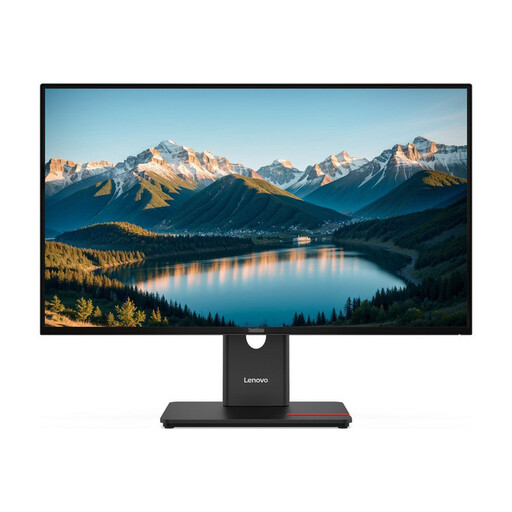
A good option if you’re looking for QHD and an adjustable screen for your development windows.
27 inches, 2560 × 1440 pixels, IPS display and built-in USB hub.
The stand can be adjusted for height, tilt, swivel and pivot.
 No image available
If you’re comparing 27-inch 4K monitors for code and app previews, this model is one to consider.
3840 × 2160 pixels, HDMI and DisplayPort.
The stand offers height adjustment, pivot, tilt and swivel, and the screen has a matt finish.
 No image available
A widescreen display could suit you if you want to arrange several development windows side by side. Make sure you have enough room for it at your workspace.
40 inches, 5120 × 2160 pixels, USB-C with 65 W Power Delivery and a USB hub.
PIP/PBP is specified for displaying several video sources at the same time.
 No image available
If you’re comparing 4K monitors with laptop connectivity, check that the stated charging power is enough for your computer.
3840 × 2160 pixels, USB-C with 90 W Power Delivery, plus HDMI and DisplayPort.
The stand can be adjusted for height, tilt, swivel and pivot; PIP/PBP is specified.
 No image available
A good option if you want to compare QHD with USB-C connectivity and an adjustable stand.
2560 × 1440 pixels, USB-C with up to 65 W Power Delivery and a USB hub.
The stand offers height adjustment, tilt, swivel and pivot.
No. Local storage is set up in the application on the computer you use. For example, SQLite describes a database as a file stored on a storage device. The monitor’s resolution and connections don’t replace this decision.
No, 4K isn’t a requirement for app development. Compare QHD and 4K based on your window layout, how readable text is at your chosen scaling, and the space available on your desk.
Position your screen and lighting to avoid distracting reflections, and adjust the setup to suit your workspace. Germany’s ASR A6 guidelines set out requirements for workplaces and teleworking environments within their scope; they don’t apply universally to every home workspace.
That depends on the connections and power ratings of both devices. Check that the monitor supports the video connection and Power Delivery you need, and that your laptop’s port and power requirements are compatible.
Compare the energy label for the specific monitor. If you buy as a consumer in Germany, your statutory rights against the seller are separate from any voluntary guarantee. The Verbraucherzentrale also explains the changes to repair rights that took effect on 31 July 2026, which cover devices including monitors.