Note checker
If you keep the source document and entry list open at the same time, you’ll need enough space to view both windows clearly.


When checking building survey notes, choose a monitor with enough usable space to view the source document and index together. For long stretches of text, suitable scaling and screen positioning also matter. Choose a size to suit your desk and working habits, and check the connections and adjustment options for your computer and workspace. A monitor won’t identify duplicate entries by itself: you’ll need the right feature in your work software.
If you keep the source document and entry list open at the same time, you’ll need enough space to view both windows clearly.
If you’re working with lots of small labels, adjust the text size, scaling and screen position to suit your eyesight. The Federal Institute for Occupational Safety and Health highlights the importance of matching screen position to your eyesight and body measurements.
If you connect your laptop regularly, suitable ports and a comfortable, adjustable working position are important.
First, decide whether you’d rather keep windows visible side by side or have individual views that are easy to read. Then check how the monitor can be set up and, if you use a laptop, whether the connections are compatible.
| Buying consideration | What to check | Who is it important to? |
|---|---|---|
| Space for side-by-side checking | Aspect ratio, resolution, actual window sizes and available desk width | If I want to check the source document and index side by side, I need room for both windows without losing sight of the available desk space. Around 36% of consumers prioritise side-by-side checking. |
| Note readability | Test text at your usual scaling and viewing distance; take your individual eyesight into account | If I’m working with lots of small labels, I want to read the text comfortably without relying on high resolution alone. Around 29% of consumers prioritise the readability of notes and labels. |
| Workspace adjustment | Check height adjustment, tilt and, where applicable, pivot, as well as how the monitor works with the available lighting | If I work in the same place regularly, I want to be able to position the screen to suit how I sit and see. Around 21% of consumers prioritise workspace adjustment. |
| Laptop connection | Check video output over USB-C, the power delivery required and suitable cables | If my laptop stays connected at my permanent workstation, I want to check in advance that video transmission and power supply are compatible. Around 14% of consumers prioritise laptop connectivity and power supply. |
Readability also depends on scaling, screen position and your individual eyesight.
Test a typical note at your intended scaling and from your usual seat.
A 34-inch display with a 21:9 aspect ratio can give you room for side-by-side windows, but it needs to suit your available desk space and seating position.
Measure the space you have in mind and check the dimensions and window layout of the specific model.
The monitor’s charging power alone doesn’t tell you whether your laptop supports the right video output or will receive enough power.
Before buying, compare your laptop’s video output and power requirements with the monitor’s connections.
If the devices aren’t compatible, you may need extra cables or a separate power supply for your laptop.
The Dell Pro P2725QE is a 27-inch 4K monitor with a USB-C hub for a permanent workstation.
The LG UltraWide 34U650A-B is a 34-inch monitor with a 21:9 aspect ratio, designed for using applications side by side.
The FlexScan EV2740X combines a 27-inch 4K screen with USB-C docking.
The ThinkVision T27QD-40 is an example of a 27-inch QHD monitor with USB-C docking.
The ProArt PA279CRV is a 27-inch 4K model with pivot and USB-C.
This selection from Joybuy includes monitors for viewing content side by side, displaying high-resolution text and adjusting your setup for a permanent workstation.
 No image available
The wide format is useful for checking notes against entries when you want both views on screen at the same time.
40 inches, 5120 × 2160 pixels, 21:9, PIP/PBP, height-adjustable stand and USB-C with 65 W Power Delivery.
 No image available
For text-heavy views on a 27-inch screen, the stated resolution and split-screen features are useful points to consider.
3840 × 2160 pixels, IPS, 120 Hz, PIP/PBP, USB-C with 90 W Power Delivery, plus a height-adjustable stand and pivot.
 No image available
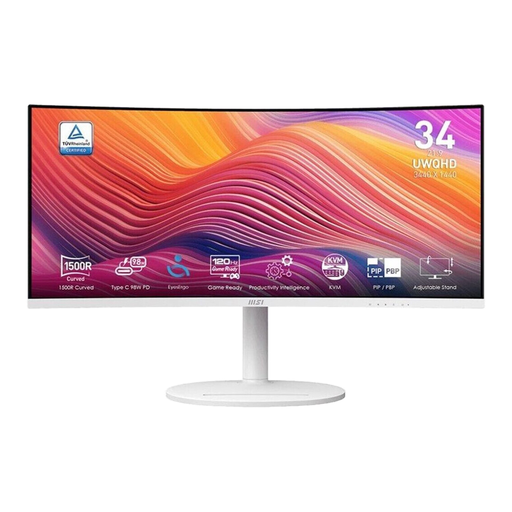
The 34-inch format is an option if you want to display source notes and the index side by side and have enough desk space.
3440 × 1440 pixels, 21:9, curved display, VA panel and 120 Hz.
 No image available
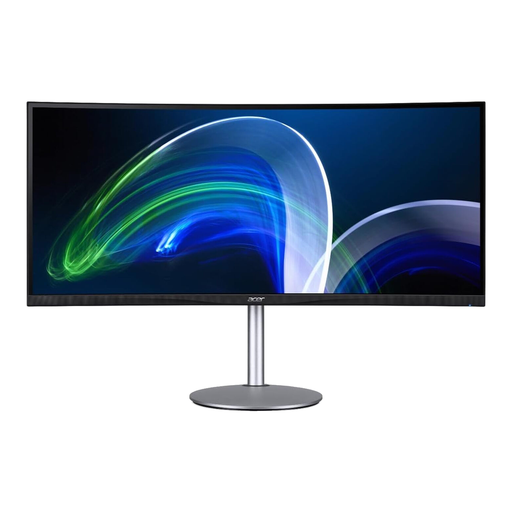
The wide display could suit checking notes and entries side by side, as long as the monitor fits on your desk.
37.5 inches, 21:9, 3840 × 1600 pixels and 75 Hz.
 No image available
This monitor is worth considering for a permanent workstation with a laptop, provided your computer’s connections are compatible with its docking features.
27 inches, WQHD, IPS, 100 Hz, USB-C with 98 W Power Delivery, daisy chain, KVM and integrated webcam.
No. The monitor displays the source notes and entry list; duplicate detection needs to happen in the software you use or as part of your workflow. More screen space can make it easier to compare items visually, but it won’t replace that check.
Adjust the screen position and text scaling to suit your eyesight and workspace. The Federal Institute for Occupational Safety and Health notes that screen position, individual eyesight and, where necessary, your glasses should all work together.
You can only tell by checking both devices: your laptop must support the right video output, and the specific monitor must provide enough power for your intended use. Listed model specifications range from 94 W for the EIZO FlexScan EV2740X to 100 W for the Lenovo ThinkVision T27QD-40; also check your laptop’s requirements.
For a consumer purchase, your statutory rights against the seller are separate from any voluntary guarantee. The Verbraucherzentrale generally describes a two-year statutory warranty period. It also explains that, for sales contracts from 31 July 2026, this period can be extended once by twelve months if you choose a repair when a fault occurs.
ASR A6 does not establish a general requirement to buy a 4K monitor. The Federal Institute for Occupational Safety and Health sets out requirements for screen-based work within the relevant scope; whether the rules apply to your workstation depends on how it is classified.