People who read code and documentation
If you keep longer sections of code and locally stored guides open at the same time, screen height, text clarity and comfortable scaling are important factors to consider.


If you mainly read code and longer locally stored documents one above the other, consider a taller format such as 3:2. For an editor and preview side by side, check that both fit at a comfortable, readable scaling. At a laptop workstation, check video output, charging power and, where relevant, KVM compatibility against your computer’s requirements separately. The stand also needs to suit your desk.
If you keep longer sections of code and locally stored guides open at the same time, screen height, text clarity and comfortable scaling are important factors to consider.
If you check the prototype planner in your browser, you’ll need enough room for the editor and preview side by side, without making the text so small that it’s difficult to read.
If you want to connect your workstation with fewer cables or switch between two computers, check video output, power delivery and, where relevant, KVM compatibility separately.
A good fit if: you often read longer sections of code and local documentation vertically, and have enough width available.
The trade-off: At a similar screen size, this format prioritises height more than a 16:9 screen. BenQ lists the RD280U at 60 Hz, so bear that in mind if a high refresh rate matters to you.
A good fit if: you want the editor and browser preview to remain readable side by side at your preferred text size.
The trade-off: QHD has fewer pixels than the 4K models mentioned here. A USB hub alone doesn’t confirm USB-C docking or a particular charging power.
A good fit if: you want finer text or detailed previews and are happy to adjust the scaling to suit your needs.
The trade-off: More pixels don’t automatically mean more usable space for windows. Docking and charging power vary by model, so make sure they suit your computer.
When choosing a monitor for coding and offline documentation, consider the format, resolution and scaling you can actually read comfortably together. The proportions below each refer to the most important buying priority.
| Priority | What to check | Especially important for |
|---|---|---|
| Reading code and documentation | Compare the aspect ratio, native resolution and readable operating system scaling. BenQ lists the RD280U as 3:2 with 3840 × 2560 pixels; EIZO lists the EV2740X as 4K. | When I keep code and locally stored guides open for a long time, a comfortable, readable display matters to me. Around 31% of consumers prioritise being able to read code and documentation clearly. |
| Editor and preview side by side | Try your usual window layout at your preferred text size. With 27-inch QHD and 4K screens, factor in scaling too, rather than assuming that the pixel count alone determines how much usable space you’ll have. | When I want to see the editor and browser preview at the same time, enough room and readable text matter to me. Around 25% of consumers put this kind of side-by-side use first. |
| Connecting and charging a laptop | Check your laptop’s video output, the monitor input and Power Delivery output separately. For KVM, also check the connections to both computers. EIZO lists a maximum of 94 W for the EV2740X, while Dell lists 90 W for the U2724DE. | When I work on a laptop or switch between computers, I want to know which connections and charging power will actually work for me. Around 19% of consumers prioritise laptop connectivity. |
| Setting up your workspace | Check the height, tilt and, where relevant, pivot adjustment against the space available on your desk. The BAuA ASR A6 regulation covers screen-based work in workplaces and teleworking environments within its scope. | When I plan to spend long periods at my desk, having a screen I can position to suit me matters. Around 13% of consumers put adjustability and positioning first. |
| Balancing purchase price and energy use | Decide which features are essential, then compare the EU energy label and the energy consumption data for the specific model. An efficiency class alone can’t predict your individual electricity costs. | When I weigh up the purchase price and running costs together, I want to avoid paying for features I don’t need. Around 12% of consumers prioritise cost and energy use. |
With a higher resolution, you may find that increasing the text scaling makes things easier to read. What matters is how the format, resolution and scaling work together for your code, documentation and previews.
Try your usual window layout and text size before comparing 3:2, QHD and 4K.
Features vary by model: a connection label alone doesn’t confirm video output, sufficient charging power or a KVM switch.
Check the connections and power specifications for the exact monitor model against both computers and the connections you need.
Depending on your laptop, you may still need a separate power supply or a different connection.
An additional manufacturer’s warranty has its own terms and conditions. It’s separate from your statutory rights against the seller.
Keep your proof of purchase and check the warranty terms as well as your statutory rights. Your Europe’s EU consumer information explains the legal guarantee for goods in the EU.
The RD series includes the 28.2-inch RD280U, a 3:2 coding monitor that may be worth considering if you need extra screen height.
The UltraSharp U2724DE combines a 27-inch QHD display with a Thunderbolt 4 hub for compatible laptop workstations.
The FlexScan EV2740X is a 27-inch 4K office monitor with USB-C docking, LAN and KVM.
The 27UP850K-W is a 27-inch 4K IPS model with USB-C and an adjustable stand.
The Business Monitor 27B2G5500/00 is a 27-inch QHD office option with a 100 Hz refresh rate and a USB hub.
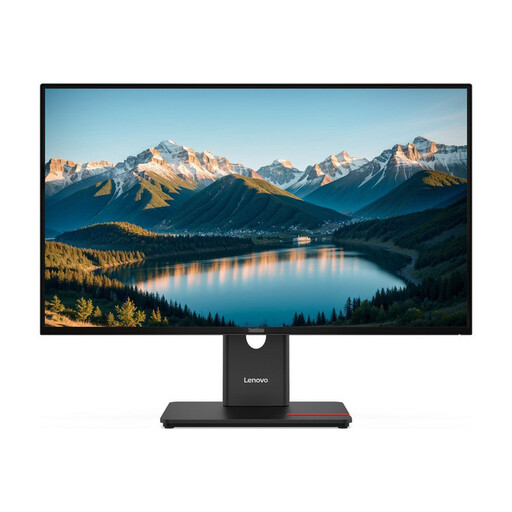
The following models are 27-inch QHD or 4K monitors for coding and viewing a preview alongside your editor. Check the connections and charging power separately if you plan to use one with a laptop.
 No image available
Could be a good fit if you’re looking for a 27-inch QHD workspace for coding and using windows side by side. Check the scaling with your usual text size.
27 inches, QHD with 2560 × 1440 pixels and an IPS panel.
The description lists a variable refresh rate of 48–120 Hz and a height-adjustable stand that tilts, swivels and pivots.
 No image available
A QHD option for coding and previews. Check that the curved screen suits your workspace.
27 inches, 2560 × 1440 pixels, Fast IPS panel and 144 Hz.
The product description lists a height-adjustable stand and HDMI and DisplayPort connections.
 No image available
Could be worth considering for detailed previews or a finer display. Check that your chosen text scaling leaves enough room for your windows.
27 inches, 3840 × 2160 pixels, Mini LED and Rapid IPS.
The product name lists 160 Hz in 4K mode and 320 Hz in FHD mode; according to the description, the stand is adjustable.
 No image available
Could be a good fit if you’re looking for a 27-inch 4K display for coding and previews. Factor in scaling when arranging your windows.
27 inches, 3840 × 2160 pixels and an IPS panel.
The description lists HDMI and DisplayPort connections, as well as a tilt range of −2 to 15 degrees.
 No image available
A curved QHD option for coding and previews. Check that the screen shape and available space suit your desk.
27 inches, 2560 × 1440 pixels, IPS panel and 180 Hz.
The product description lists a tilting stand and VESA mounting compatibility.
No. Whether documentation is available offline depends on whether it’s stored locally on your computer and supported by the software you use. Choose a monitor based on how comfortably you can read and arrange your documentation and code.
If you want the editor and preview visible at the same time, check that both fit across the screen at your preferred text size. If you tend to read longer sections of code and documents vertically, a taller format such as 3:2 may suit you better.
Not necessarily. Check your laptop’s video output, the compatible monitor input and Power Delivery output separately. EIZO specifically lists DisplayPort Alt Mode and up to 94 W via the USB-C upstream port for the EV2740X; this doesn’t apply to all USB-C monitors.
Check whether the specific model can be adjusted to a suitable height and tilt for your desk, and whether you have enough space for it. The BAuA ASR A6 regulation sets out requirements for screen-based work in workplaces and teleworking environments within its scope; it doesn’t create a blanket requirement for every private hobby workspace.
Use the EU energy label and the product data sheet for the specific model to compare energy consumption. The European Commission includes computer monitors among electronic displays, with an efficiency scale from A to G. To estimate your own costs, you’ll also need to know how long you use the monitor and your electricity tariff.