Developers who prioritise keyboard access
You’re checking whether the directory’s search, filters and entries can be reached and used without a mouse. This is about the website itself, not necessarily how you control the monitor.


First, choose a screen size that lets you read your editor, directory preview and testing tools comfortably at your preferred font size. Then match the format, positioning and connections to your workspace. A larger or higher-resolution monitor may let you keep more windows open side by side, but it won’t automatically make the website keyboard-accessible. You’ll need to test the directory’s features yourself using a keyboard, as described by the W3C Web Accessibility Initiative for web content. KVM or monitor hotkeys are most relevant if you switch between computers or want to adjust monitor settings without a mouse.
You’re checking whether the directory’s search, filters and entries can be reached and used without a mouse. This is about the website itself, not necessarily how you control the monitor.
You want to keep your code, browser preview and testing tools in view at the same time, so you’re comparing screen format, resolution and scaling.
You spend long periods at a screen or regularly connect a laptop, so you’re considering screen positioning, video connections and, where needed, power delivery over USB-C.
Start by deciding what matters most to you: vertical space for code, room for windows side by side, or the ability to switch between computers. Then check that the resolution, scaling, connections and positioning suit your particular workspace.
| Priority | What to check before buying | Who it matters to |
|---|---|---|
| Keyboard workflow | Test the website’s features with a keyboard yourself; check KVM and hotkey features on the specific model only if you need them. | If I want to test search, filters and dialogue boxes without a mouse, I keep testing the website separate from controlling the monitor. Around 36% of consumers prioritise a keyboard workflow. |
| Room for code and preview | Assess the format and resolution with your preferred font size and scaling; check how your intended window layout works in your own workspace. | If you need to read your editor, preview and testing tools at the same time, the usable layout matters more than screen size alone. Around 29% of consumers prioritise space for multiple windows. |
| Positioning in your workspace | Check the adjustment options and stand depth against the space available; consider reflections and viewing position. | If I spend long periods at a screen, I want to be able to position the monitor comfortably without taking up unnecessary desk space. Around 21% of consumers prioritise monitor positioning. |
| Laptop connectivity | Check that the video output, charging power required and available connections are compatible between your laptop and monitor. | If I connect a laptop, I want to make sure the picture and power supply work with that particular device. Around 14% of consumers prioritise laptop connectivity. |
KVM and monitor hotkeys won’t solve the problem if the directory’s own controls can’t be reached using a keyboard.
Test search, filters, dialogue boxes and the focus order directly on the website. Only make monitor hotkeys a buying priority if you also want to change inputs or adjust monitor settings without a mouse.
QHD, 4K, 3:2 and ultrawide formats use pixels and screen space differently. What matters is whether your windows remain readable at your preferred scaling and fit on your desk.
Plan your window layout and check how it looks at your preferred font size. Also compare the stand and connections on the specific model.
Depending on your workspace, you may also need a suitable mount.
A USB-C port alone doesn’t tell you whether your particular laptop can output video through it or receive enough power.
Check that the video output, power requirements, cable and connections you need are compatible with both devices.
You may also need a suitable cable or docking solution to connect your devices.
The details below apply to the specific models or product ranges mentioned; they aren’t a general assessment of each brand.
The P2725DE is a 27-inch QHD option to compare if you’re looking for a monitor with a USB-C hub for office work.
The 527pu from the Series 5 Pro range is a QHD USB-C option to compare for laptop and multi-screen workspaces.
The FlexScan EV2740X is a 27-inch 4K model with USB-C docking. Compatible FlexScan KVM models may be worth considering if you switch between computers.
The RD280U is a 3:2 option to compare if you need vertical space for code and lists.
The 346B1C/00 is a 34-inch ultrawide option to compare if you want windows side by side.
The ProArt PA279CRV is a 27-inch 4K option if you also work with colour or layouts as well as developing your directory.
The Joybuy models below cater for different needs, from QHD and ultrawide screens to a portable secondary display. Test the directory’s keyboard accessibility on the website itself, independently of the monitor.
 No image available
Could work as a QHD screen for an editor and preview side by side; check that both windows remain readable at your chosen scaling.
27 inches; 2560 × 1440 pixels; IPS; 260 Hz (OC 275 Hz); 1 ms GTG.
The refresh rate and response time are features of the model, but they don’t prove that the website is keyboard-accessible.
 No image available
The wide format could suit a layout with your editor, preview and other tools side by side; check that the screen will fit on your desk.
40 inches; 5120 × 2160 pixels; 21:9; IPS; 100 Hz; USB-C with 65 W Power Delivery; PIP/PBP.
The product description lists a height-adjustable stand; check that its adjustment options suit your workspace.
 No image available
The 21:9 format could suit you if you prefer to have your editor and preview side by side; check the space available and your ideal viewing distance.
34 inches; 3440 × 1440 pixels; 21:9; 1500R curve; VA; DisplayPort, HDMI and USB.
The product description lists an ergonomic stand and VESA mounting.
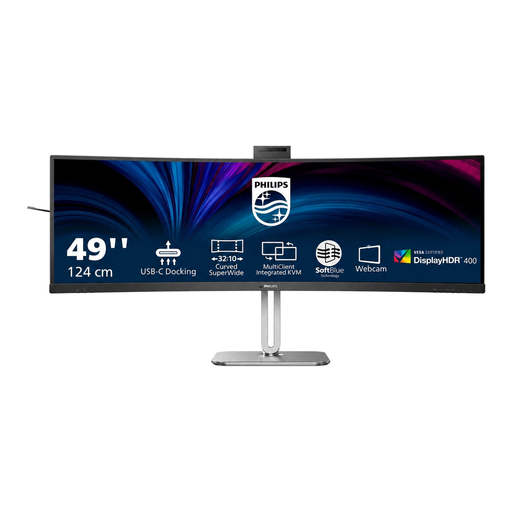 No image available
The wide Dual QHD screen could work well for several windows side by side; take the space required and positioning into account.
49 inches; 5120 × 1440 pixels; 32:9; 75 Hz; USB-C; HDMI and DisplayPort.
The product description recommends having two people install and transport it because of its size and weight.
 No image available
As a portable secondary screen, this model gives you another display to work with. At 18.5 inches, it offers less room for windows on screen at the same time than larger formats.
18.5 inches; 1920 × 1080 pixels; Full HD; IPS; 120 Hz; USB-C and Mini-HDMI.
Check that your connected device supports the video output you need through the port you plan to use.
No. The W3C Web Accessibility Initiative’s guidance on keyboard accessibility relates to the features of web content. Test the directory’s controls and workflows yourself using a keyboard. The monitor can display the website while you test it, but it can’t make it accessible for you.
No, it depends on the specific model and the software it supports. EIZO describes hotkey input selection using Screen InStyle for compatible FlexScan models. Check whether this feature is available for your monitor and setup.
Check that the screen position, reflections and space for your keyboard and other work equipment suit your desk. Germany’s ASR A6 covers display-screen workstations within its defined scope. Whether it applies to a particular workplace depends on its circumstances.
Check whether your setup needs an additional cable or monitor mount, and compare the EU energy label for the specific monitor. According to Your Europe, when consumers buy from a business seller, they generally have a minimum two-year statutory guarantee from the date they receive the goods. You shouldn’t assume this consumer right applies to business purchases without checking.
No, not simply because it’s a directory. According to the Federal Government’s Accessibility Agency, among other things, it depends on whether an e-commerce service covered by the Act is intended to lead to a consumer contract. The Act has applied to covered cases since 28 June 2025. The Agency notes an exemption for services provided by micro-enterprises with fewer than ten employees and annual turnover of no more than two million euros. Without knowing what the directory does and who operates it, it isn’t possible to determine how it should be classified.