Schema and SQL multitaskers
If you want to work with diagrams, queries and documentation side by side, consider screen size and resolution together. EIZO and Dell’s model specifications include high-resolution 27-inch options.


If you often have database schemas, SQL and documentation open at the same time, a 27-inch QHD monitor is a good option, provided you have enough desk space and a suitable viewing distance. On a small desk, an adjustable 23.8-inch monitor may be a better fit. USB-C docking or 4K is worth considering mainly if your laptop and workflow can make use of those features.
If you want to work with diagrams, queries and documentation side by side, consider screen size and resolution together. EIZO and Dell’s model specifications include high-resolution 27-inch options.
If there’s limited room for your monitor, laptop and input devices, pay attention to screen size and stand. Lenovo lists the ThinkVision T24i-30 as having a 23.8-inch display and an adjustable stand.
If you frequently connect and disconnect your laptop, USB-C can make things simpler – provided your laptop port and power requirements are compatible. EIZO and Philips list USB-C connectivity on selected models.
Start by comparing the space you have with the monitor’s native resolution. Then consider whether convenient connectivity and adjustability matter for your laptop and workspace.
| Consideration | What to check before buying | Who is it important to? |
|---|---|---|
| Keeping schemas and SQL in view | Consider screen size, native resolution, scaling and viewing distance together. | If I want to see my schema, SQL and documentation side by side, I need enough usable screen space. Around 26% of consumers put having a clear overview first. |
| Room on your desk | Measure the available desk space, along with the monitor’s width and depth including its stand. Consider VESA mounting only if you have a compatible mount. | If my desk also needs to accommodate my laptop and input devices, I need to consider the footprint of the whole monitor. Around 21% of consumers prioritise space requirements. |
| Features and cost | Only pay for features you’ll actually use, and check the total price of the specific model before buying. | If I only want to pay for features I need, I compare what’s included with how I actually work. Around 21% of consumers prioritise cost and features. |
| Connecting your laptop | Check your laptop port’s video output and power requirements against the monitor’s power delivery. Consider HDMI and DisplayPort as possible alternatives. | If I regularly connect and disconnect my laptop, I want to know whether the connection I prefer supports both video and power. Around 16% of consumers prioritise connection convenience. |
| Adjustable screen position | Check whether the height and tilt are adjustable, and whether the stand suits your seating position and available space. | If I want to adjust the screen to suit my seating position, I need the right adjustment options on the specific model. Around 16% of consumers prioritise ergonomics. |
A USB-C port on a monitor doesn’t, by itself, tell you whether your laptop can output video through it or receive enough power to charge. The power delivery specified varies by model.
Compare the video output supported by your laptop port and its power requirements with the specifications for the monitor you’re considering.
Depending on your laptop, you may need a separate charger, an extra cable or a different connection.
A larger screen isn’t automatically a better fit for a small desk or large diagrams. Resolution and the stand also affect how you can position the monitor and display content.
Measure the available space and compare the screen size, native resolution and stand of the specific model.
Your statutory rights apply to the seller; a warranty is a voluntary offer with its own terms and conditions.
Keep your proof of purchase. If there’s a fault, check your statutory rights and the warranty terms separately.
Dell Germany lists the S2725DC as a 27-inch QHD option with USB-C.
The ThinkVision T24i-30 is a compact 23.8-inch Full HD option with an adjustable stand.
Philips describes the 276B9/00 as a 27-inch QHD monitor with USB-C.
The 24U631A-B and 27U631A-B offer QHD options in different sizes.
The FlexScan EV2740X is a 27-inch 4K office monitor with USB-C docking and additional ports.
The selection includes high-resolution 27-inch monitors, a wider 34-inch option and a compact 23.8-inch model to suit different space and connectivity needs.
 No image available
For a high-resolution workspace with several items of content displayed at once.
27 inches, 3840 × 2160 pixels and an IPS panel.
Specifications include USB-C with 90 W Power Delivery, HDMI and DisplayPort, as well as height adjustment and PIP/PBP.
A one-cable setup requires a laptop with compatible video output and suitable charging requirements.
 No image available
For high-resolution diagrams and several connected devices, if the extra features suit your workflow.
27 inches; the product title lists a dual mode of 4K at 160 Hz and Full HD at 320 Hz.
Specifications include USB-C with 65 W, KVM, HDMI and DisplayPort. The stand is height-adjustable.
Your laptop port and power requirements must be compatible with the monitor for video and charging.
 No image available
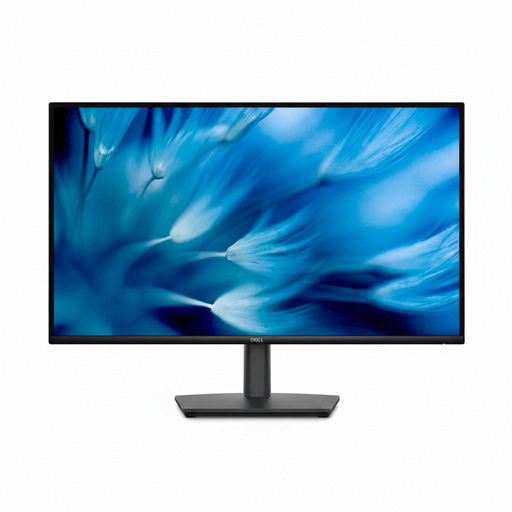
For working with several windows on a 27-inch screen, if you have enough space for it.
27 inches, 2560 × 1440 QHD and an IPS panel.
The stand supports height adjustment, tilt, swivel and pivot. HDMI and DisplayPort are listed.
 No image available
For viewing several items of content side by side, if you have room for a wide screen and enough desk space.
34 inches, 3440 × 1440 UWQHD, a VA panel and a 21:9 aspect ratio.
Specifications include height adjustment, tilt and swivel, as well as PIP/PBP.
A 34-inch screen takes up more space than a compact monitor.
 No image available
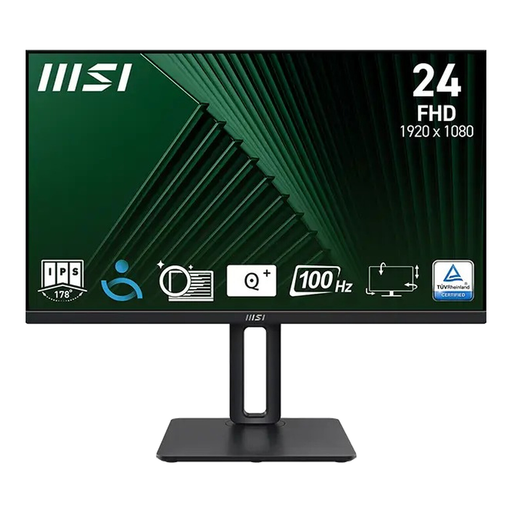
For a smaller desk, if a compact screen matters more to you than QHD resolution.
23.8 inches, Full HD and an IPS panel.
The stand supports height adjustment, tilt, swivel and pivot. HDMI, DisplayPort and VGA are listed.
Full HD has fewer pixels than QHD, so you may need to zoom in more or switch between windows when viewing large schemas.
A 23.8-inch monitor can be a good fit if you’re short on desk space and don’t mind zooming in or switching between windows. Lenovo lists the ThinkVision T24i-30 as a Full HD monitor; how easy diagrams are to read also depends on scaling and viewing distance.
Only if your laptop port supports the video output you need and the power delivery is suitable for your laptop. EIZO lists DisplayPort Alt Mode and up to 94 W over USB-C for the EV2740X; this doesn’t guarantee compatibility with every laptop.
Position the screen to suit your posture, eyesight and workspace. The Federal Institute for Occupational Safety and Health describes individual screen positioning as part of setting up a workstation; its guidance for offices isn’t a general legal requirement for a private student room.
Check the EU energy label and the product specifications for the specific model rather than relying on screen size alone. The EU lists monitors as a product group with an A-to-G energy label and directs consumers to EPREL for model information. Your electricity costs will also depend on factors such as how long you use the monitor and your electricity tariff.
For online purchases by consumers, there is generally a 14-day right to cancel, starting from the day you receive the goods. The consumer advice centre says that, for faulty new goods, you have statutory rights against the seller for two years after receiving them. This is separate from any voluntary warranty.