Writers working with lots of sources
If you want to keep your outline and research in view while you write, usable screen space and a clear window layout are important things to consider.


For a documentary film script with a section-by-section outline, a 27-inch QHD monitor is a sensible starting point if text and structure are your priorities. A 34-inch ultrawide is worth considering if you want your sources visible alongside your script and have enough desk space. A 27-inch 4K monitor is another option if you need finer detail or want to review images. Check text scaling, connectivity and the space available on your desk, too.
If you want to keep your outline and research in view while you write, usable screen space and a clear window layout are important things to consider.
For longer editing sessions, text size and screen position should suit your workspace. The German Federal Institute for Occupational Safety and Health (BAuA) recommends considering screen position alongside your individual vision requirements.
If you also review stills or video footage alongside your script, resolution and the manufacturer’s colour specifications may be relevant when choosing a monitor.
Start by deciding whether side-by-side windows, readable text, connecting a laptop or reviewing images matters most. Then check that the screen format and connections suit your workspace.
| What to consider | What to look for | Who it matters most to |
|---|---|---|
| Working with multiple windows | Match the aspect ratio and resolution to your preferred window layout and available desk width. | If I want to read my script, outline and research at the same time, the layout matters. Around 31% of consumers prioritise having multiple windows open side by side. |
| Readability and ergonomics | Check how text looks at your planned scaling, and whether the monitor’s height and tilt can be adjusted. The BAuA recommends considering screen position alongside your individual vision requirements. | For long writing sessions, I want to set the text size and screen position to suit my workspace. Around 25% of consumers prioritise readability and ergonomics. |
| Laptop connectivity | Compare your laptop’s video output and charging needs with the features of the specific monitor. BenQ specifies 65 W for the GW2790QT; EIZO lists a maximum of 94 W for the EV2740X. | If I want to connect my laptop through the monitor, I check the video output and charging requirements rather than looking at USB-C alone. Around 19% of consumers prioritise laptop connectivity that meets their needs. |
| Image review | Decide whether occasional image review is enough or whether colour specifications matter. ASUS lists 99% coverage of both DCI-P3 and Adobe RGB for the PA279CRV; these are manufacturer claims. | If I also assess still images, I want to compare resolution and model-specific colour specifications for the task. Around 13% of consumers prioritise reviewing visual material. |
| Desk space and features | Check the monitor’s dimensions, including its stand, against the space available on your desk, and only plan for the connections you need. | If desk space is limited, I want a format that suits my space and workflow. Around 12% of consumers prioritise desk space and the features they need. |
A higher pixel count alone doesn’t tell you how large text will appear at your preferred scaling or whether you’ll be able to read windows at the size you want.
Check your planned text size and window layout. Compare 4K with QHD or ultrawide options based on how you actually write and research.
A USB-C port on a monitor doesn’t, by itself, guarantee the video connection you need or enough power to charge your laptop. Charging wattage varies by model.
Compare your laptop’s video output and power requirements with the specifications for the monitor you’re considering. Depending on the combination of devices, you may need a separate power supply or a different connection.
A separate power supply or connection can add to the equipment on your desk.
A wide screen gives you more horizontal space, but it still needs to suit your desk and preferred viewing distance.
Measure the space available and think about which windows you’ll actually want open side by side before you buy.
The GW2790QT is a 27-inch QHD option with USB-C for a writing workspace.
According to Dell, the P2725QE combines a 27-inch screen and 4K resolution with a USB-C hub.
The FlexScan EV2740X is a 27-inch 4K option with USB-C docking and an Ethernet port.
The 34B1U5600CH/00 is a 34-inch ultrawide with 3440 × 1440 pixels, designed for working with windows side by side.
The ProArt PA279CRV is a 27-inch 4K model for writers who also assess visual material.
This selection includes 27-inch QHD and 4K monitors, as well as 34- and 40-inch ultrawide models for working with your script, outline and sources side by side.
 No image available
The 21:9 format is worth considering if you want your script, outline and research visible side by side and have enough width on your desk.
5120 × 2160 pixels; IPS; 100 Hz; USB-C with 65 W Power Delivery; PIP/PBP; height-adjustable stand.
 No image available
A 27-inch 4K monitor is an option if you want to consider finer detail or image review alongside your writing.
3840 × 2160 pixels; IPS; 120 Hz; HDR500; USB-C with 90 W Power Delivery; PIP/PBP; height-adjustable stand.
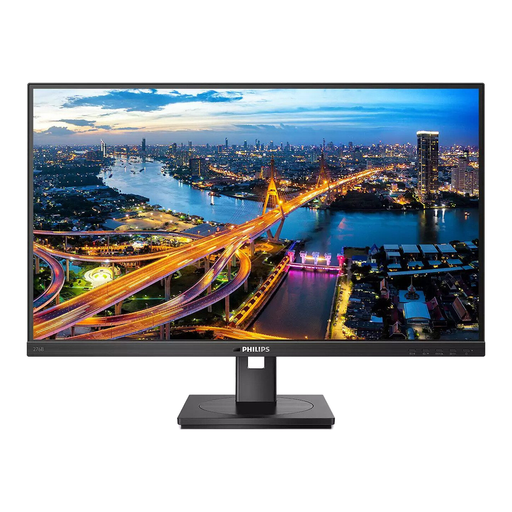 No image available
A 27-inch QHD model is worth considering if text and outlining are your priorities and you’re looking for a monitor with USB-C docking.
75 Hz; IPS; 350 cd/m²; height-adjustable stand with tilt, swivel and pivot.
 No image available
The 21:9 format could suit a workflow where you want to keep your script, outline and research open side by side. Measure the available space first.
WQHD with 3440 × 1440 pixels; 100 Hz; VA; 1500R; USB hub; height-adjustable stand.
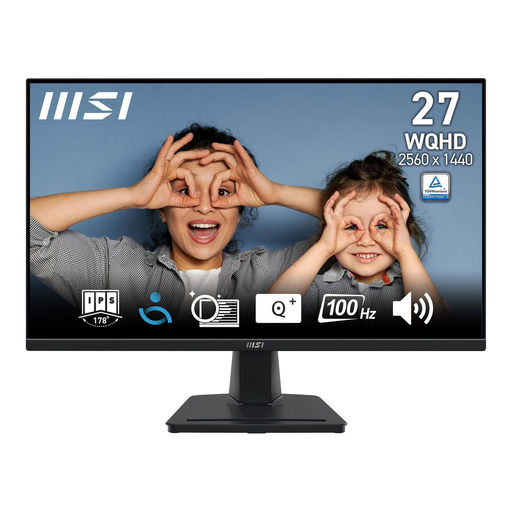 No image available
The 27-inch WQHD format is an option for working on a script and section-by-section outline. Check that the stand’s tilt adjustment suits your workspace.
2560 × 1440 pixels; IPS; 100 Hz; tiltable stand; HDMI 2.0b and DisplayPort.
No. What matters is which windows you want to see at the same time and whether the text is a comfortable size for you to read. A 27-inch QHD or 34-inch ultrawide monitor could also work. 4K is particularly worth considering if you need finer detail or want to review images.
Adjust the text size and screen position to suit your workspace. The BAuA recommends considering your workspace, individual vision requirements and screen position together; a single monitor specification can’t replace this adjustment.
Not without checking compatibility. Compare your laptop’s video output and power requirements with the features specifically listed for the monitor you’re considering. BenQ specifies 65 W for the GW2790QT; EIZO lists a maximum of 94 W for the EV2740X.
No. The German Environment Agency recommends collecting waste electrical equipment separately rather than putting it in household rubbish. Retailer take-back schemes are subject to their own terms and conditions.