Designers with limited desk space
If you need room for a keyboard and cards as well as your monitor, the actual dimensions of the screen and stand are crucial. PRAD describes the 23–25-inch size range as a good fit for desks with limited space.


First measure the usable desk space, including the monitor stand, then check that you can read the text and use the tools comfortably from your seated position. Full HD may be enough for individual cards that are mostly text. If you want to see the layout, word list and tools at the same time, WUXGA or QHD gives you more screen real estate. For colour cards that will be printed, a well-managed colour workflow matters more than a single colour-gamut figure: a monitor alone cannot guarantee a match with the print.
If you need room for a keyboard and cards as well as your monitor, the actual dimensions of the screen and stand are crucial. PRAD describes the 23–25-inch size range as a good fit for desks with limited space.
If you work with small text, word lists and layout tools at the same time, weigh the extra screen space against legibility and the right scaling. PRAD highlights the additional rows of pixels that WUXGA offers over Full HD for text-heavy views.
If you want to assess colours before printing, what matters is having the right colour workflow, not just a high colour-gamut figure. Adobe explains that monitor and printer colours can differ.
This guide focuses on the main consideration when choosing a monitor for designing flashcards at a small desk.
| Consideration | What to check | Who is this particularly important for? |
|---|---|---|
| Desk space and positioning | Measure your desk’s width and depth, then compare them with the monitor’s dimensions, including the stand. | If I need room for a keyboard and cards on my small desk, I check the space required for the whole monitor rather than just its screen size. Around 31% of consumers put available desk space first. |
| Legibility and layout space | Compare the resolution and aspect ratio, then check the scaling and text size from your seated position. | If I want to see words, my design and toolbars at the same time, I look for clearly legible text and enough screen space. Around 25% of consumers prioritise legibility and room for layout tools. |
| Colours before printing | Check the colour mode and calibration options, and assess a test print using the paper you’ll actually use. | If the colours on my printed cards matter to me, I consider the whole process, from monitor and profile to printer and paper. Around 25% of consumers put print colour assessment first. |
| Connections and adjustability | Check that the video connection and charging requirements match your computer, and confirm the adjustment options on the specific model. | If I want to connect the monitor to my existing computer and position it comfortably, I check the display connection, charging requirements and stand together. Around 19% of consumers prioritise connections and ergonomic adjustment. |
The screen size doesn’t tell you how much desk space the stand needs or how much room will be left for cards and input devices. For example, LG lists the 24BN650Y-W.AED as having an overall depth of 240 mm with the stand.
Compare the full dimensions of the specific model with your measured workspace.
More pixels can give you extra room for your layout, but text size also depends on scaling and your viewing distance.
Consider the resolution, scaling and your preferred text size together.
Monitors and printers can reproduce colours differently, and paper and colour profiles also affect the result. Adobe explains these differences as part of the colour management workflow.
If colour accuracy is important for your cards, plan to make a test print using your actual printing method.
The monitor’s power supply alone doesn’t confirm that your computer can output a picture through it or receive enough power to charge.
Check video and charging functions separately, and make sure the monitor meets your computer’s power requirements.
The DesignVue range is worth considering if colour design for printed cards is a priority. The PD2506Q is a 25-inch QHD model with USB-C.
The Pro Plus P2425DE combines a compact QHD format with a USB-C hub, making it suited to layouts where you want to see several work areas side by side.
The FlexScan EV2400R is a 23.8-inch Full HD model designed for a compact office setup.
The Business Monitor 24B2N3200D/00 has a 16:10 WUXGA format, which is well suited to text- and tool-heavy views.
The 24BN650Y-W.AED is a Full HD alternative with a height-adjustable, rotating stand.
The monitors below are listed for compact workspaces and predominantly text-based card designs. Check that each model’s resolution, connections and setup meet your specific needs.
 No image available
Full HD may be enough for individual text-based designs; check that the text is a comfortable size from your seated position.
Listed in the product name: 120 Hz, 5 ms, 99% sRGB, HDMI, VGA, VESA 100 × 100 mm and a tilt-adjustable stand. Full HD offers fewer rows of pixels than WUXGA for viewing word lists and tools at the same time.
 No image available
Full HD may be enough for individual text-based designs; check that the text is a comfortable size from your seated position.
Listed in the product name: 144 Hz, 1500:1 contrast, 116% sRGB, HDMI, DisplayPort and a tilt-adjustable stand. Full HD offers fewer rows of pixels than WUXGA for viewing word lists and tools at the same time.
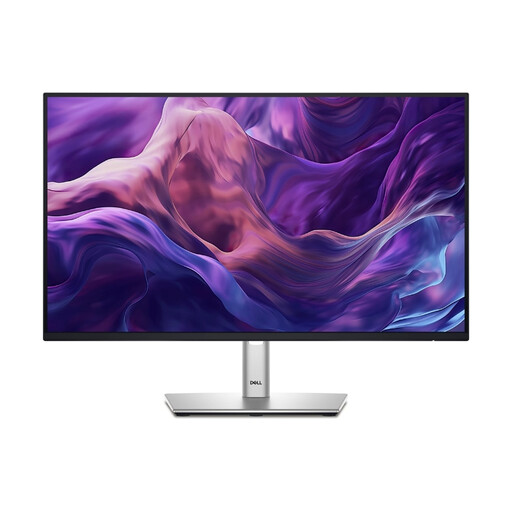 No image available
Full HD may be enough for individual text-based designs; check that the text is a comfortable size from your seated position.
The product name lists USB-C and a 3-year warranty. Full HD offers fewer rows of pixels than WUXGA for viewing word lists and tools at the same time. Check that video output and charging power are suitable for your computer.
 No image available
At 24 inches, this model falls into the compact size category. Still, measure how much desk space the stand will need.
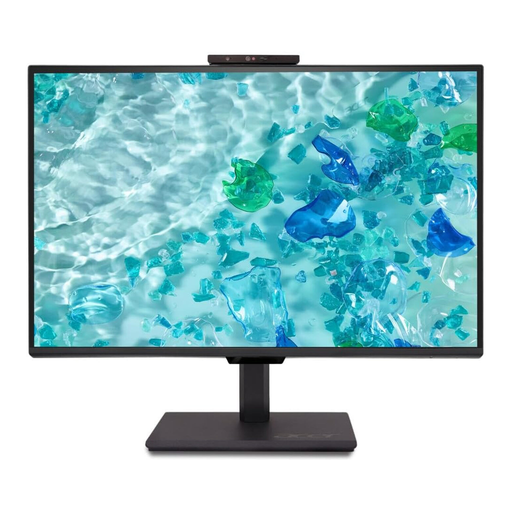 No image available
At 24 inches, this model falls into the compact size category. Still, measure how much desk space the stand will need.
The product name lists a 5 MP IR webcam with microphone.
Full HD may be enough for individual designs that are mostly text, as long as you can read the words clearly from your seated position. If you want to see the design, word list and tools at the same time, compare WUXGA or QHD and check that the scaling is comfortable to read. PRAD notes that WUXGA has 120 more rows of pixels than Full HD.
First measure the available space, allowing for the stand, keyboard and cards, and compare it with the monitor’s full dimensions. Then check the adjustment options on the specific stand. LG lists the 24BN650Y-W.AED as having a depth of 240 mm with the stand.
No. Adobe highlights differences between monitor and printer colours, as well as the effects of profiles, paper and ambient light. If print colours matter to you, check your colour workflow and make a test print. sRGB or factory calibration claims don’t guarantee accurate prints.
According to Verbraucherzentrale, consumers typically have a 14-day right to cancel an online purchase, starting after the contract is concluded or the ordered goods are received. Verbraucherzentrale also states that, for defects in newly purchased goods, you may have statutory rights against the seller for up to two years after delivery or receipt. These rights are separate from a voluntary guarantee; the terms of your specific purchase apply.
No. The German Environment Agency states that old electrical appliances must be collected separately from unsorted municipal waste.