When creating flashcards with illustrations and several templates open at once, the key question is whether the windows you need fit side by side and remain easy to read at your preferred text size. A 27-inch 4K monitor has more pixels than a 27-inch QHD model, but resolution alone doesn’t determine how practical your window layout will be. Dell lists a resolution of 2560 × 1440 pixels for the P2725DE and 3840 × 2160 pixels for the P2725QE. If colours need to match a particular screen or print workflow, the right colour mode and a well-aligned output process also matter. For laptop use, check that video transmission, the cable and charging power all work together.
Who these monitors are for
Illustrators working with lots of templates
If you want to keep your drawing, reference images and controls in view at the same time, compare QHD and 4K resolutions using your own window layout. Dell, ASUS and BenQ list 27-inch models with different resolutions.
Designers with a set colour workflow
If you’re assessing flashcards against a particular screen or print workflow, you’ll need suitable colour modes and a well-aligned file, profile and output process. ASUS, BenQ and EIZO list relevant features on selected models.
Illustrators using a laptop
If you switch between working on the go and at your desk, check video transmission, the charging power you need and how the monitor can be positioned. ASUS and BenQ list USB-C features and charging power for specific models, but your laptop and cable must also support the connection.
What to look for when buying
First, check that your work windows fit at a comfortable, readable scaling. Then make sure the colour workflow, laptop connection and monitor position suit your workspace.
| What matters |
What to check before buying |
Who is it important to? |
| Space for templates |
Screen size and native resolution; how windows arrange in your software at your preferred scaling. |
If I need to keep my drawing, reference images and tools open at the same time, I check that the windows fit side by side at a readable scaling. Around 36% of consumers put having enough room for several templates first. |
| Colour workflow |
Output destination and suitable colour modes; calibration options, if available. |
If I need to assess flashcards for a particular screen or print workflow, I need a colour mode suited to the output destination. A colour gamut figure alone doesn’t describe the whole process. Around 29% of consumers prioritise a defined colour workflow. |
| Laptop connection |
Video output from the laptop and monitor, as well as the cable; check that the charging power meets your laptop’s needs. |
When I connect my laptop at my desk, I want to know that video transmission and power supply work with the monitor and cable. Around 21% of consumers say connectivity and charging are their main concern. |
| Positioning and reflections |
Room for the stand, height and tilt adjustment, and position relative to the light source. |
During longer sessions, I want to position the screen so I can adjust the height and viewing angle to suit me, while keeping reflections to a minimum. Around 14% of consumers prioritise suitable positioning with minimal reflections. |
Common selection mistakes
-
Assuming more 4K pixels guarantee more usable space for windows
Resolution and text scaling together affect how large content and controls appear. A higher pixel count doesn’t automatically determine how you can arrange the windows you need on screen.
Before comparing QHD and 4K, arrange your drawing, templates and tools at the display size you actually want to use.
-
Assuming wide colour gamut coverage guarantees accurate print colours
Manufacturers’ details about colour modes and colour gamuts apply to individual models. They don’t prove what your entire output process will produce.
Choose your colour mode and, if needed, calibration to suit your actual screen or print destination.
Suitable profiles and calibration may require extra set-up and checking.
-
Assuming USB-C means full laptop compatibility
Video features and charging power vary by model. Your laptop and cable must also support the video transmission and power supply you need.
Before buying, compare the monitor’s specific USB-C features with its video output, cable and required charging power.
Key brands at a glance
ASUS
The ProArt PA279CRV is a 27-inch 4K option for detailed work and a laptop-based workspace.
- ASUS lists sRGB and Adobe RGB modes, USB-C with 96 W Power Delivery and a height-adjustable stand for this model.
- ASUS says specifications may vary by region; these details don’t automatically guarantee accurate print colours.
BenQ
The DesignVue PD2706U is a 27-inch 4K option for illustration and a laptop-based workspace.
- BenQ lists several colour modes, as well as USB-C with DisplayPort Alt Mode and 90 W Power Delivery for this model.
- The manufacturer’s details about colour modes alone don’t guarantee a match with a particular print result.
Dell
The P2725DE and P2725QE are 27-inch alternatives, with QHD and 4K resolutions respectively.
- Dell lists a resolution of 2560 × 1440 pixels for the P2725DE and 3840 × 2160 pixels for the P2725QE.
- Check how well your windows fit and remain readable at your preferred scaling using your own programmes.
EIZO
EIZO recommends the ColorEdge CS2740 for uses including illustration and photo editing.
- EIZO lists a wide-gamut IPS display and 4K resolution for this model.
- Display features don’t replace the need to align your file, profile and output process.
LG
The UltraFine 27UP850K-W is another 27-inch 4K option, with USB-C and an adjustable stand.
- For this specific model, LG lists a resolution of 3840 × 2160 pixels and typical DCI-P3 colour gamut coverage of 95%.
- The typical colour gamut figure isn’t a measurement of the individual unit you buy, nor does it guarantee accurate print colours.
Joybuy product selection
This selection includes wide ultrawide screens, as well as 27- and 32-inch models for working with several illustration windows open. Aspect ratio, resolution and scaling all affect how you can arrange your drawing, templates and tools.
 No image available
INNOCN 40C1U, 40-inch ultrawide
The wide workspace may suit you if you want to keep several references open at once. Check how they fit with your software and scaling.
40 inches, 5120 × 2160 pixels, IPS, 21:9 and 100 Hz.
USB-C with 65 W Power Delivery and PIP/PBP are listed.
View on Joybuy
 No image available
INNOCN CB27U1, 27-inch 4K UHD
If you want to fit fine details and several open windows on a 27-inch screen, check that they remain readable at your preferred scaling.
3840 × 2160 pixels, IPS and 120 Hz.
USB-C with 90 W Power Delivery, PIP/PBP and height adjustment are listed.
View on Joybuy
 No image available
ASUS ROG Swift OLED PG32UCDMR, 32-inch 4K
The 32-inch screen may give you room for your drawing and several work windows. Check how the windows look at your preferred text size.
3840 × 2160 pixels and 240 Hz are listed.
USB-C with 90 W Power Delivery is listed. According to the product description, the stand offers height, tilt, swivel and pivot adjustment.
View on Joybuy
 No image available
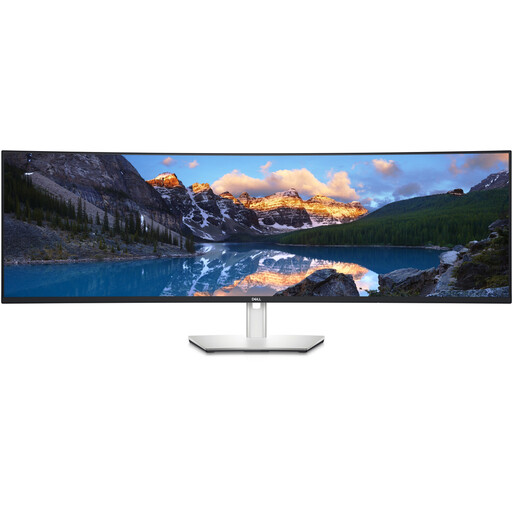
Dell UltraSharp U4924DW, 49-inch DQHD
The wide 32:9 format may suit you if you want several references side by side. Check that you have enough desk space and that the window layout works for your workspace.
5120 × 1440 pixels and 60 Hz.
USB-C with 90 W Power Delivery, a USB hub, and height, tilt and swivel adjustment are listed.
View on Joybuy
 No image available
TCL 27P2A, 27-inch QHD Mini LED
QHD resolution may suit you if your drawing, templates and tools fit and remain readable at your preferred scaling.
2560 × 1440 pixels, Mini LED, HFS-IPS panel and 200 Hz are listed.
The stand is adjustable, according to the product description. At 27 inches, QHD has fewer pixels than 4K, so check that the window layout suits your needs.
View on Joybuy
Frequently asked questions
Is a 27-inch QHD monitor enough for drawing and several templates?
It depends on how you arrange your windows and the text scaling you use. Dell lists a resolution of 2560 × 1440 pixels for the 27-inch P2725DE and 3840 × 2160 pixels for the also 27-inch P2725QE. Check that your drawing, templates and tools fit at the size you want.
How should I position my monitor if reflections are distracting?
The German Federal Institute for Occupational Safety and Health recommends positioning your workspace in relation to the light source so that your usual viewing direction doesn’t coincide with reflected light. Also check whether you can adjust the specific monitor to a suitable height and tilt.
What should I consider when comparing running costs?
For the specific models you’re considering, compare the EU energy label or the details in the product information sheet. The European Commission explains that the label for electronic displays shows, among other things, the energy efficiency class, screen size and resolution. To work out your individual costs, you’ll also need to factor in how long you use the monitor and your electricity tariff.


