If you often open a transcript, recording and source files side by side, an ultrawide monitor gives you more horizontal workspace. Just check that it suits your desk and window layout. For longer stretches of text work, a 27-inch QHD or 4K model with a versatile stand may be a better fit. Whichever you choose, check the scaling and connections against your laptop.
Which monitor setup is right for you?
Working with multiple sources
If you want to keep a transcript, recording and related files in view at the same time, more horizontal workspace can make it easier to arrange your windows. MAXQDA describes timestamps in a transcript that link to the corresponding audio or video file.
Long sessions working with transcripts
If you spend a long time reading and marking up text, look for text that’s comfortable for you to read and a screen with an adjustable stand. Lenovo lists the ThinkVision T27Q-40 as having a height-adjustable stand that tilts, swivels and pivots; EIZO lists the FlexScan EV2740X as a 27-inch 4K model.
Switching between laptop and desk
If you often connect your laptop at your desk, compare its video output and charging requirements with the monitor’s connections and power delivery. Dell and EIZO list USB-C power delivery for their respective models; whether it’s suitable also depends on your laptop.
What should you consider when choosing?
| Consideration |
What to check before buying |
Who is it especially relevant to? |
| Space for multiple sources |
Check the window layout and the horizontal and vertical pixel count against the windows you use. |
If I want to keep a transcript, recording and source files in view at the same time, enough horizontal space matters to me. Around 36% of consumers would make room for multiple sources their top priority. |
| Readability and positioning |
Try out the text size and scaling; check how the stand can be adjusted. |
When working with text for long periods, I want to read transcripts comfortably and position the screen to suit me. Around 29% of consumers would prioritise readability and adjustability. |
| Laptop connectivity |
Compare your specific laptop’s video output and charging requirements with the monitor’s connections and stated power output. |
If I often connect my laptop at my desk, I want to know whether the video connection and power delivery will work with my device. Around 21% of consumers would make laptop connectivity their main purchase consideration. |
| Features you need |
Decide in advance how much window space and which connections you’ll actually need for your workflow. |
I want to choose features I’ll genuinely use when working with transcripts, rather than paying for features without a clear purpose. Around 14% of consumers would prioritise getting the features they need. |
Common misconceptions when buying a monitor
-
Confusing screen space with a linking feature
A larger monitor displays windows, but it doesn’t create timestamps or link a transcript to the original file by itself.
Check how files and timestamps work in your transcription software separately from your choice of screen. MAXQDA, for example, describes timestamps that link to the associated audio or video files.
-
Assuming USB-C is a complete docking solution without checking compatibility
A USB-C port alone doesn’t tell you whether a specific laptop can output video through it or receive enough power to charge. The manufacturers’ specifications for the models discussed differ in their power delivery.
Check your laptop’s supported video mode and charging requirements against the monitor’s specifications. Depending on your laptop, you may need a different connection or an additional power supply.
-
Choosing a wide screen based on size alone
The 34-inch model discussed offers more horizontal pixels, but no more vertical pixels than the QHD models mentioned. The extra width is only useful if it suits your window layout.
Compare your actual layout of transcript, player and source files with the space available on your desk and your seating position.
Monitor brands worth knowing
Dell
The P2725DE and U2724DE offer different connectivity options in 27-inch QHD office monitors.
- Dell lists QHD resolution and 90 W USB-C power delivery for the P2725DE.
- The U2724DE is a separate Thunderbolt hub model. Check compatibility with your laptop for the specific model.
Lenovo
The ThinkVision T27Q-40 is a 27-inch QHD model with an adjustable stand.
- Lenovo lists height adjustment, tilt, swivel and pivot.
- According to Lenovo, the USB-C port delivers up to 15 W. Check that this is enough for your laptop before relying on it for charging.
Philips
The B-Line 346B1C/00 is a 34-inch model designed for a wide layout with multiple windows.
- Philips lists a resolution of 3440 × 1440 pixels, giving you more horizontal window space than the 27-inch QHD models mentioned.
- The extra width doesn’t remove the need to check your available space and window layout. The manufacturer’s claims about reduced flicker are not an independent assessment of your personal viewing comfort.
EIZO
The FlexScan EV2740X is a 27-inch 4K office monitor with USB-C docking.
- EIZO lists a resolution of 3840 × 2160 pixels and maximum power delivery of 94 W through the USB-C upstream port.
- Check text scaling, laptop compatibility and the connections you need before deciding whether this setup is right for your workspace.
Monitor options at Joybuy
This selection includes wide ultrawide models and 27-inch monitors with QHD or 4K resolution. Compare the window layout, space requirements and laptop connections with your workflow.
 No image available
INNOCN 40C1U, 40-inch 5K ultrawide
Could be a good fit if you want to keep a transcript, recording and other sources visible side by side; remember to allow for the space needed by a 40-inch display.
Listed in the product name: 5120 × 2160 pixels, IPS, 100 Hz, 21:9, 65 W USB-C, plus PIP and PBP.
View at Joybuy
 No image available
INNOCN CB27U1, 27-inch 4K UHD
A 27-inch option for text and split-screen windows, if 4K resolution and an adjustable stand suit your workspace.
Listed in the product name: 3840 × 2160 pixels, IPS, 120 Hz, PIP and PBP, plus 90 W USB-C Power Delivery.
View at Joybuy
 No image available
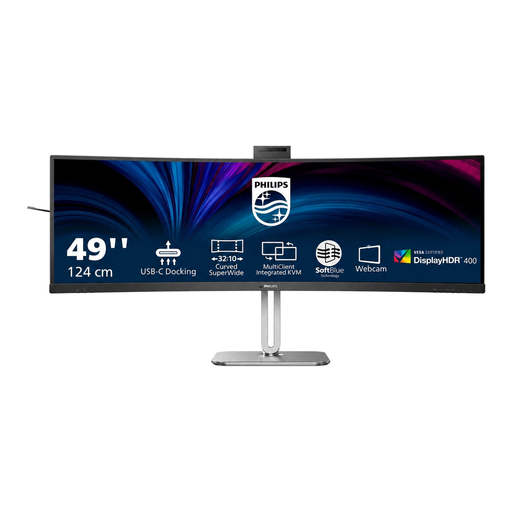
Philips 49B2U6900CH, 49-inch, 5120 × 1440
Could suit an especially wide layout of work windows; check that its dimensions will fit your desk before you buy.
Listed in the product name: curved display, VA, 75 Hz, USB-C, HDMI and DisplayPort.
View at Joybuy
 No image available
Philips 345B1C, 34-inch WQHD ultrawide
This ultrawide model can accommodate a broad window layout; compare its resolution with the vertical space you need for working with text.
Listed in the product name: 3440 × 1440 pixels, 100 Hz, curved display, HDMI, DisplayPort and USB hub.
View at Joybuy
 No image available
MSI PRO MP275QPDGDE, 27-inch WQHD docking monitor
Could suit transcript work with occasional split-screen use, if the QHD resolution and listed docking connections work with your laptop setup.
Listed in the product name: IPS, 100 Hz, 98 W USB-C Power Delivery, daisy-chain and integrated webcam.
View at Joybuy
Frequently asked questions
Does the monitor link the interview transcript to the original recording?
No, that link is created by the software you use. MAXQDA, for example, describes timestamps in a transcript that link to the associated audio or video files; the monitor displays your work windows.
How should I set up my screen for long sessions working with transcripts?
Choose a scaling setting that’s easy to read and position the screen to avoid distracting reflections. Germany’s Workplace Ordinance sets out requirements for employees’ display screen workstations; the Federal Ministry of Labour and Social Affairs and the requirements in the ordinance’s annex describe the relevant framework.
Is USB-C on the monitor enough for video and power through one cable?
Not necessarily: check video output and charging requirements for your specific laptop. Dell lists 90 W for the P2725DE, EIZO lists up to 94 W for the EV2740X and Lenovo lists up to 15 W for the T27Q-40’s USB-C port; each figure applies to the model named.
Who should I contact if my monitor is faulty?
Distinguish between your statutory rights and a voluntary warranty. The Verbraucherzentrale explains the difference; also check your purchase documents and the relevant warranty terms for your situation.
What should I consider when interviews involve personal data?
Processing personal data requires a legal basis under Article 6(1) of the GDPR. The Federal Commissioner for Data Protection and Freedom of Information explains the legal bases listed there; whether a particular recording or transcription is lawful must be assessed separately for each case.


