When choosing a monitor for a structured composting handbook, consider whether the outline, manuscript and sources will all remain readable at your preferred text size. Specifications from Dell, ASUS and Philips cover a range of QHD, 4K and ultrawide options. A more compact model may be enough for mostly single-column writing, while 4K and larger displays also make scaling, laptop compatibility and desk space important considerations.
Who writes at a monitor?
Writers working with outlines and sources
You want to view your chapter structure, manuscript and research material side by side. What matters is arranging your windows so everything stays clear at your preferred text size—not simply the screen’s diagonal measurement.
Authors writing longer passages
For longer writing sessions, readable text, suitable scaling and a screen position that works for your eyesight and workspace all make a difference.
Writers with limited space for a laptop
If you’re connecting a laptop, check video output, the charging power you need and the space available for the monitor at your particular workstation.
What should you look for?
First, decide how many windows you need to be able to read at once at your preferred text size. Then check whether the screen position and connections will work with your workspace and laptop.
| Buying priority |
What to check |
Who should pay particular attention? |
| Space for windows |
Arrange your outline, manuscript and a typical source side by side at your preferred text size. Consider the aspect ratio and native resolution together. |
If I want to keep headings, text and sources open at the same time, I need an arrangement that keeps everything readable. Around 36% of consumers prioritise using multiple windows side by side. |
| Long-form readability |
Assess text and the user interface at your preferred scaling, rather than comparing pixel counts alone. |
During longer writing sessions, I want body text to be comfortable to read, even if that means fewer windows are visible at once. Around 29% of consumers prioritise long-form readability. |
| Set-up |
Check your desk depth, stand or arm, and the screen positions you can achieve. Consider height adjustment or a pivot function only if it suits your workspace. |
If I want to adjust the monitor to suit my seating position and available space, set-up matters more than extra pixels. Around 21% of consumers put an adjustable position first. |
| Laptop connection |
Check video output through your specific laptop port, the charging power you need and the connections available on the monitor you’re considering. |
If you want to connect a laptop with as few cables as possible, check video and power delivery for your devices. Around 14% of consumers say laptop docking is their main concern. |
Common selection mistakes
-
Comparing screen size alone
A wide display allows for a different window layout from a higher-resolution screen with a conventional aspect ratio. Text size and scaling affect how much content remains genuinely readable.
Try arranging your outline, manuscript and a typical source at your preferred text size. Compare the aspect ratio and native resolution together.
-
Assuming USB-C always provides full one-cable docking
Video output, charging power and other connections vary by model. For example, Dell does not list a USB hub for the S2725DSM.
Check the connections and power specifications of the particular monitor against your laptop’s requirements.
If video output or charging is not compatible with your laptop, you may need an additional connection or a separate power supply.
-
Choosing a larger monitor without checking the available space
The screen, stand or arm needs to fit your desk and the position you want.
Measure the width and depth of the available space, then check what screen positions you can achieve there.
Brands worth considering
Dell
The documented S and UltraSharp models combine QHD with a range of adjustment and connectivity features.
- Dell states that the 27-inch S2725DSM has QHD resolution and a height-adjustable stand.
- Dell does not list a USB hub for the S2725DSM. Features of the U2724D do not necessarily apply to this model.
ASUS
The ProArt PA279CRV is a documented 27-inch 4K option for writing spaces where resolution, adjustability and USB-C matter.
- ASUS lists a pivot function, height adjustment and USB-C Power Delivery of 96 W for this model.
- Check the scaling at your preferred text size. A focus on professional colour work is not automatically a deciding factor for mainly text-based writing.
Philips
The documented models range from a 27-inch QHD monitor to a 34-inch ultrawide display.
- Philips lists a resolution of 3440 × 1440 pixels for the 346B1C/00 and 2560 × 1440 pixels plus USB-C for the 27E1N5600AE/00.
- Choosing between the formats depends on whether extra horizontal screen space and the available desk width suit your workspace.
EIZO
The documented FlexScan models include a compact Full HD monitor and a 27-inch 4K monitor with docking features.
- According to EIZO, the EV2740X offers 4K and USB-C docking with up to 94 W Power Delivery.
- The EV2490 is 23.8 inches and has Full HD resolution. That’s a different resolution trade-off for keeping several windows visible at once than you’ll find with larger or higher-resolution models.
BenQ
The RD320UA is a large 4K option with a flexible arm for workspaces where you want room for several text windows.
- BenQ lists a 31.5-inch screen and a maximum resolution of 3840 × 2160 pixels for the RD320UA.
- BenQ describes its coding modes as an advantage for programming; this does not establish a benefit for writing a handbook.
Joybuy monitors for text and multiple windows
The Joybuy models below include wide ultrawide formats, as well as 27-inch QHD and 4K options for arranging your manuscript, outline and sources.
 No image available
CRUA 49-inch DQHD curved ultrawide monitor
The wide 32:9 format is designed for arranging several text windows so you can view them at the same time.
49 inches; DQHD at 5120 × 1440 pixels; 165 Hz; curved display; height-adjustable stand.
View at Joybuy
 No image available
INNOCN 40C1U 40-inch ultrawide monitor
The 21:9 format offers a wide display area for placing several items of content side by side.
40 inches; 5120 × 2160 pixels; IPS; 100 Hz; USB-C with 65 W Power Delivery; height-adjustable.
View at Joybuy
 No image available
INNOCN CB27U1 27-inch 4K monitor
A 27-inch option for writers who want to arrange text and other content on a 4K display.
3840 × 2160 pixels; IPS; 120 Hz; USB-C with 90 W Power Delivery; PIP and PBP; height-adjustable.
View at Joybuy
 No image available
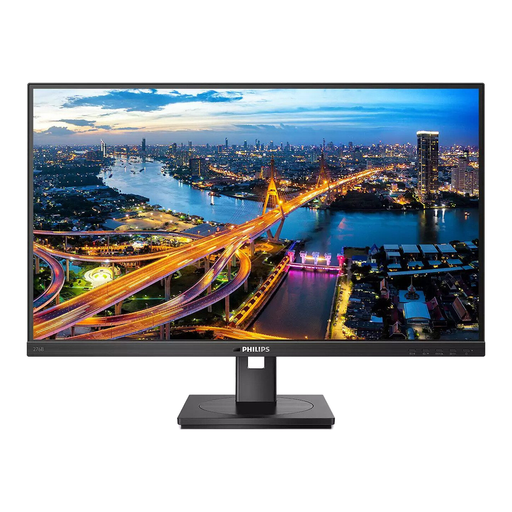
Philips 276B1 27-inch QHD monitor
Its 27-inch QHD specification makes this model an option for viewing your manuscript and outline side by side.
2560 × 1440 pixels; 75 Hz; IPS.
View at Joybuy
 No image available
Philips 345B1C 34-inch curved ultrawide monitor
The 21:9 format is designed to give you a wide layout for your manuscript and other windows.
3440 × 1440 pixels; 100 Hz; curved display; USB hub; height-adjustable.
View at Joybuy
Frequently asked questions
Do I need 4K for nested chapter headings?
No. What matters is whether your outline and manuscript remain readable at the same time at your preferred text size. Manufacturer specifications include both 27-inch QHD and 27-inch 4K models. If you choose 4K, remember to check the scaling you want to use.
Will every USB-C monitor charge my laptop?
No. Check whether the specific port on your laptop supports video output and whether the monitor’s charging power meets your device’s needs. ASUS lists up to 96 W Power Delivery for the PA279CRV, but that does not guarantee compatibility with every laptop.
How should I position my monitor for longer writing sessions?
Adjust the screen position and viewing distance to suit your build and eyesight. For office workstations, the DGUV recommends a viewing distance of at least 50 cm and positioning the screen as low as possible, with the top line no higher than eye level. This is not a blanket recommendation for every home desk.
What should I know about complaints and returns when buying online in Germany?
The Verbraucherzentrale distinguishes between your statutory rights against the seller and a voluntary guarantee. Online purchases generally come with a 14-day right of withdrawal; the conditions and when the period starts depend on the individual case.
Do workplace screen rules automatically apply to my personal writing project?
No. The Federal Institute for Occupational Safety and Health (BAuA) explicitly excludes private screen use outside workplaces and teleworking workplaces from the scope of ASR A6. The requirements covered by it therefore do not automatically apply to a personal writing project.


