For regularly comparing historical adverts, a 27-inch QHD monitor is a sensible starting point, provided your scan and data-entry window remain readable side by side at your preferred text size. 4K may be worth considering if you regularly check fine details in scans; USB-C docking is only worthwhile if it’s compatible with your laptop, cable and charging requirements. A monitor displays content, but it won’t identify duplicates for you.
Who should consider this type of monitor?
People checking for duplicates
Anyone comparing historical adverts and catalogue entries side by side needs to distinguish between similar finds that aren’t necessarily identical. The DFG’s practical guidelines for digitisation and information from the German Digital Library offer insight into this cataloguing context; they don’t establish that any particular monitor is suitable.
People reviewing scans and entering text
If you read small print in digitised material and transfer or check details, consider window size, text scaling and your position in front of the screen. The DFG’s practical guidelines for digitisation cover the professional context, not the performance of any particular monitor.
People working at a laptop
If you use scans, a data-entry form and accessories at a laptop workstation, check that your specific computer’s ports are compatible with the monitor. Lenovo and EIZO’s specifications describe different connectivity and docking features across individual models.
What should you look for in a monitor?
Start by checking a typical scan alongside your data-entry windows to see what display and window width you actually need. Then check the available desk space and connections.
| What you need |
What to look for when buying |
Who is this most important for? |
| Comparing adverts side by side |
Test with a scan, a search window and a data-entry form to check that headings, dates and image details are all readable at once. |
If I want to check scans and records side by side, I need the key details to remain visible without constantly switching between windows. Around 36% of consumers prioritise this kind of side-by-side comparison when buying. |
| Reading small print and fine details |
Display a typical scan at your preferred zoom level and text scaling, then judge how readable it is using your own material. |
If I’m checking small print or details in historical scans, the display needs to be readable at my preferred text size. Around 29% of consumers prioritise readability of fine details and text. |
| Setting up a suitable workstation |
Check the available desk space, adjustability and lighting where you plan to work, and watch out for distracting reflections. |
When reviewing material for long periods, I want to be able to adjust the screen position and lighting so I can see my sources clearly. Around 21% of consumers prioritise a suitable workstation setup. |
| Connecting a laptop and accessories |
Check the video output, cable, accessory ports and required charging power against the specific monitor. |
If I work on a laptop, I want to check in advance that the picture, accessories and, if needed, charging will all work through the connection I plan to use. Around 14% of consumers prioritise connectivity and docking. |
Common misconceptions about monitors for checking duplicates
-
More pixels don’t automatically mean better duplicate detection
Resolution affects how content is displayed, not how adverts or metadata are compared.
Try a typical scan alongside two real entries, and plan to check the content and metadata separately from choosing a monitor.
-
Dell models with similar names don’t necessarily have the same features
Dell Germany lists the P2725D as a QHD model, the P2725DE as a QHD model with a USB-C hub, and the P2725QE as a 4K model with a USB-C hub. The names refer to different resolutions and connectivity options.
Before buying, check the full model name and make sure it has the ports your workflow actually requires.
-
USB-C doesn’t automatically guarantee video and enough charging power
For the EIZO FlexScan EV2795, EIZO specifies DisplayPort Alt Mode and up to 70 W through the relevant USB-C upstream port. Whether that’s enough depends on your laptop.
Check your laptop’s specifications, cable, video output and power requirements against the exact monitor model.
Brands to consider
Dell
Dell offers similarly named 27-inch models with different resolutions and connectivity options.
- Dell Germany specifies a resolution of 2560 × 1440 pixels for the P2725D and 3840 × 2160 pixels for the P2725QE.
- The P2725DE’s USB-C hub features shouldn’t be assumed to apply to the P2725D. These model differences aren’t independently measured productivity benefits.
Lenovo
According to Lenovo, the ThinkVision T27h-30 is a 27-inch QHD monitor with connectivity features for a suitably equipped laptop workstation.
- Lenovo lists USB-C docking, a USB hub, Ethernet and a DisplayPort output for this model.
- Whether the connections are suitable depends on your laptop. Manufacturer claims about viewing comfort or productivity don’t prove an advantage when checking for duplicates.
EIZO
According to EIZO, the FlexScan EV2795 combines a QHD display with USB-C docking, LAN and KVM functionality, if these features suit your workstation.
- For the relevant USB-C upstream port, EIZO specifies DisplayPort Alt Mode and a maximum power delivery of 70 W.
- KVM and docking won’t compare adverts automatically. Check your laptop, cable and charging requirements against the specific model.
Joybuy monitors for comparing items side by side
This Joybuy selection includes monitors listed with QHD or ultrawide displays, which may be useful when viewing scans and entries side by side. Check that the format, text scaling and stand suit your particular workstation.
 No image available
Z-Edge AGEX 27-inch QHD gaming monitor
The listed QHD display may be useful when viewing a scan and entries side by side; check readability at your own text scaling.
27 inches; 2560 × 1440 pixels; Fast IPS; height-adjustable stand; DisplayPort and HDMI.
View at Joybuy
 No image available
TCL 27P2A 27-inch QHD monitor
Its QHD resolution makes this model a possible option for side-by-side viewing; assess text and scan details using your own material.
27 inches; QHD at 2560 × 1440 pixels; Mini-LED; 200 Hz.
View at Joybuy
 No image available
CRUA 49-inch DQHD ultrawide monitor
The wide format may be useful for displaying several comparison windows at once; check the available desk space and make sure your windows will be readable.
49 inches; 32:9; 5120 × 1440 pixels; 1500R curvature; height-adjustable stand.
View at Joybuy
 No image available
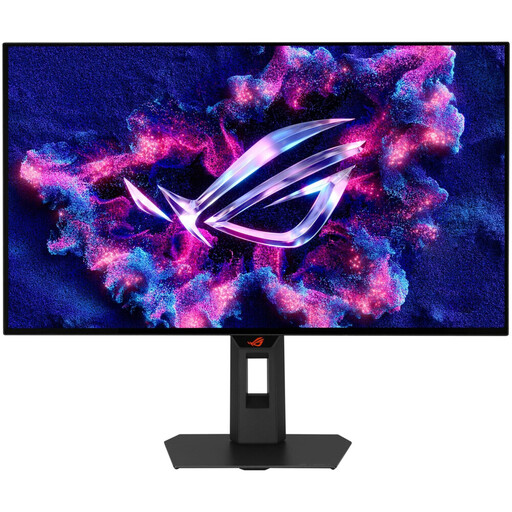
ASUS ROG Strix WOLED XG27AQWMG 27-inch WQHD gaming monitor
The listed WQHD resolution may be useful for comparing scans and entries; check that text and details are clear at your preferred scaling.
27 inches; 2560 × 1440 pixels; Tandem OLED panel; 280 Hz; USB hub.
View at Joybuy
 No image available
INNOCN E34A1R 34-inch UWQHD monitor
The ultrawide format can accommodate several views side by side; check that its width suits your workstation and data-entry windows.
34 inches; 3440 × 1440 pixels; 21:9; PIP and PBP modes; height-adjustable stand.
View at Joybuy
Frequently asked questions
Can a high-resolution monitor automatically detect duplicate historical adverts?
No. Resolution changes how content is displayed, not how it is compared. Whether adverts or entries are duplicates needs to be checked using their content and metadata, or with suitable cataloguing tools.
How do I set up two screens for comparison?
If you use Windows, you can identify detected screens in the display settings and arrange them to match their actual positions. Microsoft Support explains how to arrange displays in Windows; afterwards, check that the scan and data-entry form are clearly visible at your chosen text size.
Are there specific requirements for workplace monitors in Germany?
Workstations with display screens that fall within the scope of the German Workplace Ordinance must meet requirements for their design and operation. The Federal Institute for Occupational Safety and Health provides further detail in ASR A6, July 2024 edition. This doesn’t mean everyone must buy a monitor of a particular size or resolution. Check the requirements for your specific workplace with the relevant authority.
Do I need a particular monitor resolution to view adverts in the German Newspaper Portal?
The German Digital Library’s published requirements for submitted newspaper data cover aspects such as METS/MODS metadata, not a particular monitor resolution. Data format and monitor choice are separate decisions for your own cataloguing project.


