For magazine layouts at a sit-stand desk, your monitor should display spreads and tool palettes at a comfortably readable scale. If you’re assessing print colours, you’ll also need a colour-managed workflow with proofs. When switching between sitting and standing, check the adjustment range, desk space and notebook connections too – a high colour gamut figure or USB-C alone won’t answer these questions.
Which monitor is right for you?
Layout designers who use lots of palettes
You want to arrange spreads, details and tool palettes at a comfortably readable scale. ASUS and BenQ list different screen sizes and resolutions for specific models, which you can compare with your own workspace.
Designers checking print colours
You assess colours for a specific print condition and need more than a colour gamut figure. Adobe InDesign explains colour management and proofs for specific output profiles; ISO 12646:2015 covers display properties for soft proofing.
Designers at a sit-stand desk
You switch between sitting and standing, so you need to position your screen correctly at both desk heights. The German Federal Institute for Occupational Safety and Health (BAuA) describes the dynamic alternation between these working postures as sit-stand activity.
What should you look for when buying?
For magazine layouts, the key considerations are usable workspace, print-proof requirements, screen positioning and notebook connectivity.
| Consideration |
What to check before buying |
Who should pay particular attention? |
| Space and readability |
Screen size, native resolution and footprint; check your spread view at a comfortably readable scale. |
If I want to see pages, details and palettes at the same time, usable workspace is crucial. Around 31% of consumers put layout space first when choosing. |
| Print colour checking |
Confirm the output profile and proof requirements with your printer; compare the presets, calibration method and uniformity of the specific model. |
Anyone assessing colours for a defined print process needs a suitable proofing workflow, not just a high colour gamut figure. Around 31% of consumers prioritise print colour checking. |
| Screen positioning |
Check height adjustment, tilt and rotation; if you’re using a monitor arm, also check the VESA mount and load capacity. |
If I switch between sitting and standing, I need to be able to position the screen correctly in both postures. Around 23% of consumers put screen positioning first. |
| Notebook connectivity |
Compare the notebook’s video signal, connection type and required charging power with the details for the specific monitor. |
If you want to connect the video signal and power supply as neatly as possible, check your notebook’s requirements in advance. Around 15% of consumers prioritise notebook connectivity. |
Common misconceptions
-
Assuming colour gamut coverage guarantees an accurate print proof
A colour gamut figure alone doesn’t prove that the display matches a specific print condition.
Confirm the output profile and proof requirements with your printer, and consider the entire colour management workflow.
Regular calibration may require a measurement device and other accessories, depending on your workflow.
-
Comparing only the 4K resolution
27- and 31.5-inch models can display the same number of pixels across physical screens of different sizes.
Check how spreads, palettes and text look at your preferred scaling, and measure the available desk space.
-
Assuming USB-C guarantees a single-cable setup
The documented models offer different charging power. A USB-C connection alone doesn’t tell you whether the video signal and power supply will suit your notebook.
Compare the video signal and required charging power with the specifications for the exact monitor model.
Depending on your notebook and connection, you may need a separate power adapter or a different connection.
Key brands to consider
The details below relate to the models mentioned and aren’t a blanket recommendation for an entire brand portfolio.
ASUS
The ProArt PA279CRV is a 27-inch 4K model for detail-focused layout work, with an ergonomic stand.
- ASUS lists 99% Adobe RGB, pivot, 130 mm height adjustment and 96 W USB-C Power Delivery for the PA279CRV.
- These manufacturer specifications alone don’t guarantee colour accuracy for a particular print condition.
EIZO
The ColorEdge CS2740 is a 27-inch 4K model for workflows that involve colour management and regular calibration.
- EIZO lists an AdobeRGB preset, hardware calibration and uniformity correction for this model.
- According to EIZO, USB-C power delivery is up to 60 W; whether that suits your notebook depends on the device.
BenQ
The DesignVue PD3225U offers a larger 31.5-inch 4K screen for layouts and tool palettes.
- BenQ lists 98% DCI-P3, 150 mm height adjustment, pivot and 85 W via the Thunderbolt input for this model.
- The stated DCI-P3 coverage doesn’t indicate AdobeRGB coverage or prove suitability for a particular print proof.
Dell
The UltraSharp U2725QE is a 27-inch 4K model focused on hub and connectivity convenience.
- Dell lists a height-adjustable stand and a Thunderbolt hub for this model.
- These features alone don’t prove that it’s suitable for soft proofing.
LG
The UltraFine 27U730A-B is a 27-inch 4K model for mainly digital layout views and USB-C connectivity.
- LG typically lists 90% DCI-P3, an anti-glare surface and up to 90 W via USB-C for this model.
- These details alone don’t establish whether it’s suitable for a particular print proof.
Joybuy monitors for layout work
This selection includes monitors with different screen sizes and resolutions for layout work, as well as models whose product names specify an adjustable screen position.
 No image available
INNOCN 40C1U 40-inch ultrawide monitor
The 21:9 screen could be useful for a layout view with several tool palettes; check that it will fit on your desk first.
40 inches, 5120 × 2160 pixels, IPS, 100 Hz, USB-C with 65 W Power Delivery and a height-adjustable stand.
Joybuy
 No image available
INNOCN CB27U1 27-inch 4K monitor
If you’re after a more compact 4K view for layout details, check how readable your palettes are at your preferred scaling.
27 inches, 3840 × 2160 pixels, IPS, 120 Hz, USB-C with 90 W Power Delivery and a height-adjustable stand.
Joybuy
 No image available
ASUS ROG Swift OLED PG32UCDMR 32-inch 4K monitor
The larger screen size could be useful for a more spacious layout view; measure your available desk space and check your preferred scaling.
32 inches, OLED, 3840 × 2160 pixels, 240 Hz and USB-C with 90 W Power Delivery.
Joybuy
 No image available
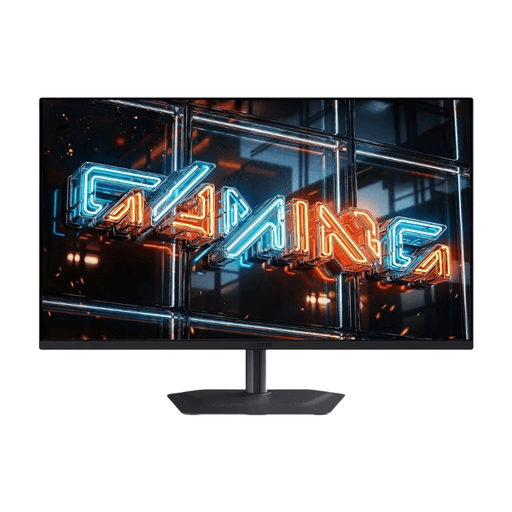
GIGABYTE MO32U24 OLED 32-inch monitor
The 32-inch screen and stand adjustments listed in the product name could be useful for a larger layout view at a sit-stand desk.
3840 × 2160 pixels; according to the product name, the stand adjusts for height, tilt, swivel and pivot.
Joybuy
 No image available
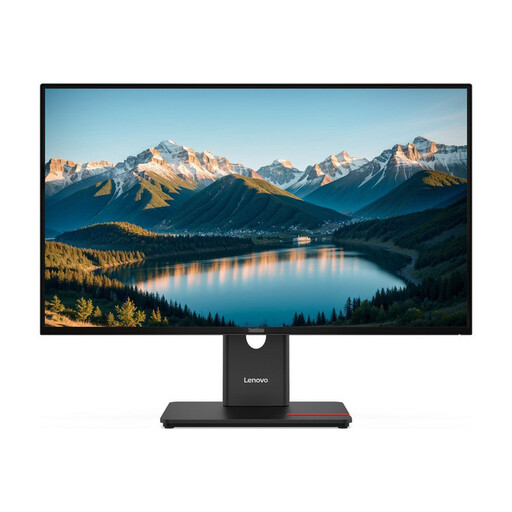
Lenovo ThinkVision T27Q-40 27-inch QHD IPS monitor
If you’re considering a 27-inch IPS monitor for pages and palettes, check whether the QHD resolution suits your preferred workspace.
27 inches, QHD and IPS.
Joybuy
Frequently asked questions
Is 27 inches enough for a magazine spread?
It depends on how large you want pages and panels to appear at a comfortably readable scale. Compare your typical workspace on a 27-inch screen with a larger option, rather than deciding on the 4K specification alone.
Does an AdobeRGB monitor automatically ensure accurate print colours?
No. To assess a specific print condition, you’ll need the right profiles and a coordinated proofing workflow. ISO 12646:2015 covers display properties for soft proofing.
How should I position my monitor at an adjustable-height desk?
Check the screen position both sitting and standing, and use the available height, tilt and swivel adjustments. The BAuA describes switching between sitting and standing as sit-stand activity.
What should I check about calibration and ongoing costs?
If you calibrate regularly, check which measurement device and accessories your workflow requires. Also compare the warranty and service terms, as well as the energy label for the specific model.
Do monitors have an energy label in Germany?
The European Commission describes an A to G energy efficiency scale for electronic displays, including computer monitors. Compare the label for the specific model; certain specialist display categories are subject to different regulatory scopes.


