Proofreaders working with a reference window
If you regularly check a guide against specifications or examples of musical notation, it helps to be able to see both the draft and the reference at once, with the text at a readable size.


If you often compare a draft, tracked changes and a reference side by side, an adjustable 27-inch QHD monitor is a sensible starting point – check that text remains easy to read at your preferred scaling. For fine musical notation or layout details, 4K may be a good fit; if space is limited or you regularly switch between laptops, a compact footprint or suitable connections may matter more. It’s your writing software, not the monitor, that tracks changes.
If you regularly check a guide against specifications or examples of musical notation, it helps to be able to see both the draft and the reference at once, with the text at a readable size.
For extended writing sessions, it’s important to be able to adjust the screen position, keep text easy to read and arrange your setup to minimise distracting reflections. Workplaces covered by the relevant regulations must also meet the applicable requirements.
If you connect your laptop regularly, check that its video output and charging requirements are compatible with the monitor’s connections and power delivery.
First, consider which windows you want to read at the same time. Then check that the monitor’s setup and laptop connections suit your workspace and device.
| What matters | What to check before buying | Who is it important to? |
|---|---|---|
| Space for the draft and reference | Try placing the tracked-changes view and template side by side, using a text size that’s genuinely comfortable for you to read. | If I need to check the draft, annotations and reference at the same time, I want to be able to read them in side-by-side windows. Around 31% of consumers prioritise this kind of comparison. |
| Readability and screen position | Check text size, height adjustment and reflections where you plan to set up the monitor. | For long writing sessions, I need easy-to-read text and a screen position I can adjust to suit me. Around 31% of consumers focus above all on these factors. |
| Laptop connection | Check your laptop’s USB-C video output, cable and charging requirements against the monitor’s specifications. | If I switch between laptops often, I want to know whether the video and power supply will work through the connection I want to use. Around 23% of consumers prioritise these connection requirements. |
| Desk space and how you use the screen | Measure the space available, including the monitor stand, and consider whether you usually have one or several documents open. | If space is tight or I usually work with one document open, I don’t want to plan for a larger work area than I need. Around 15% of consumers start by considering desk space and straightforward work with a single document. |
The higher resolution of the ASUS ProArt PA279CRV doesn’t, by itself, tell you whether text and tracked-change marks will be the right size at your preferred scaling.
Check documents, annotations and examples of musical notation using the scaling you actually intend to use.
Video connectivity and charging power need to suit your particular laptop; USB-C specifications vary from one monitor to another.
Check the complete connection setup, including video output, cable and charging requirements, against the manufacturer’s specifications.
At 23.8 inches, the EIZO EV2490’s Full HD resolution provides fewer pixels for viewing a document, tracked changes and a reference side by side than a 27-inch QHD model.
Arrange the windows you need at a readable size before deciding whether a more compact option is right for you.
The Pro Plus range includes the P2725DE, a 27-inch QHD monitor with a USB-C hub for compatible laptops.
The ProArt PA279CRV is a 27-inch 4K option if fine layout details and flexible positioning are important to you.
The FlexScan EV2490 is a more compact Full HD option with USB-C docking.
The PRO MP275QDE is a 27-inch WQHD option for office work, without USB-C docking as a prerequisite.
The RD320UA is a large-format 31.5-inch 4K option if you have enough desk space.
The models below include 27-inch QHD and 4K monitors, as well as options with specified USB-C features. Check the resolution, connections and charging specifications for the particular model and your laptop.
 No image available
4K resolution is an option if you want to check fine layout or musical notation details; check that text remains readable at your chosen scaling.
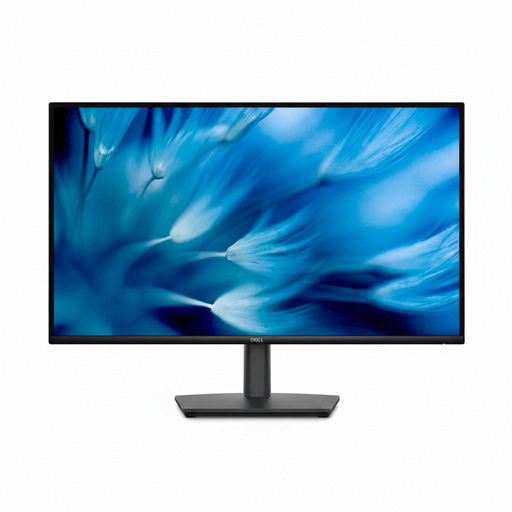 No image available
This 27-inch WQHD monitor is an option if you want to review document content across a larger workspace.
 No image available
This QHD model is an option for working with documents side by side; check that its USB-C charging power meets your laptop’s requirements.
 No image available
The listed docking features may be useful if you connect a laptop frequently; check that video and charging are compatible with your device.
 No image available
QHD resolution on a 27-inch screen is an option if you want to view a draft and reference side by side.
No. Tracking changes is a feature of your writing software. Microsoft explains how to view and edit tracked changes in Word; choose a monitor based on whether you can fit this view and, if needed, a reference on screen while keeping the text easy to read.
Adjust the screen position and text size to suit your work, and watch out for distracting reflections. To use one cable for video and charging, your laptop must support the required USB-C video output, and the monitor’s charging power must meet its requirements. EIZO lists DisplayPort Alt Mode and a maximum of 70 W for the EV2490.
Compare the EU energy label for the specific monitor variants; display power consumption is shown in kWh per 1,000 hours. When you buy goods from a business seller in the EU, you have statutory consumer rights for at least two years from the date you receive them; this is separate from any additional manufacturer’s warranty.
The writing project alone doesn’t mean there is a general resolution requirement. However, screen-based work by employees in workplaces and certain home-working setups is subject to the applicable requirements of the Workplace Ordinance and the accompanying ASR A6 technical rules. These requirements don’t apply across the board to personal use.