Who would benefit from each type of monitor?

Those checking for duplicates

You compare search results, metadata and scans to take a closer look at entries that appear to be the same. For collections, RISM distinguishes between main entries for the collection and individual entries for the works it contains. Similar-looking records alone therefore don’t determine the right catalogue structure.

Those checking scans

You regularly examine details in digitised music scores and also need catalogue fields to be easy to read. Manufacturers offer different display options across their QHD and 4K models; check readability using the scaling you actually plan to use.

Cataloguers at a fixed workstation

For longer cataloguing sessions, the right screen position, enough desk space and a connection that works with your computer all matter. The Federal Institute for Occupational Safety and Health limits the scope of ASR A6 to the specified requirements for workplace display screen equipment and teleworking.

What should you look for when buying?

Compact Full HD monitor

A good fit if: you have limited desk space or usually work on individual records and open scans separately.

Trade-off: Full HD has fewer pixels for displaying several views at once than QHD or ultrawide.

27-inch QHD monitor

A good fit if: you want to fit a catalogue form, search results and a scan into a manageable window layout.

Trade-off: Text size and window widths need to suit your software; portrait mode is a model-specific feature.

27- or 31.5-inch 4K monitor

A good fit if: you often check fine details in scans and can set a scaling level that’s easy for you to read.

Trade-off: More pixels don’t guarantee better scans or automatically give you more usable screen space; larger models need more desk space.

34-inch ultrawide monitor

A good fit if: you want to keep several narrow catalogue windows or two document views open side by side.

Trade-off: The wide format takes up desk space, and at 3440 × 1440 pixels it offers no more vertical pixels than QHD.

Priority What to check before buying Who is it important to?
Entries and scans side by side Test window widths in your software and measure the desk space available. If I want to check search results, a catalogue form and a scan side by side, I need enough room for each window without making the text too small. Around 36% of consumers say side-by-side views are their top priority.
Fine scan details Test a typical scan using the software and scaling you normally use. If small musical symbols in a scan are important, I want to be able to check the details at a comfortable size. For around 29% of consumers, scan details come first.
Screen position and desk space Measure your desk and monitor stand; check for height adjustment and, if needed, portrait mode. For longer cataloguing sessions, I want to be able to position the screen to suit my desk and seating position. Around 21% of consumers prioritise screen position and desk space.
Connection to your computer Check that the video output and cable are compatible, and check your laptop’s charging requirements. If I want to connect my existing laptop, the video connection and, where applicable, power delivery need to work together. For around 14% of consumers, connecting to a computer is their top buying priority.

Which assumptions should you avoid?

  • Assuming similar catalogue titles refer to the same music edition

    A larger screen doesn’t replace checking the content. Catalogues may distinguish between a collection, individual works and copies.

    Compare the details relevant to your catalogue and check the scan before merging entries.

  • Assuming 4K automatically makes text easier to read

    The pixel count doesn’t tell you the size at which your software will actually display text and music notation.

    Use a typical music score page to check both the display size and the usable window space.

  • Choosing USB-C without checking video signal and charging power

    A USB-C port on the monitor alone doesn’t mean your computer can send a video signal through it or receive enough power to charge.

    Check the computer port, cable and power requirements against the full model details.

Which brands and model ranges are worth considering?

BenQ

The GW2790QT is a 27-inch QHD option with portrait mode and USB-C; the MA320U is a separate 31.5-inch 4K model.

  • BenQ Germany lists USB-C with up to 65 W of power delivery and 110 mm of height adjustment for the GW2790QT.
  • BenQ Germany specifies a resolution of 3840 × 2160 pixels for the MA320U.
  • Check the desk space available and whether the model is compatible with your laptop.

Philips

According to Philips Germany, the 27E1N1600AE/00 combines a 27-inch screen, QHD and USB-C.

  • Philips Germany lists a resolution of 2560 × 1440 pixels.
  • Refresh rate is not an established key advantage when comparing catalogue entries and music score scans.

Dell

The UltraSharp U2724DE is a 27-inch QHD monitor with a Thunderbolt hub.

  • Dell Germany lists a resolution of 2560 × 1440 pixels and a hub for the U2724DE.
  • Thunderbolt is only useful if your computer can support it; these specifications don’t automatically apply to similarly named models.

LG

The 34U650A-B is an example of a 34-inch ultrawide format for working with windows side by side.

  • LG Germany lists a resolution of 3440 × 1440 pixels in a 21:9 format for this model.
  • Check that the wider screen will fit on your desk.

EIZO

The FlexScan EV2490 is a more compact 23.8-inch Full HD option with USB-C docking.

  • EIZO Germany lists a resolution of 1920 × 1080 pixels and up to 70 W via the USB-C upstream port.
  • Check that the charging power suits your laptop and that the available resolution is enough for your side-by-side views.

Joybuy monitors for cataloguing and music score scans

This selection from Joybuy includes compact Full HD, 27-inch QHD and 4K monitors, as well as wide-format models for viewing items side by side.

MSI PRO MP273UPDE E6, 27-inch, 4K UHD

MSI PRO MP273UPDE E6, 27-inch, 4K UHD

An option if fine scan details matter and you can set a suitable scaling level.

The model name specifies a 27-inch screen, 4K UHD, IPS and 60 Hz.

Joybuy
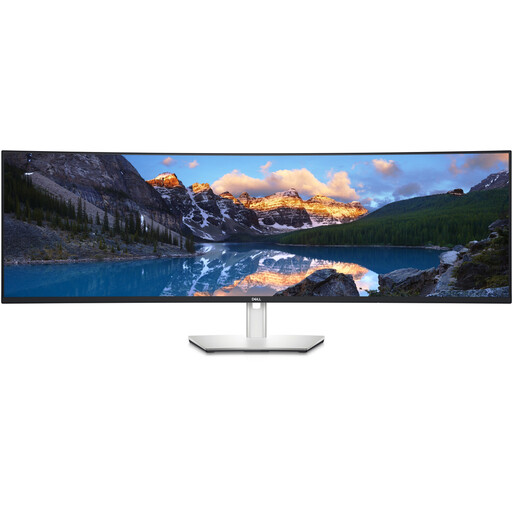
Dell UltraSharp U4924DW, 49-inch, 5K Dual QHD

Dell UltraSharp U4924DW, 49-inch, 5K Dual QHD

This 49-inch model may be worth considering if you need several views side by side; check that you have enough desk space.

The model name specifies 5120 × 1440 pixels and 60 Hz.

Joybuy

Philips 345B1C, 34-inch, WQHD ultrawide

Philips 345B1C, 34-inch, WQHD ultrawide

The wide format may suit you if you want to use catalogue windows and document views side by side; check the width of your desk.

The model name specifies 3440 × 1440 pixels, 100 Hz, VA, 1500R and 4 ms.

Joybuy

Dell Pro Plus P2725DE, 27-inch, QHD

Dell Pro Plus P2725DE, 27-inch, QHD

A QHD option if you want to fit a catalogue form, search results and a scan into a manageable window layout.

The model name specifies a 27-inch screen and a resolution of 2560 × 1440 pixels.

USB-C video and power delivery require a compatible computer and suitable cable.

Joybuy

Acer Vero B247YGbmiqprx, 24-inch monitor

Acer Vero B247YGbmiqprx, 24-inch monitor

A compact option if you have limited desk space and often work on individual records.

The model name specifies a 24-inch display.

Joybuy

Frequently asked questions

Can a new monitor detect duplicate music entries by itself?

No. A monitor displays records and scans; decisions about entries and copies are part of the cataloguing process. For collections, RISM describes, for example, main entries for the collection and individual entries for the works it contains. Automatic duplicate detection depends on the software you use, not the monitor’s resolution.

How should I set up my monitor for longer cataloguing sessions?

Adjust the text size, window layout and screen position to suit your work, and watch out for distracting reflections. For workplace display screen equipment covered by ASR A6, the relevant requirements must be followed; the Federal Institute for Occupational Safety and Health distinguishes the rules, among other things, from private use outside teleworking.

How can I compare monitor power consumption?

Compare the energy labels and their corresponding model data on the same basis of use. The European Commission assigns electronic displays an efficiency class from A to G; the label shows consumption in kWh per 1,000 hours. To calculate your own costs, you’ll also need your usage time and electricity tariff.

What are my rights when buying online or if a monitor is faulty?

In Germany, consumers buying at a distance generally have a right to cancel; the period is usually 14 days, subject to statutory requirements and exceptions. The Consumer Advice Centre distinguishes statutory consumer rights from a voluntary guarantee. It also explains that changes to repair rights since 31 July 2026 apply to monitors too.