Product photos for print
If you regularly match product colours for catalogues, packaging or other printed materials, a reliable colour workflow matters more than especially vivid screen colours.


Choose a monitor based on how you’ll use the images. If you regularly prepare print-ready products, a suitable colour space and a calibratable colour workflow matter more than resolution alone. For product images used mainly online, detail and a practical sRGB workflow may be the priority. Then check that the height, viewing angle and reflections work for you both sitting and standing, and that the connections suit your computer. Manufacturers’ colour-coverage claims are no substitute for checking your own colour workflow.
If you regularly match product colours for catalogues, packaging or other printed materials, a reliable colour workflow matters more than especially vivid screen colours.
If you edit batches of images at a height-adjustable desk, the screen height, viewing distance and any reflections need to work in both positions.
If you mainly check crops and retouching for digital product images, detail and a suitable colour workflow should be priorities, without automatically favouring print features.
A good fit if: You regularly assess product colours for print or client approval and need a carefully configured colour workflow.
The trade-off: Calibration requires the right process and may call for additional measuring equipment; USB-C charging power varies by model.
A good fit if: You work on crops and retouching, and want to consider an Adobe RGB mode alongside digital outputs.
The trade-off: Resolution and colour-space specifications alone don’t confirm the colour accuracy of an individual unit or whether its height will suit your desk.
A good fit if: You often connect a laptop or switch between devices at your desk, and want to check video, charging and hub functions together.
The trade-off: Charging power and protocols need to suit your laptop; a built-in hub alone doesn’t guarantee adequate colour control for print.
| Buying priority | What to look for | Who it matters most to |
|---|---|---|
| Colour control for print | Check the specific model’s Adobe RGB mode, calibration method and uniformity correction; find out whether a measuring device is required. | If I’m matching product colours for print, I need a reliable colour workflow rather than high colour coverage alone. Around 29% of consumers prioritise colour control for print. |
| Sit-stand set-up | Check the adjustment range and stand depth; if you’re adding a monitor arm, also check the mounting pattern and weight capacity. | When switching between sitting and standing, I want to be able to adjust the height, distance and viewing angle to suit me. Around 29% of consumers prioritise a set-up that works for different working positions. |
| Image detail for digital use | Consider resolution alongside screen size, and check that image detail and your software’s interface are easy to see. | For digital product images, I want to assess crops and retouching details clearly, without assuming I need print features. Around 24% of consumers focus primarily on image detail. |
| Laptop connectivity | Compare the video protocol, the charging power you need, and the data and video ports actually available. | When I work on a laptop, the display signal and charging need to suit my computer. Around 18% of consumers prioritise laptop connectivity. |
A colour-space specification alone doesn’t tell you whether colours will match throughout your own editing and printing process.
Check the calibration method, any extra equipment required and the needs of your print output together.
A suitable monitor arm may need extra space or a compatible mounting solution.
USB-C doesn’t automatically mean that video, data and enough charging power will all work with every laptop.
Compare your laptop’s video protocol and power requirements with the ports on the specific monitor model.
Depending on your computer and connection, you may need a separate power supply or a suitable cable.
The ProArt range includes 27-inch 4K monitors with stated colour-space coverage and USB-C connectivity.
The SW272U, PD2732U and SW270C differ in resolution, connectivity and calibration features.
The ColorEdge CS2740 is a 27-inch 4K photo monitor designed for a configured colour workflow.
The UltraSharp U2725QE is described as a height-adjustable 27-inch hub monitor for a workspace where connectivity is a priority.
This selection includes monitors for detailed digital product images, sRGB workflows and an adjustable workspace set-up.
 No image available
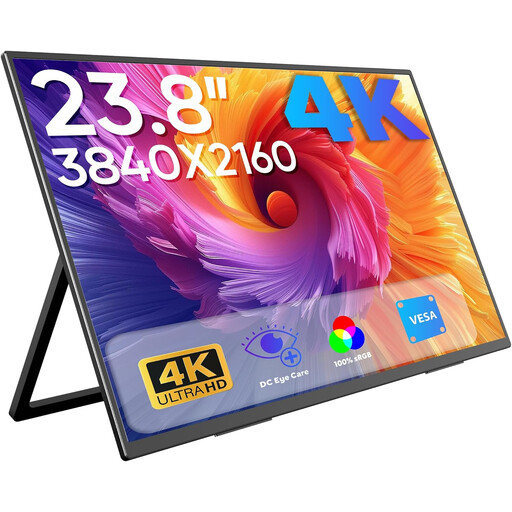
A portable option for detailed product images and digital sRGB output.
The product specifications list 3840 × 2160 pixels, 60 Hz and 100% sRGB. A built-in folding stand is also included.
 No image available
A possible choice if you want 4K image detail with a stand that can be adjusted to suit different working positions.
The product specifications list 3840 × 2160 pixels, an IPS panel and 60 Hz. The stand is described as height-adjustable, tiltable, swivelling and pivotable; 10-bit colour depth is also specified.
 No image available
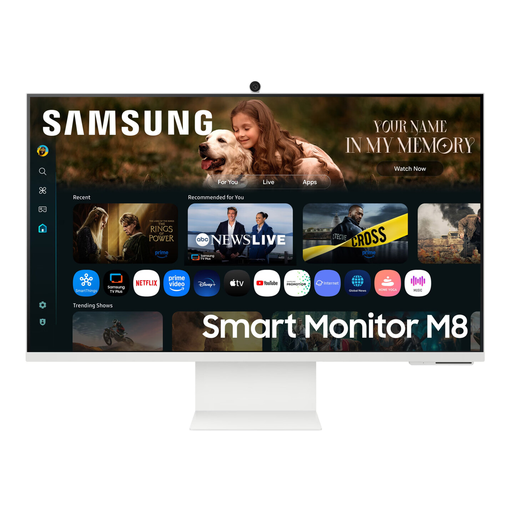
An option for editing larger product images if you need a height-adjustable stand and digital sRGB output.
The product specifications list a 32-inch VA display with 3840 × 2160 pixels, 60 Hz, 99% sRGB and a built-in webcam. The stand is described as height-adjustable and tiltable.
 No image available
The wide display may suit large product images and digital sRGB workflows. Check first that the screen size and resolution will work in your workspace.
The product specifications list an IPS display with 5120 × 2160 pixels, 99% sRGB and 100 Hz. The stand is described as offering 120 mm of height adjustment, plus tilt and swivel functions.
 No image available
A possible choice if you want to compare 4K detail, several stated colour spaces and a height-adjustable stand in one model.
The product specifications list 3840 × 2160 pixels, 120 Hz, 100% sRGB and 99% Adobe RGB. USB-C with 90 W Power Delivery and 150 mm of height adjustment are also listed.
No, not just because you’re working with product photography. Choose a colour space to suit your actual output and colour workflow. If you’re considering a monitor with an Adobe RGB mode, check how to set it up for digital output too. The manufacturer’s colour-coverage claim doesn’t guarantee accurate colours on other screens.
Check the screen position both sitting and standing, and pay attention to viewing distance, readability and reflections. The Federal Institute for Occupational Safety and Health describes sit-stand movement as switching between working positions. Before mounting the monitor on an arm, check that the specific monitor is compatible with your chosen arm.
A planned hardware calibration workflow may require a suitable measuring device. EIZO lists an optional calibration sensor for the CS2740; check what accessories the process you have in mind requires for each model.
The European Commission generally classifies computer monitors under the rules for energy labelling and ecodesign for electronic displays. The Federal Network Agency lists CE marking, product identification and manufacturer details among the points it checks as part of market surveillance. This general guidance doesn’t confirm that an individual listing complies; check the documentation for the specific model.
According to the consumer advice centre, online consumer contracts generally come with a 14-day right to cancel, starting from the day you receive the goods; this is stated in its information dated 13 August 2026. Check whether your purchase is a consumer contract and whether any exception applies. The right to cancel because you’ve changed your mind is different from your statutory rights if goods are faulty.