Writers working with sources side by side
If you keep a draft and folklore sources open at the same time, compare the usable width at your usual text size with the space available on your desk.


If you keep your manuscript and sources open side by side, an ultrawide monitor is an obvious choice — provided the window layout, text size and desk space work for you. For longer passages and a smaller footprint, an adjustable 27- or 32-inch 4K monitor may better suit your workflow. Two screens are another option if you prefer to keep documents on separate displays. Also check the scaling, your computer’s ports and the available desk space.
If you keep a draft and folklore sources open at the same time, compare the usable width at your usual text size with the space available on your desk.
If you read and edit lengthy passages, clear text and a comfortable screen position may matter more than extra window width.
If you regularly connect a laptop, check its video output and charging requirements against the features of the monitor you’re considering.
A good fit if: You want your manuscript and sources side by side on a wide screen and have enough desk space.
The trade-off: More horizontal space doesn’t automatically mean more room vertically for long pages. Check readability with your preferred window layout.
A good fit if: You prioritise high native resolution and a manageable footprint over maximum window width.
The trade-off: With scaling set for comfortable reading, two wide document windows may feel more cramped than on an ultrawide screen.
A good fit if: You want a 27-inch workspace and 2560 × 1440 pixels is enough for your window layout.
The trade-off: It has fewer pixels than the 27-inch 4K model mentioned here. Check the ports on the specific model you’re considering.
A good fit if: You want to arrange text windows across a larger area, or keep your manuscript and sources on separate displays.
The trade-off: With a larger single screen, make sure your desk and monitor arm can accommodate it. With two monitors, check your computer’s outputs, desk space and layout.
| Buying consideration | What to check before buying | Who is it important to? |
|---|---|---|
| Room for your manuscript and sources | Window layout at your usual text size; aspect ratio, resolution and monitor width. | If you keep a draft and sources open at the same time, usable window space is what matters most to you. Around 37% of consumers put this kind of side-by-side workspace first. |
| Reading long texts comfortably | Resolution and operating system scaling; reflections and adjustment options. | If you mainly read and edit long passages, you’ll want to adjust the text size and screen position to suit you. Around 27% of consumers prioritise readability for long texts. |
| Connecting a laptop | Your laptop’s video output and charging requirements; the monitor’s video, data and Power Delivery specifications. | If you regularly work on a laptop, you’ll want to know before buying whether the connection supports the features you need. Around 18% of consumers put laptop connectivity first. |
| Desk space and positioning | Available desk width and depth; dimensions and the stand or arm. | If your desk is short on space, the screen and its stand or arm need to fit your workspace. Around 18% of consumers prioritise the space available for their monitor. |
A wide screen gives you more horizontal space for side-by-side windows, but not necessarily more vertical room for long pages. LG lists the 34WR55QK-B as having 3440 × 1440 pixels, a 21:9 aspect ratio and a width of 809 mm.
Try your preferred window layout at your actual text size, and measure the space available on your desk.
Ports and charging power vary by model. A USB-C port on its own doesn’t tell you whether your laptop can output video through it or charge sufficiently.
Check your laptop’s video output and charging requirements against the specifications of the specific monitor.
Depending on your laptop, you may also need a separate power adapter or a different video connection.
Descriptions of coatings and specialist modes tell you about product features, but they aren’t independent evidence of how a monitor will feel to use for your writing.
Consider your lighting, potential reflections, text size and screen position when choosing and setting up your monitor.
The 34WR55QK-B is a notable 34-inch ultrawide option if you want one wide screen.
The 27-inch P2725QE and S2725DSM offer different 4K and QHD options in a standard format.
The ProArt PA279CRV is a 27-inch 4K option with specified features for colour work and USB-C.
The RD320UA is a 31.5-inch 4K option with a flexible arm for a suitably set-up workspace for writing.
According to Philips, the 34B2U3600CH/00 combines a wide 34-inch format with office connectivity.
The following Joybuy products are wide single-screen monitors designed for working with text side by side. Compare the resolution, screen width, ports and footprint with your computer and desk.
 No image available
The wide 21:9 screen may suit you if you want to arrange your manuscript and sources side by side.
Specifications include 5120 × 2160 pixels, an IPS panel and a height-adjustable stand. USB-C with 65 W Power Delivery and PIP/PBP are also listed. The stated width is 944,1 mm, so measure your desk.
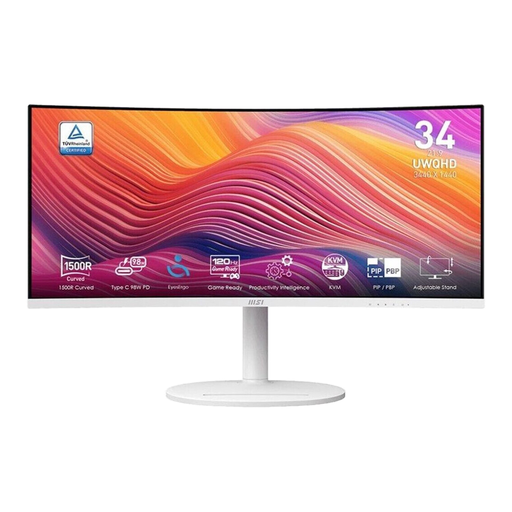 No image available
The 34-inch format is an option if you want to arrange several text windows on an ultrawide screen.
Specifications include 3440 × 1440 pixels, a 21:9 aspect ratio, a VA panel and 120 Hz. The stand is tilt-adjustable, and VESA mounting is also listed.
 No image available
The 21:9 format may suit you if you want room for your manuscript and sources on one wide screen.
Specifications include 3440 × 1440 pixels, a VA panel and a curved design. The product name lists 180 Hz; HDMI and DisplayPort inputs, as well as VESA compatibility, are also specified.
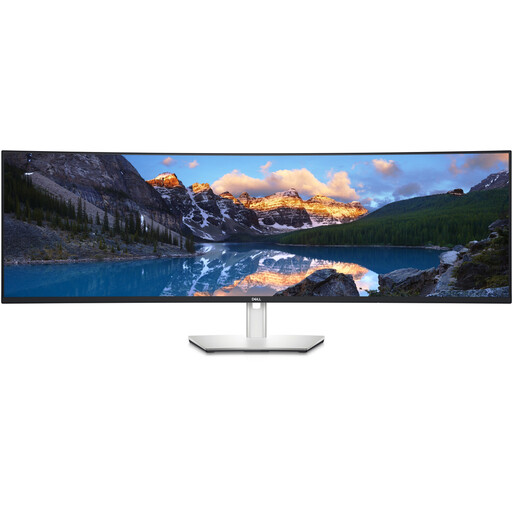 No image available
The 32:9 format lets you arrange your manuscript and sources across an especially wide screen.
Specifications include 5120 × 1440 pixels and an IPS panel. Other listed features include USB-C with 90 W Power Delivery, a USB hub and RJ45. The stated width is 1214,9 mm; check that the screen and stand will fit on your desk.
 No image available
The 34-inch ultrawide screen may suit your workflow if you want to open text windows side by side across a wide display.
Specifications include 3440 × 1440 pixels, a 21:9 aspect ratio, a VA panel and 100 Hz. Other listed features include a USB hub, 180 mm of height adjustment and MultiView PIP/PBP.
Start by comparing both windows at your usual text size and scaling. The LG model mentioned here has 3440 × 1440 pixels in a 21:9 format, which mainly gives you more width. The 27-inch 4K models listed offer more vertical pixels. There’s no minimum resolution that suits everyone.
No. The USB-C label alone doesn’t confirm that video output and charging will work with your laptop. Check your laptop’s video output and charging requirements against the monitor’s port specifications. LG lists up to 65 W for the 34WR55QK-B, while ASUS lists DisplayPort over USB-C and 96 W Power Delivery for the PA279CRV.
Choose a screen position that suits your workspace, make sure the text is easy to read and check for possible reflections. The German Federal Institute for Occupational Safety and Health covers screen-based work under ASR A6 within its scope, including work at fixed screen-based workstations. The regulation doesn’t apply universally to every home desk.
Your statutory rights if a product is faulty are against the seller and are separate from a manufacturer’s guarantee, as the consumer advice centre explains. For an online consumer contract, you generally have a 14-day right to cancel after receiving the goods. Exceptions and the terms of the specific contract should be taken into account.
No. In Germany, old electrical equipment must not be put in unsorted municipal waste. The Federal Environment Agency lists local collection points as an option for returning it. The relevant requirements apply to free take-back from private households and to retailers’ obligations.