If you want to view a dashboard and report side by side on one computer, a 21:9 monitor with 3.440 × 1.440 pixels is a sensible starting point. Check that both windows fit at a comfortable, readable size. If you need more horizontal pixels or want to connect two computers at once, consider a 32:9 model with 5.120 × 1.440 pixels. Separate monitors are another option if you want to position each display independently. Desk space, your computer’s video output and its charging requirements are also important considerations.
Which option is right for you?
People working with dashboards and reports
If you mainly want to read two windows at once on one computer, window layout and clear, readable text are important things to consider. Microsoft Support explains how to snap windows side by side in Windows.
People who need a large amount of screen space
If you need particularly wide screen space or want to display two computer signals at once, compare 32:9 models and their specific picture-by-picture features. LG Germany and Samsung Germany list these features or resolutions for certain models.
People who switch between computers
If you want to connect and charge a laptop or switch between computers, check video transmission, switching and the required charging power separately. The specifications from Dell Germany, Samsung Germany and EIZO each refer to specific models.
What should you consider when buying?
21:9 for two windows
A good fit if: Your dashboard and report mainly come from the same computer and you want one continuous workspace. Dell lists a resolution of 3.440 × 1.440 pixels at 21:9 for the P3425WE.
Trade-off: Compared with the 5.120 × 1.440 pixels of a 32:9 model, there are fewer horizontal pixels available.
32:9 for more horizontal screen space
A good fit if: You need an especially wide display or want to show two computer signals at once. LG lists a resolution of 5.120 × 1.440 pixels for the 49U950A-W, while Samsung lists Picture-by-Picture for the ViewFinity S95UF.
Trade-off: A 49-inch model takes up a lot of desk space, and Picture-by-Picture isn’t needed to display two windows from the same computer.
Two separate monitors
A good fit if: You want to position each display independently or keep using a screen you already own.
Trade-off: You’ll need separate space for each display. The German Social Accident Insurance examined dual screens compared with a single 22-inch screen; this doesn’t establish a general performance advantage over ultrawide monitors.
| Priority |
What to check before buying |
Who it matters most to |
| Readable text in both windows |
Arrange both windows at the size you plan to use and check your computer’s native resolution. Microsoft Support notes that text can look blurry at a lower resolution. |
If I’m reading a dashboard and report at the same time, I don’t want to keep resizing windows or straining to read the text. Around 36% of consumers are likely to make readability their top priority. |
| One screen instead of two |
Measure the monitor and stand, along with the available desk space. Also consider whether it’s important to you to position each display separately. |
If I want to replace two displays with one continuous panel, I’ll measure the space carefully first. Around 29% of consumers are likely to make this change their top priority. |
| Computers and connections |
If you’re connecting two computers, check the inputs, Picture-by-Picture and, where relevant, KVM on the specific model. For a laptop, check video transmission and the charging power required. |
If I switch between computers or connect a laptop, the connections need to work with my devices. Around 21% of consumers are likely to prioritise ports and switching between computers. |
| Space and running costs |
Check the dimensions of the device and stand, along with the adjustment options. For energy consumption, refer to the energy label for the specific model. |
If my desk is short on space or I’m keeping an eye on energy use, I’ll compare the setup and model specifications beforehand. Around 14% of consumers are likely to make space and running costs their top priority. |
Common misconceptions
-
49 inches doesn’t automatically mean two QHD workspaces
When comparing with two QHD displays, the key factor is the 5.120 × 1.440-pixel resolution, not just the screen size. The monitor also needs to fit on your desk.
Check the specific model’s native resolution and actual width, including the stand.
-
Two windows aren’t the same as two video signals
For two windows on a Windows computer, a suitable window layout is all you need. Picture-by-Picture for two computers requires compatible inputs and the relevant feature on the specific monitor.
First decide whether you want to connect one computer or two. Then check for Picture-by-Picture, KVM and the connections you’ll need.
-
USB-C doesn’t guarantee that every laptop will charge sufficiently
Dell lists USB-C power delivery of up to 90 W for the P3425WE, while EIZO specifies 94 W Power Delivery for the FlexScan EV3450XC. These model specifications don’t prove that the power will be sufficient for every laptop.
Check that your computer’s video output and charging requirements match the specifications of the exact monitor model.
If your video or charging requirements aren’t met, you may need a different connection solution.
-
An older ranking doesn’t prove current availability or that it’s the same model
On 7 April 2026, CHIP listed the LG 49WQ95X-W at number 2 in its selection. LG Germany marks this exact model as no longer available; it shouldn’t be confused with another LG model.
Check the ranking, exact model name and current product page separately.
Key brands at a glance
Dell
The Pro P3425WE is a 34.1-inch 21:9 option for a continuous workspace.
- Dell lists a resolution of 3.440 × 1.440 pixels, height adjustment and USB-C power delivery of up to 90 W for this model.
- Whether the charging power is sufficient for a particular laptop depends on its connection and power requirements.
LG
The 49U950A-W is a 49-inch 32:9 option with high horizontal resolution.
- LG Germany lists a resolution of 5.120 × 1.440 pixels for this model.
- The manufacturer’s description of the screen space as equivalent to two QHD displays isn’t a measure of ergonomics or productivity. The 49WQ95X-W is a different model, which LG Germany lists as no longer available.
Samsung
The ViewFinity S95UF is a 49-inch option for displaying two computer signals at once.
- Samsung lists Picture-by-Picture, KVM, LAN and 90 W USB-C for this model.
- Check that the specific inputs and switching features work with your computers.
Philips
The Curved Business 49B2U5900CH/00 is a 49-inch 32:9 model with an integrated webcam.
- Philips lists a resolution of 5.120 × 1.440 pixels and an integrated webcam for this model.
- If you don’t make video calls at your monitor, don’t assume you’ll benefit from the webcam.
EIZO
The FlexScan EV3450XC combines a 34.1-inch 21:9 screen with a webcam and USB-C docking.
- EIZO lists a resolution of 3.440 × 1.440 pixels and 94 W Power Delivery for this model.
- Check that the connections, charging power and integrated features suit your devices and workflow.
Joybuy products for working across multiple windows
This selection features 21:9 ultrawide monitors for working with multiple windows on one display. Some models also include features for using multiple video sources.
 No image available
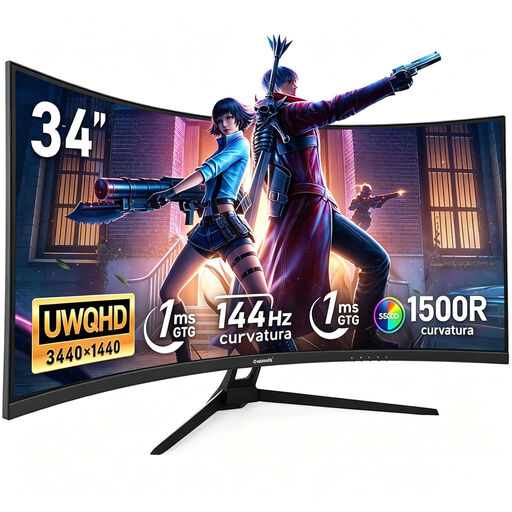
Gawfolk 34-inch Curved Gaming Monitor, UWQHD 3440 × 1440
The 34-inch 21:9 screen gives you a wide display for viewing a dashboard and report side by side.
Specifications listed in the product title: 3.440 × 1.440 pixels, 144 Hz, 1500R curvature and no speakers.
Joybuy
 No image available
INNOCN E34A1R 34-inch Curved Monitor
The 34-inch ultrawide format is designed for viewing a dashboard and report on one display; PIP&PBP is listed in the product title for this model.
Specifications listed in the product title: 3.440 × 1.440 pixels, 21:9, 200 Hz and 1500R curvature. Check which inputs and display modes your devices need.
Joybuy
 No image available
INNOCN 40C1U 40-inch Monitor
The 40-inch screen offers a wide display for working with multiple pieces of content at once; check which resolution your computer supports.
Specifications listed in the product title: 5.120 × 2.160 pixels, 21:9, PIP&PBP and 65 W USB-C Power Delivery. Check that the charging power meets your computer’s requirements.
Joybuy
 No image available
MSI MAG 341CQPDE QD-OLED 34-inch UWQHD Monitor
The 34-inch 21:9 UWQHD screen gives you a wide display for working with multiple windows.
Specifications listed in the product title: curved screen, 21:9 and 175 Hz.
Joybuy
 No image available
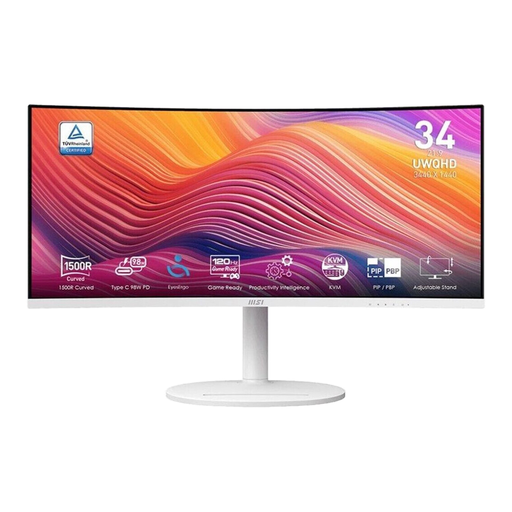
MSI Modern MD342CQPWDE 34-inch UWQHD Office Monitor
The 34-inch ultrawide format is well suited to viewing multiple pieces of content on one display.
Specifications listed in the product title: curved screen, VA, 21:9 and 120 Hz.
Joybuy
Frequently asked questions
Do I need Picture-by-Picture to view a dashboard and report on one computer?
No. In Windows, you can snap two application windows side by side on one display. Picture-by-Picture is useful on compatible monitors when you want to display separate video signals at the same time.
What can I do if text or windows don’t look right after connecting the monitor?
Check the monitor’s native resolution in your display settings, then check the scaling. Microsoft Support notes that text can look blurry at a lower resolution.
Are the manufacturer’s warranty and your statutory rights the same thing?
No. Under the EU consumer rules explained by Your Europe, when you buy from a trader, you have a legal guarantee of at least two years from the date you receive the goods, and it applies against the seller. A voluntary manufacturer’s warranty is separate; these rules don’t apply to purchases from private individuals.
Which rules and information are relevant to using a monitor at work?
For screen-based work at a workplace or in a teleworking environment, the Federal Institute for Occupational Safety and Health describes ASR A6. Its scope doesn’t make it a blanket requirement for every personal use at home. The EU energy label also offers a useful guide when comparing the energy consumption of specific models.


