Schema and SQL multitaskers
If you want to keep your schema, SQL editor and documentation in view at the same time, a clear, readable workspace and enough room to arrange your windows are key.


When choosing a monitor for database schema work at a shared desk, start with the readable workspace you need and the space available. A single larger screen and multiple monitors are different solutions, and neither is automatically better. If different laptops will be connected, also check the video and USB connections, charging power and how easily the screen can be adjusted for different users.
If you want to keep your schema, SQL editor and documentation in view at the same time, a clear, readable workspace and enough room to arrange your windows are key.
If different laptops are used at the shared desk, make sure the monitor and devices support the video, USB and, where needed, charging connections you require.
If several people use the same desk, the monitor’s adjustment options and how it fits on the desk are important. The DGUV notes that results with multiple screens vary depending on their arrangement and the task.
First, decide which requirement matters most at your shared desk. Then check the relevant features on the specific monitor and the laptops you use.
| Buying priority | What to check | Who will find this most important? |
|---|---|---|
| Readable space for multiple views | Consider the resolution, text size you prefer, scaling and available desk space together. | If I want to read my schema, SQL query and documentation side by side, a clear, readable workspace is my main priority. Around 36% of consumers would make this their priority. |
| Switching between laptops | Check video over USB-C, charging power, USB connections, KVM functionality and the cables you need. | If I switch between laptops at a shared desk, I want to connect my devices without unnecessary cable swapping. Around 29% of consumers would prioritise switching between computers. |
| Adjustability at a shared desk | Check the height, tilt and swivel adjustments, as well as how the monitor can be positioned for each user. | If several people use the screen in turn, I want to be able to adjust it easily to suit each person’s seating position. Around 21% of consumers would consider adjustability especially important. |
| Compact size | Compare the width and depth, including the stand, with the space available. Check that the resolution will work for your windows. | If there’s limited room on my shared desk, I want to prioritise a suitable size over the largest possible display area. Around 14% of consumers would focus above all on a compact monitor. |
A USB-C port on its own doesn’t tell you whether it supports video, provides enough charging power, or supports USB devices and KVM switching. Your laptop must support the features you need, too.
Check the features and stated Power Delivery output of the exact monitor, and make sure they’re compatible with the laptops you use.
Depending on your laptop, you may need an additional dock or suitable cables.
A very wide display takes up space, and more pixels don’t guarantee easy-to-read text or a suitable window layout.
Compare the desk dimensions and stand with the monitor size. Also check whether the scaling you want makes your work windows easy to read.
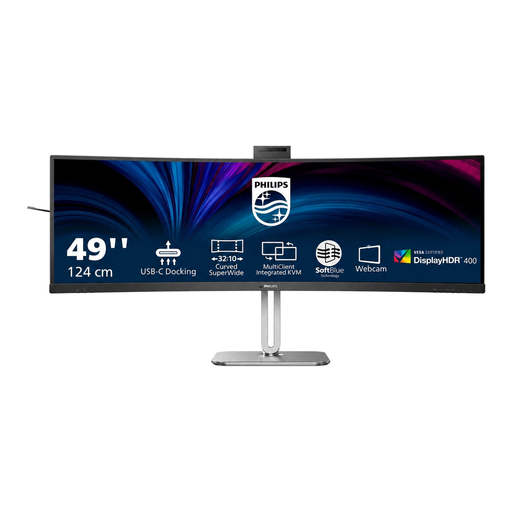
LG lists the 49WQ95X-W as no longer available on its German product page, even though the model appears in a monitor selection by CHIP.
Use it as an example of an ultra-wide format, and check the availability of the specific model on offer separately.
The RD320UA is an example of a large 4K single monitor with USB-C docking and switching features.
The S2725DSM is an example of a height-adjustable 27-inch QHD single monitor.
The FlexScan EV2490 combines a compact 23.8-inch format with USB-C docking and KVM.
The UltraWide 49WQ95X-W shows how you can arrange multiple views on a single ultra-wide screen.
The ProArt PA279CRV is another model included in a selection of monitors for office and home working.
This selection covers single monitors for shared desks, from compact Full HD models to large displays for multiple work views. Compare the space available, resolution you need and connections on the laptops you use with the specifications for each model.
 No image available
For multiple work views on a single screen, provided the format and positioning suit your desk.
40 inches, 5120 × 2160 pixels, IPS, 100 Hz and 21:9; USB-C with 65 W Power Delivery, plus PIP and PBP. Height-adjustable.
The stated dimensions with the stand are 944.1 × 573.5 × 241.1 mm; check the space available.
 No image available
For multiple views on a very large single monitor, if you have enough desk space.
49 inches, 5120 × 1440 pixels, curved display and 75 Hz.
The stated dimensions with the stand are 1193 × 268 × 583 mm; compare them with your desk before setting it up.
 No image available
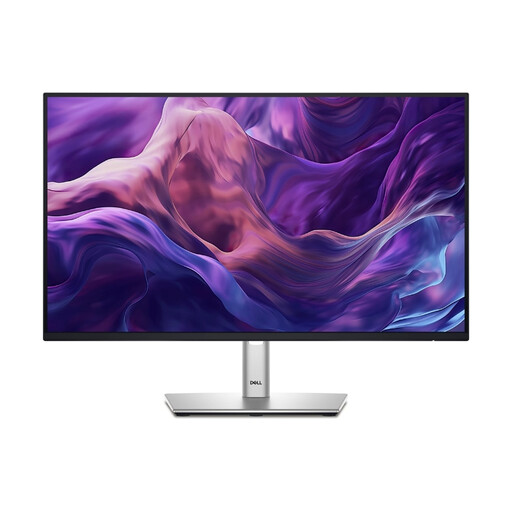
A compact single monitor for when space is limited at a shared desk.
24 inches, Full HD, IPS and USB-C.
 No image available
For working with a schema and SQL editor on a single QHD monitor, with docking and KVM features if needed.
27 inches, 2560 × 1440 pixels, IPS and 100 Hz; USB-C with 98 W Power Delivery, KVM and an integrated webcam.
 No image available
For multiple work windows on a 27-inch single monitor, if a QHD format suits the space available.
27 inches and 2560 × 1440 pixels.
It depends on how you arrange your windows and how much desk space you have. An older laboratory study by the DGUV’s Institute for Occupational Safety compared specific 22-inch setups for standardised office tasks; it doesn’t establish that one setup is generally better for database schema work.
Adjust the height, orientation and layout to suit the person using it. Within the scope of the Workplace Ordinance, ASR A6 sets out requirements for screen-based work. The DGUV notes that the relevant rules generally apply to desk-sharing, too. This doesn’t mean there’s a universal minimum size for every monitor bought for personal use.
Check the energy label for the specific display and consider whether you’ll need extra cables or a separate dock. The European Commission explains the energy labelling rules for electronic displays. According to Verbraucherzentrale, online purchases generally come with a 14-day right to cancel; the conditions should be checked for each individual case.
Dispose of an old monitor separately as waste electrical equipment. The German Environment Agency lists local collection points and retailer take-back options; check the conditions of your chosen collection point before dropping it off.