What should you look for when buying?
Start by managing the light from your window, then compare the available detail area and display size, and finally check the colour workflow and connections. The German Social Accident Insurance recommends positioning screen-based workstations so that your line of sight is parallel to the window front.
| Buying consideration |
What to look for |
Who is it most relevant to? |
| Window light |
Check the position of your window, adjustable blinds or shades, monitor tilt and surface finish; don’t confuse typical brightness with peak HDR brightness. |
If I see reflections on the texture as daylight changes, I want to get the window, blinds or shades and monitor angle under control first. Around 36% of consumers prioritise managing window light. |
| Seam details |
Check the resolution and display size at your chosen scaling, as well as the space available for your image editor and 3D view. |
What matters to me is being able to compare the UV texture and 3D view side by side while still making out fine transitions. Around 29% of consumers prioritise a detailed view of texture seams. |
| Colour control |
Check that the colour mode suits your output, and look at the monitor profile, calibration options and lighting during calibration. |
If texture colours are destined for output, I need a mode that suits the intended result and a repeatable profiling process. Around 21% of consumers put colour control first. |
| Connections and switching between devices |
Check video transmission, compatible cables, your laptop’s charging requirements and the switching functions you need on the specific model. |
If I connect several computers or regularly switch between devices, I check the video signal, charging power and switching functions on the specific model. Nearly 14% of consumers prioritise laptop connectivity and switching between devices. |
Monitors at Joybuy
The Joybuy models below offer different screen sizes for detailed work and a range of connection options. Compare the resolution, surface finish and space available for your UV texture and 3D view with your workspace.
 No image available
INNOCN 40C1U, 40-inch, 5120 × 2160, IPS, 100 Hz
The wide format is an option if you want to fit several work views on one large screen.
Specifications include a 40-inch display, 5120 × 2160 pixels, IPS, 100 Hz and 21:9; PIP and PBP are also listed.
A matte surface, height-adjustable stand and USB-C with 65 W Power Delivery are listed.
View at Joybuy
 No image available
INNOCN CB27U1, 27-inch, 4K UHD, white
The 27-inch 4K specification makes this model an option for checking details; see how readable it is at your chosen scaling.
Specifications include 3840 × 2160 pixels, IPS and 120 Hz; the surface is described as NON-GLARE.
Height adjustment of up to 150 mm, PIP and PBP, and USB-C with 90 W Power Delivery are listed.
View at Joybuy
 No image available
ASUS ROG Swift OLED PG32UCDMR, 32-inch, 4K UHD, 240 Hz
The 32-inch 4K screen is an option if you prefer a larger view for checking details; make sure it suits your desk and viewing distance.
The product specifications list QD-OLED, 3840 × 2160 pixels and an anti-glare surface.
USB-C with 90 W Power Delivery is listed; check that the charging power and connections suit your computer.
View at Joybuy
 No image available
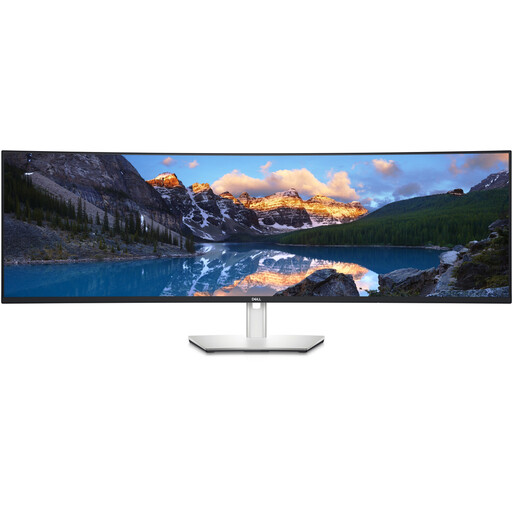
Dell UltraSharp U4924DW, 49-inch, 5120 × 1440, 60 Hz
The wide format is an option if you want to arrange several work windows side by side.
Specifications include a 49-inch screen and 5120 × 1440 pixels; the vertical resolution is 1440 pixels, below 4K at 2160 pixels.
The product specifications list an IPS panel, 98% DCI-P3 and USB-C with 90 W.
View at Joybuy
 No image available
MSI PRO MP275QPDGDE, 27-inch, WQHD, docking
This model is an option if docking and switching between devices matter to you; for fine seam details, bear in mind that it has WQHD resolution.
It has an IPS panel and 2560 × 1440 pixels; the resolution is below 4K at 2160 pixels.
USB-C with 98 W Power Delivery and an integrated KVM switch are listed.
View at Joybuy
Frequently asked questions
Is an anti-reflective monitor enough right beside a sunny window?
Not necessarily. The German Social Accident Insurance recommends positioning screen-based workstations so that your line of sight is parallel to the window front, and controlling incoming light with adjustable blinds or shades where needed. ASR A6 sets out requirements for workplaces and teleworking environments within its scope; it isn’t a blanket rule for every home workspace.
How can I check a visible seam before blaming the monitor?
Compare the area in the texture view and the 3D view. The Blender Foundation describes Seam Bleed as extending the paint beyond the edges of UV islands to avoid visible artefacts; a higher monitor resolution won’t correct the texture data itself.
Do I need to calibrate a monitor for colour-critical textures?
If you’re making colour-critical decisions, Adobe recommends using an accurate monitor profile and calibration, as well as keeping the lighting stable during set-up. This is a recommendation for this workflow, not a general legal requirement when buying a monitor.
How can I check energy ratings and consumer rights when buying online in Germany?
For monitors covered by the rules, the EU energy label and EPREL information can help you compare the stated energy characteristics, as explained by the European Commission. The Verbraucherzentrale distinguishes statutory consumer rights from a voluntary guarantee. For many online purchases, you generally have a 14-day right to cancel from the day you receive the goods, subject to the relevant legal conditions.


