People who compare entries side by side
If you’re checking a transcript, an index list and possible duplicate entries at the same time, having a clear view of your windows is important.


If you mainly compare a transcript and an index list side by side, a well-positioned 27-inch QHD monitor is a sensible starting point. If you want a third window to stay open, a 34-inch ultrawide model could be a good fit. The key factors are readable text at your viewing distance, available desk space and the right connections. A monitor won’t detect or remove duplicate entries for you.
If you’re checking a transcript, an index list and possible duplicate entries at the same time, having a clear view of your windows is important.
When working with longer texts, adjust the font size and screen position to suit your viewing distance and workspace.
If you move between workspaces, check before buying that the monitor’s video signal, the peripherals you need and, if applicable, its power supply are compatible with your laptop.
A good fit if: you usually read a transcript and index list side by side and want to adjust the screen position.
The trade-off: You get less horizontal space than with 3440 × 1440 pixels. Text size also depends on scaling and viewing distance.
A good fit if: you regularly want another window visible alongside the transcript and duplicate list, and you have room for it on your desk.
The trade-off: You’ll need enough room for the larger footprint, and it must suit your seating position. Even on a wider screen, you’ll need to set the text to a comfortable size.
| What you need | What to look for | Who is this most important to? |
|---|---|---|
| Compare multiple views | Check your usual window layout and what font size you can read comfortably; compare 2560 × 1440 with 3440 × 1440 pixels. | If I want to see the transcript and possible duplicates at the same time, space for multiple windows matters most to me. Around 36% of consumers prioritise this side-by-side comparison. |
| Readability and positioning | Check the text at your usual scaling and whether the screen can be positioned appropriately in the space you have in mind. | When working with text for long periods, I want to be able to read it comfortably from my usual seating position. Readability is a priority for around 29% of consumers. |
| Connect a laptop and peripherals | Compare your laptop’s video output and charging requirements with the specifications of the specific monitor; check the connections you need separately. | If I want to use my laptop and accessories at one workstation, the connections need to work with my devices. Around 21% of consumers prioritise laptop connectivity. |
| Desk space and features | Measure the space available and consider how many views you need to keep open at once. | If I usually work through views one at a time, I don’t want to make room for a width I’ll hardly use. Around 14% of consumers prioritise limited space or avoiding unnecessary features. |
3440 × 1440 pixels can give you room for several views, but they won’t check whether entries actually match.
First decide which windows need to be visible at the same time, and plan how to check for duplicates separately from your monitor purchase.
More pixels alone don’t guarantee easy-to-read text; scaling and viewing distance also play a part.
Check the text size at your usual scaling and intended working distance.
A USB-C port on a monitor doesn’t automatically mean your laptop can send the video signal you need through it or charge sufficiently.
Compare video output, charging requirements and the peripherals you need with the specifications of both devices.
The 27E1N1600AE/00 is a 27-inch QHD model with USB-C, making it worth considering for comparing text views.
The documented range includes the 27-inch QHD USB-C hub monitor P2725DE and the wider P3425WE.
The GW2790QT is documented as a 27-inch QHD USB-C monitor for office use.
The L27h-4A combines a 27-inch QHD display with laptop connections.
The 34BA75QE-B business monitor is an ultrawide option for workspaces where you need several views open.
The Joybuy models below range from 27-inch displays to wide ultrawide formats for viewing text side by side. Before choosing, check that the dimensions, connections and readability suit your workspace.
 No image available
For viewing several text windows at once; check that the wide format will fit on your desk.
40 inches; 5120 × 2160 pixels; IPS; 21:9; 100 Hz; USB-C with 65 W; PIP and PBP; height-adjustable.
 No image available
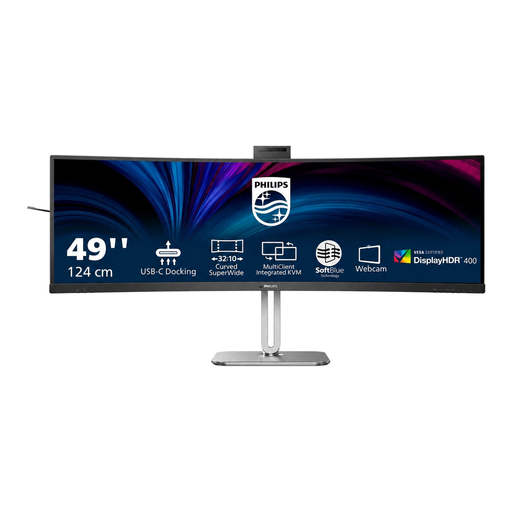
This wide format is worth considering if you want to keep several views open side by side; make sure you have enough room for it.
49 inches; 5120 × 1440 pixels; 32:9; 75 Hz; 2 × HDMI; DisplayPort; 2 × USB-C.
 No image available
An option if you want to view several text windows side by side and a 34-inch format suits your workspace.
3440 × 1440 pixels; 21:9; 100 Hz; USB hub; height-adjustable.
 No image available
For mainly viewing two text windows, if a 27-inch format is a better fit for your available space than a wide ultrawide monitor.
2560 × 1440 pixels; 75 Hz; USB-C with 65 W; USB hub; height-adjustable.
 No image available
A 27-inch QHD option to consider if you mostly work with text windows side by side rather than on a wider display.
2560 × 1440 pixels; LCD.
No. Screen size and resolution can make manual comparisons easier to follow, but you’ll need a suitably configured workflow or appropriate software to check for duplicates automatically.
A 27-inch QHD model could suit you if you mainly compare two text views side by side. A 34-inch ultrawide model is more likely to work if you regularly need another window to stay visible. Consider desk space, seating position and text readability before deciding.
Set the font size and screen position so the text is easy to read at your working distance, and watch out for distracting reflections. For workplaces covered by the rules, ASR A6 sets out requirements for screen-based work; it doesn’t prescribe a particular screen size for every personal purchase.
You can’t tell from the connector shape alone. Check your laptop’s video output and charging requirements, as well as the documented power delivery and connections on the specific monitor. Lenovo lists 75 W for the L27h-4A, while Dell lists up to 90 W for the P3425WE.
If recordings or index entries contain personal data, processing them requires a valid legal basis. Consent is one possible basis, but not the only one. The Federal Commissioner for Data Protection and Freedom of Information also highlights the duty to provide information to the people concerned. Choosing a monitor doesn’t replace this assessment.