Working with several test windows
If you want to view code, failed tests and documentation side by side, and have room for a larger monitor, compare 27-inch QHD models at your preferred text size.


If you often need to read your code editor, test results and documentation at the same time, and have enough desk space, a 27-inch QHD monitor is an obvious choice. If space is tight, a 23.8-inch Full HD model is more compact. For both, check that text is easy to read at your preferred font size. USB-C only simplifies your laptop setup if your laptop, monitor and cable all support video output and the charging power you need.
If you want to view code, failed tests and documentation side by side, and have room for a larger monitor, compare 27-inch QHD models at your preferred text size.
If clear, easy-to-read code is your main priority, consider both screen space and the room you have available. Measure your desk and check whether you can still read your windows comfortably on a compact model.
If you switch between working on the move and at your desk, check that your laptop and monitor support video output and charging over USB-C, and find out how much charging power your laptop needs.
First, work out which windows you need to be able to read at the same time and at your preferred text size. Then measure the space available and check which connections your laptop actually needs.
| Buying priority | What to check | Who it matters most to |
|---|---|---|
| Clear, usable workspace | View your code editor, test output and documentation side by side at your preferred text size; compare screen size and resolution. | If I want to keep code, test results and documentation in view at the same time, the amount of usable screen space matters to me. Around 26% of consumers prioritise having code and test windows open side by side. |
| Desk space | Measure the available desk width and depth; check the dimensions of the specific model, including its stand. | If my desk is small, the monitor and its stand need to fit on it. Around 21% of consumers prioritise a setup that takes up as little space as possible. |
| Essential features | Decide which connections and features you need; only consider extras if they’re useful for other tasks. | If my budget is limited, I want to cover the essentials first and avoid paying for unnecessary extras. Around 21% of consumers prioritise the right basic features over additional equipment. |
| Laptop connection | Check that your laptop supports video output over USB-C, and that the monitor supports Power Delivery at the charging power required. | If I frequently connect and disconnect my laptop at my desk, I want a connection that meets my needs for video output and charging. Around 16% of consumers make laptop connectivity their main priority. |
| Adjustability and energy use | Check whether the specific model can be adjusted for height and tilt; compare EU energy labels for monitors of a similar size. | If getting the right screen position and keeping energy use down matter to me, I check both before choosing. Around 16% of consumers prioritise adjustability and energy use. |
A USB-C port alone doesn’t guarantee video output or enough power to charge your laptop.
Check your laptop, monitor and cable together. Look at the supported video output and compare the charging power with your device’s requirements.
Depending on the combination, you may need a different cable or an adapter, and you might still need to use your laptop’s power supply.
Even a monitor with the right screen size can take up too much room on a small desk if you don’t account for its stand.
Measure the available desk space and check the full dimensions of the specific model, including its stand.
Resolution and colour specifications alone don’t prove that a monitor is better for writing unit tests.
First, check that code and test results are easy to read at your chosen scaling. Consider extra features only if you also need them for specific other tasks.
The documented models range from 27-inch QHD monitors to a QHD monitor with a USB-C hub.
The documented range includes compact 23.8-inch Full HD models and 27-inch QHD monitors.
The FlexScan EV2490 is a compact office monitor with documented docking features.
The ProArt PA279CRV is an option if other tasks beyond unit testing call for its documented display or connectivity features.
The 24MR400-B is an example of the features you might find on a compact 23.8-inch Full HD monitor.
The models below include 27-inch QHD monitors for a larger workspace, as well as compact Full HD options. Ports and features vary by model.
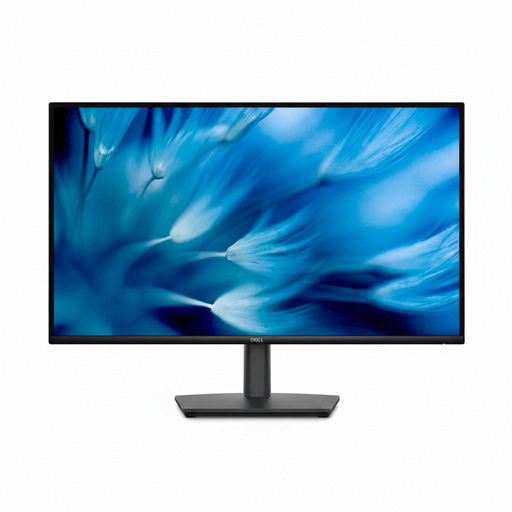 No image available
A 27-inch option if you want to work across several windows on a larger screen.
The product name specifies WQHD, IPS, HDMI, DisplayPort and an 8 ms response time.
 No image available
A larger QHD workspace if you want to view code and test results side by side.
The product name specifies 2560 × 1440 pixels, 75 Hz and USB-C with up to 65 W Power Delivery. Video output and charging over USB-C require a compatible laptop; check that the charging power meets your laptop’s needs.
 No image available
This 27-inch QHD model could suit your setup if you want room for several windows on a larger screen.
The product name specifies 2560 × 1440 pixels and an LCD display. Dell Germany lists USB-C hub features for this model; check the exact specification before buying and make sure it’s compatible with your laptop.
 No image available
A compact screen option if space is limited and you don’t want to set up a large monitor.
The product name specifies 24 inches, 1080p Full HD, IPS and 144 Hz; HDMI and DisplayPort are also listed.
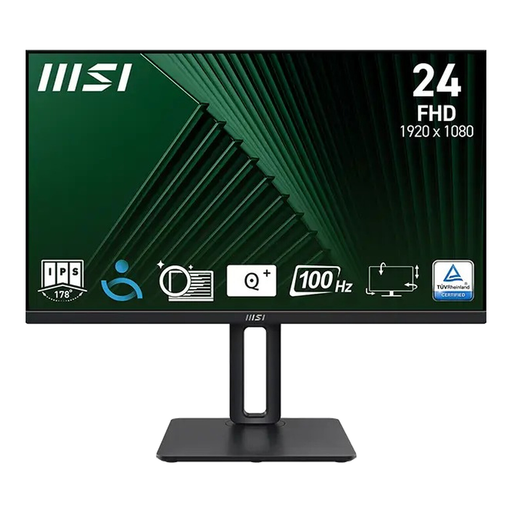 No image available
A compact Full HD option if you want a separate monitor for a smaller desk.
The product name specifies 23.8 inches, Full HD, IPS and 100 Hz. It also lists a height-adjustable stand.
A 23.8-inch Full HD model could work if you mainly use one window on the monitor or use your laptop as a second screen. If you want to view your code editor, test results and documentation side by side on one screen, also compare 27-inch QHD models and check that text is easy to read at your preferred scaling.
No. Check whether your laptop’s USB-C port supports video output and whether the specific monitor’s Power Delivery rating meets your charging needs. EIZO lists up to 70 W through the relevant USB-C upstream port on the FlexScan EV2490.
Adjust the screen position and viewing distance to suit your eyesight and workspace, rather than assuming one setting works for everyone. The Federal Institute for Occupational Safety and Health describes this as guidance for working at a screen; ASR A6 does not apply universally to private student rooms outside teleworking environments.
Compare the EU energy labels of similar monitors and check their efficiency class, shown on a scale from A to G. The European Commission includes electronic displays in this labelling system. Your actual electricity costs also depend on how you use the monitor and your energy tariff.
When you buy from a trader in the EU, you’re generally entitled to a legal guarantee of at least two years for faulty goods. Online purchases generally come with a 14-day right to cancel, subject to legal exceptions; cancellation rights and claims for faulty goods are separate rights. Your Europe, the European Union’s information portal, explains these rights. A voluntary manufacturer’s warranty does not replace the legal guarantee.