Digital graphics reviewers
If you mainly review vector designs for screen use, clearly visible detail at your preferred scaling and a colour mode suited to your output are key. BenQ lists the PD2705U as focused on sRGB.


For screen-based work, a suitable sRGB mode and enough clearly visible space for your design and tools are a sensible starting point. For print approval, you’ll also need to consider the required colour gamut, calibration and colour management workflow. At a shared desk, the connections, switching options and adjustability need to suit the computers and people who will actually use it. A stated colour gamut coverage on its own does not guarantee colour-accurate display.
If you mainly review vector designs for screen use, clearly visible detail at your preferred scaling and a colour mode suited to your output are key. BenQ lists the PD2705U as focused on sRGB.
If several people or computers use the same desk, the inputs, USB connections and switching options should suit the way you work. EIZO lists KVM and USB-C docking among the features of the EV2740X.
If you assess colours for a defined print process, consider the required colour gamut, calibration and profiles alongside the output process. Adobe describes colour management for printing as a separate step.
First decide whether you’re assessing screen or print output. Then check the connections and setup against how you’ll use the monitor at a shared desk.
| Buying consideration | What to check | Who is it important to? |
|---|---|---|
| Digital vector detail and colour | Check the resolution and display at your preferred scaling, as well as whether a documented sRGB mode is available. | When I assess outlines and colours for screen use, I need clearly visible detail at my chosen scaling and a suitable colour mode. Around 36% of consumers put digital detail and colour review first. |
| Switching between computers and input devices | Check video inputs, USB upstream, KVM, notebook compatibility and the required charging power together. | When the monitor, keyboard and mouse are used with different computers, switching should fit the shared workflow. Around 29% of consumers prioritise switching between computers. |
| Setting up a monitor at a shared desk | Consider adjustability, the space taken up by the stand and light reflections at the intended location. | When several people share a desk, I want to position the monitor to suit my needs and take the lighting into account. Around 21% of consumers prioritise their workstation setup. |
| Assessing colour for print output | Define the required output colour gamut, calibration method, profiles and print process. | When I approve colours for a defined print process, the monitor, profiles and output all need to work together. Around 14% of consumers put print proofing first. |
A stated colour gamut and a calibration function are model-specific features. For print approval, colour management, profiles and the output process also need to work together; Adobe treats colour management for printing as a separate step.
Before you buy, decide on your output target and the colour workflow you’ll use for it.
Calibration, profiles and aligning everything with the output process can involve extra work.
A USB-C port alone doesn’t tell you whether a monitor has KVM or can supply enough power to a notebook. EIZO lists up to 94 W over USB-C for the EV2740X; this figure applies to that model.
Check the video signal, USB upstream, KVM, cables and required charging power against both computers you’ll use.
Depending on the connections you need, you may also need a compatible cable, a separate power supply or a switching solution for your input devices.
The stand and screen position need to fit the space available. Adjustability alone won’t solve poor lighting or distracting reflections.
Measure the available desk space and check the adjustment range and lighting conditions at the intended workstation. Germany’s ASR A6 covers the design of screen-based workstations within its scope.
The DesignVue range is represented here by the PD2705U, a 27-inch 4K model focused on sRGB.
The models mentioned support different workflows: the FlexScan EV2740X for office docking, and the ColorEdge CS2740 and CG2700X for specific graphics and calibration workflows.
According to ASUS’s German datasheet, the ProArt PA279CRV combines colour modes for different output targets with an adjustable 27-inch monitor.
According to LG Germany, the UltraFine 27UP850K-W is a 27-inch 4K model with USB-C and an adjustable stand.
This Joybuy selection includes monitors with stated 4K resolutions for reviewing fine vector detail. Some models also list an sRGB mode or KVM features. Check the colour workflow, connections and setup against your specific needs.
 No image available
The stated 4K resolution may be useful when reviewing fine vector detail.
32 inches; OLED; 4K UHD; 3840 × 2160 pixels.
 No image available
The stated sRGB picture mode is worth considering if you review digital output in this mode.
27 inches; 4K UHD; 3840 × 2160 pixels; IPS; 60 Hz; sRGB picture mode; height-adjustable stand with pivot function.
 No image available
The product listing specifies 4K UHD for reviewing vector detail and an sRGB colour gamut for digital output.
32 inches; VA display; 3000R curvature; 3840 × 2160 pixels; 100% sRGB according to the product listing.
 No image available
The stated KVM switch may be useful at a workstation with different computers; check that it works with your devices.
27 inches; Mini-LED; 4K UHD; 3840 × 2160 pixels; 4K 160 Hz / FHD 320 Hz; Fast IPS; USB-C 65 W; KVM; height-adjustable.
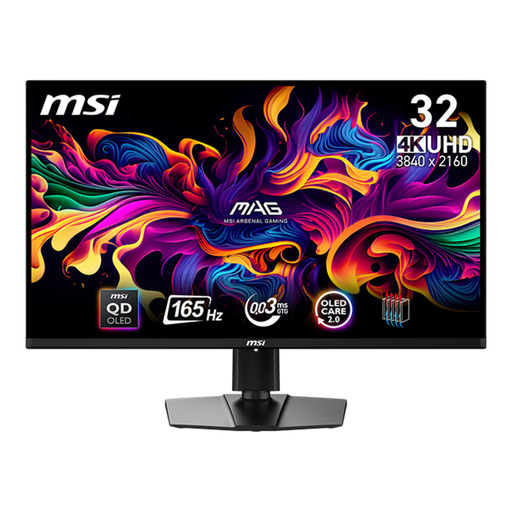 No image available
The stated 4K resolution may help when assessing fine detail; check its suitability for your colour workflow separately.
31.5 inches; QD-OLED; 3840 × 2160 pixels; 4K Ultra HD; height-adjustable, swivel, tilt and pivot functions.
No, not necessarily. First decide whether you mainly assess screen output or colours for a defined print process. For the first, a documented sRGB mode is relevant; for print approval, you’ll also need to consider colour management, profiles and calibration. A colour gamut percentage alone doesn’t guarantee a match with the printed result.
It depends on whether the notebook, cable and monitor support the video transmission you need, and whether the power supply is sufficient. EIZO lists DisplayPort Alt Mode and up to 94 W through the USB-C upstream port for the EV2740X; this doesn’t guarantee compatibility with every notebook.
Agree on a suitable colour mode for each output and use a shared profile or calibration process. EIZO lists hardware calibration for the CS2740 and an integrated sensor as an additional feature of the CG2700X; these features apply to the respective models.
The EU energy label for electronic displays, including computer monitors, uses classes A to G. Check the energy label for the specific models you’re comparing; the European Commission says it also provides information about HDR use, screen size and resolution.
Within its scope, Germany’s ASR A6 sets out requirements from the Workplace Ordinance for screen-based workstations. It concerns employers’ responsibility to provide a safe workstation; the office setting alone doesn’t imply a blanket technical minimum requirement for every model mentioned here.