Writers with recipe notes
If you want to read your narrative, ingredients and notes at the same time, usable window width and clear, legible text matter more than the highest possible refresh rate.


An adjustable 27-inch QHD monitor is a sensible starting point if you want to keep your manuscript and a second text source readable side by side at your usual font size. If you regularly work with additional sources, a 34-inch 21:9 model can give you more horizontal workspace: Dell lists the P2725DE at 2560 × 1440, while LG lists the 34U650A-B at 3440 × 1440 pixels; both specifications provide 1440 vertical pixels. Measure the space available and check the connections if you use a laptop. For photos, suitability also depends on how you plan to use them.
If you want to read your narrative, ingredients and notes at the same time, usable window width and clear, legible text matter more than the highest possible refresh rate.
A wider display is worth considering if you regularly need to keep additional sources visible alongside your manuscript and recipe notes, and you have enough room at your desk.
If you regularly connect your laptop, check its video output, the cable and, where needed, its charging requirements against the monitor’s connections.
| What matters when buying | What to check | Who this matters most to |
|---|---|---|
| Room for your manuscript and sources | Arrange both windows in your usual writing app at your normal font size; compare the resolution and aspect ratio, and measure your desk. | If I want to read my manuscript and recipe notes at the same time, I need enough room for both windows. Around 40% of consumers put workspace for windows first. |
| Readability and positioning | Check the font size, viewing distance, height adjustment and reflections at your actual writing desk. | For longer writing sessions, I want to read text comfortably and position the screen to suit me. Around 30% of consumers prioritise readability and positioning. |
| Laptop connection | Check your laptop’s video output, cable and, where needed, charging requirements against the specifications for the specific monitor model. | If I regularly work on a laptop, I want the connection to support video and, where needed, charging. Around 20% of consumers put laptop connectivity first. |
| Reviewing photos | Consider whether you’ll only view images occasionally or need to assess their colour for a specific output. | If my scrapbook includes photos, I want to know whether the screen is suitable for how I plan to use it. Around 10% of consumers prioritise reviewing their own photos. |
A 34-inch 21:9 model can offer more horizontal pixels than the 27-inch QHD models mentioned here, but it doesn’t have more vertical pixels. A larger screen size doesn’t guarantee that text windows will be easier to read at your chosen font size.
Try your preferred font size with two windows open, and measure up before buying to make sure the monitor and stand will fit on your desk.
A USB-C port alone doesn’t mean your laptop will transmit video or receive enough power from the monitor. EIZO lists DisplayPort Alt Mode and up to 70 W via the USB-C upstream port for the EV2795.
Compare the full specifications for your laptop and monitor, as well as the cable and charging requirements. Depending on the equipment, you may need a separate docking solution or an additional power adapter.
LG lists typical sRGB coverage of around 99% for the 34U650A-B. This manufacturer’s specification doesn’t prove that the colours on screen will match a later print.
If you need to print photos with colour accuracy in mind, check the output process separately. For text-only work, this figure shouldn’t be a deciding factor.
The Dell Pro P2725DE is a documented 27-inch QHD example for working with text windows side by side, with a USB-C hub.
The LG 34U650A-B is a 34-inch 21:9 model for workspaces where you regularly want to keep additional sources visible alongside your manuscript.
The FlexScan EV2795 is a documented 27-inch QHD model for workspaces where USB-C docking and adjustability matter.
The Joybuy monitors below come in a range of screen sizes and formats for a split-screen writing setup. Compare the space you need for your windows and the monitor’s footprint with your actual workspace.
 No image available
The 21:9 format and stated resolution are worth considering if you want to arrange several text windows side by side.
3440 × 1440 pixels, 1500R, 200 Hz, PIP and PBP; height-adjustable stand.
 No image available
This wide format is worth considering if you want to keep several items visible side by side. Check that the monitor and stand will fit on your desk before buying.
5120 × 2160 pixels, 21:9, IPS, USB-C with 65 W Power Delivery, PIP and PBP; height-adjustable stand.
 No image available
A 27-inch display with PIP and PBP is worth considering if you want to view two items at once. Check that its USB-C features work with your laptop.
3840 × 2160 pixels, IPS, 120 Hz, USB-C with 90 W Power Delivery and height-adjustable stand.
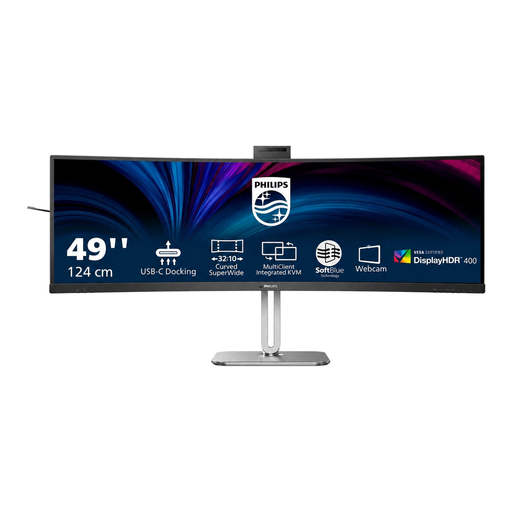 No image available
The wide 49-inch display could suit a setup where you want to keep several items visible side by side. Before buying, check the space available and how you’ll get it to your desk.
5120 × 1440 pixels, Dual Quad HD, 75 Hz, 2× HDMI and DisplayPort.
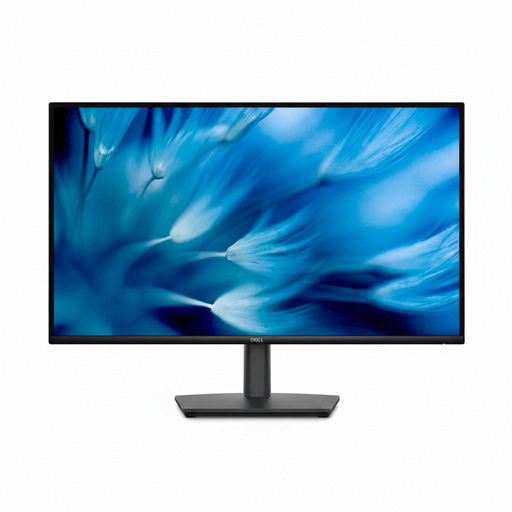 No image available
A 27-inch QHD model is a useful starting point for working with a manuscript and a second text source. Check the window width at your preferred font size.
27 inches, WQHD, IPS, HDMI and DisplayPort.
Not necessarily. Microsoft Support explains how to snap windows side by side in Windows, and how to view two documents in Word. Check that both windows remain comfortable to read at your chosen font size in the programme you use.
Only if your laptop, cable and monitor support the required video connection and, where needed, provide enough charging power. EIZO lists DisplayPort Alt Mode and up to 70 W via the USB-C upstream port for the EV2795.
Arrange both text windows, choose a comfortably legible font size, and check the screen’s position and any reflections at your desk. The ASR A6 has a limited scope under workplace regulations and isn’t a blanket requirement for writing at home.
No. The German Environment Agency points out that discarded screens must be collected separately from other waste. Find out where you can take yours for recycling.