
Lieferung heute & morgen

Qualitätsgarantie

Willkommens-Angebote freischalten: KOSTENLOSE Lieferung | Bis zu 80 % RABATT | Kostenlose 30-Tage-JoyPlus-Testphase
App herunterladen
Montessori toys are designed to encourage children to explore independently. In practice, however, the “Montessori” label alone doesn’t determine whether a toy is suitable. Age recommendation, materials, build quality, ease of use and how it fits into everyday life are more important. Parents, grandparents and other family members should also check whether a toy is right for the child’s stage of development and the space available.
“Educationally valuable” and “supports development” aren’t standardised, protected quality categories. More useful are verifiable details such as the recommended age group, materials, dimensions, number of activity stations and safety information. A toy can be inspired by Montessori without reflecting every aspect of Montessori education.
An activity board with lots of switches, magnets and learning stations may interest a toddler, but it can also quickly become confusing. For a learning toy for children aged 1 and over, large, easy-to-grip components and a clear range of functions are usually more practical. Small parts, coin batteries and loose accessories need particular attention.
A large wall-mounted busy board needs secure fixings and plenty of clear space. A balance board needs a level surface and room to move. For travel, compact products such as an LCD writing tablet or a small activity board are a better fit. The best choice therefore depends on where it will be used, not just how it works.
The manufacturer’s age recommendation is an important starting point, but it doesn’t replace adult supervision. With motor skills toys for children aged 1 and over, pay particular attention to small parts that could be swallowed. The 4-in-1 Montessori hammering toy, for example, is intended for children aged 1 to 3, but specifically warns about small parts and the need for supervision.
For products that use batteries, keep coin batteries out of children’s reach. Batteries should only be replaced by adults. Before each use, check for loose, damaged or chipped parts.
For wooden toys, smooth, sanded edges, a sturdy construction and clear information about the materials are all important. According to the product information, the Hauck peg puzzle is made from FSC-certified wood and has rounded edges. When buying, also check whether a finish is specified and how the product can be cleaned.
“Natural wood” alone doesn’t tell you anything about the quality of the finish. On a busy board or activity board, switches, flaps, cords and accessories should all be securely attached. For toys designed for active play, such as a balance board for children, a non-slip surface, sturdy construction and stable flooring are also important.
Compare the dimensions with the space where you plan to use the toy. The roba Montessori Baby Play Arch, for example, measures 52 × 70 × 50.5 cm and, according to the product information, should be used on a level surface. A wall board measuring 87 × 52 × 5.5 cm, on the other hand, needs a suitable mounting surface.
Care requirements matter too: wipe-clean surfaces are handy for everyday use. Wooden puzzles often come with a recommendation to clean them using a soft, dry cloth. LCD writing tablets should be cleaned with a soft, dry cloth and need a coin battery for the erase function.
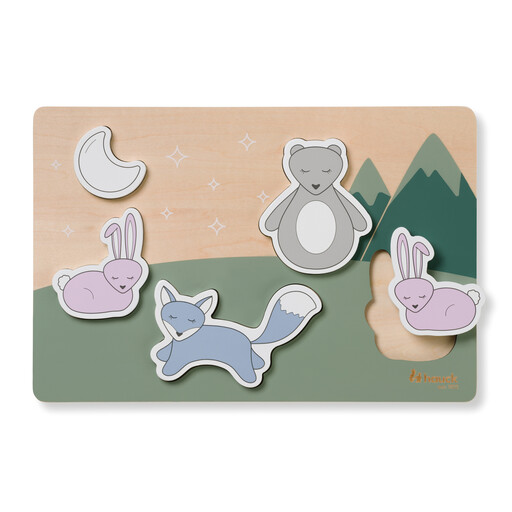
Why this product suits this profile: Suitable from 12 months, this peg puzzle offers a straightforward introduction to wooden toys and needs neither batteries nor assembly.
The age recommendation, rounded edges and clearly defined range of functions are all specified.
FSC-certified wood according to the product information, 30 × 20.5 × 2 cm, cleans with a soft cloth.
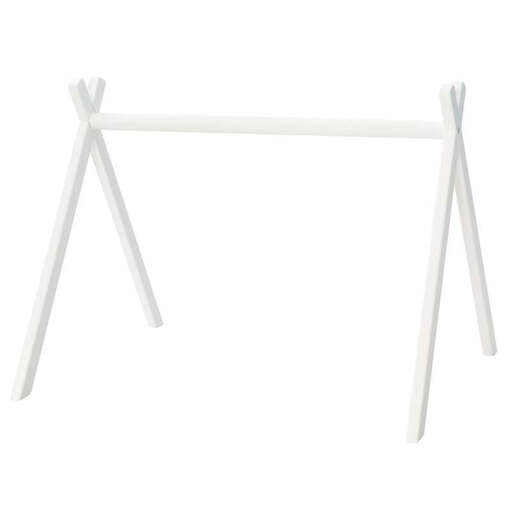
Why this product suits this profile: This wipe-clean play arch, made from varnished wood, is designed for babies from 3 months and can be extended with play sets sold separately.
The dimensions, materials, cleaning instructions and requirement to use it on a level surface are clearly described.
52 × 70 × 50.5 cm, weighs 1.4 kg, wipe-clean surfaces and extendable play sets.
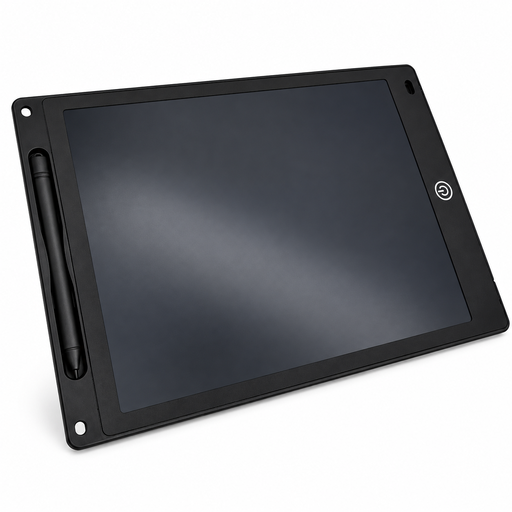
Why this product suits this profile: Just 5 mm thin, this drawing tablet is handy for travel and is suitable for drawing, writing and practising for children aged 3 to 10.
Its intended uses, 230 × 165 mm screen area, erase function and screen lock are all clearly specified.
Reusable drawing surface, pen included, 12-inch screen and compact design for travel.
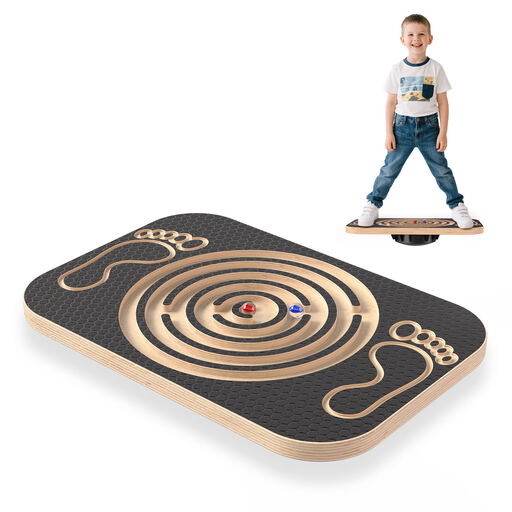
Why this product suits this profile: This balance board combines movement challenges with a built-in maze and is designed for shared indoor use.
The non-slip surface, ABS base, maximum load of 69 kg and range of tilt are all specified.
Two built-in glass marbles, 360-degree rotation according to the product information, and a design for children and adults.
We’ve put together a comprehensive, regularly updated list of products that meet these strict selection criteria and fully comply with the safety regulations in force in the EU.
It depends on the product. A baby play arch may be intended for babies from 3 months, according to the manufacturer, while peg puzzles and motor skills toys are available for children aged 1 and over. LCD writing tablets are often designed for children aged 3 and over. Always check the specific age recommendation, any small parts and the level of supervision required.
Lifespan depends on the materials, build quality, use and care. Solid or certified wood can last a long time if stored in a dry place and checked regularly. Moving parts, battery compartments and fixings should be checked regularly for wear. Damaged or loose parts should never be left within children’s reach.
You don’t need paper or ink to draw on it. However, the erase function needs a coin battery, and some listings don’t confirm whether a battery is included. Check what’s included before you buy, and make sure only an adult replaces the battery.