
Lieferung heute & morgen

Qualitätsgarantie

Willkommens-Angebote freischalten: KOSTENLOSE Lieferung | Bis zu 80 % RABATT | Kostenlose 30-Tage-JoyPlus-Testphase
App herunterladen
A well-chosen Montessori-style shelf can do more than just keep a child's room tidy. It fosters your child's independence by allowing them to access books and toys on their own. However, the market is flooded with products that seem practical at first glance but quickly turn into purchase regrets. Before you invest, it's crucial to understand the most common pitfalls that lead to frustration and unnecessary expense.
This guide focuses on the critical, objective criteria that define a functional and safe storage shelf for children. We'll highlight what truly matters in terms of material, safety, and design, so you can make an informed decision.
Many shelves are advertised with appealing photos, but their true weaknesses only become apparent in daily use. Pay close attention to these three points to avoid disappointment:
To avoid the issues mentioned above, you should base your purchase decision on three objective parameters. These will help you evaluate the quality and durability of a shelf.
The choice of material directly impacts the shelf's durability and safety.
Your child's safety is the top priority. A good bookshelf in a child's room must be stable and secure.
A Montessori-style shelf is characterized by its thoughtful design, tailored to the needs of children.
Based on the criteria above, we have identified several models suitable for different needs and living situations in Germany.
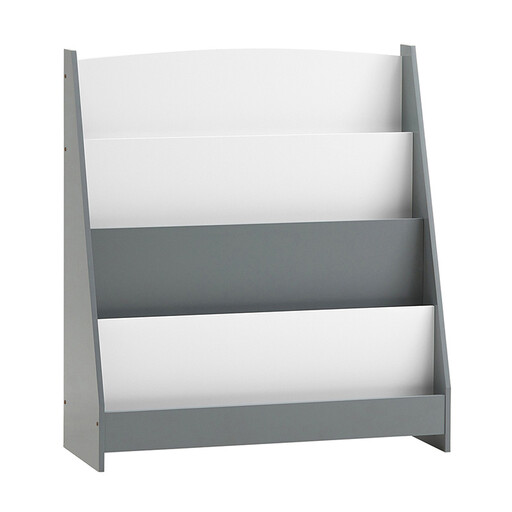
Why This Fits Their Persona: Ideal for parents seeking a functional and safe starter set for their child's room without a large budget. It meets the core requirements of Montessori education.
Its MDF (E1) construction and the included anti-tip kit counteract the problem of unstable shelves. At 88 cm high, it is easily accessible for toddlers, avoiding the pitfall of impractical dimensions.
Four front-facing shelves encourage an interest in reading. Rounded corners and a sturdy build provide essential everyday safety.
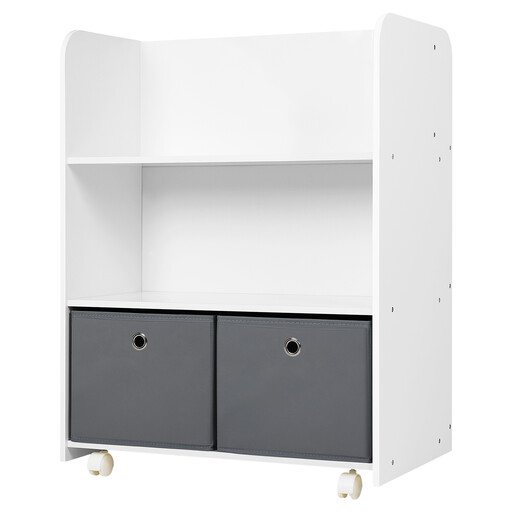
Why This Fits Their Persona: Perfect for families who need an all-in-one solution for books and toys. Its mobility is a major advantage in smaller apartments or for evolving play areas.
This shelf solves the problem of impractical design by offering dedicated storage for books on one side and toy bins on the other. The dual-sided use maximizes functionality in a small footprint.
Combines a bookshelf and toy storage in a single piece of furniture. Thanks to its casters, it is mobile and can be used flexibly within the room.
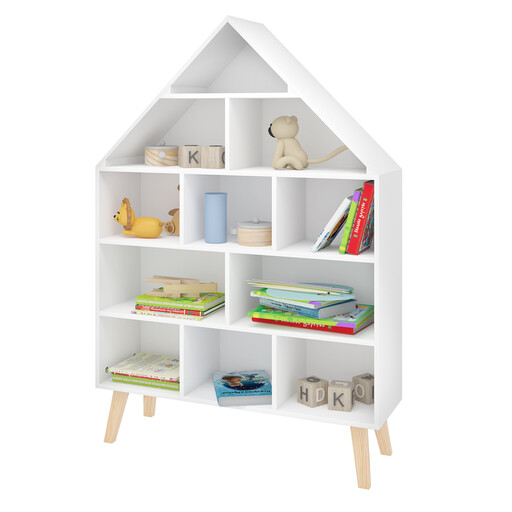
Why This Fits Their Persona: For parents who view children's furniture as an integral part of their interior design style. This shelf is a decorative statement piece that combines functionality with a playful design.
This model avoids the pitfall of misleading material claims by using specified E1-MDF and legs made of solid pine. The creative design does not compromise on stability or storage space.
The original house design is a visual focal point in any child's room. With 11 compartments across 5 levels, it offers exceptionally generous and versatile storage for books, toys, and decor.
We've compiled a complete, up-to-date list of products that fully meet these strict selection criteria and German safety regulations.
A Montessori shelf is beneficial as early as the crawling stage (around 8-12 months). As soon as a child begins to actively explore their environment, a low, accessible shelf gives them the opportunity to select toys or books independently. This supports motor development and fosters self-reliance from the very beginning.
Most children's shelves come with an anti-tip kit, which typically consists of a bracket, screws, and wall anchors. Attach the bracket to the top of the shelf and to the wall. Use wall anchors appropriate for your wall type (e.g., for drywall or masonry). Ensure the shelf sits flush against the wall and the screws are tightened securely. Installation should always be performed by an adult.
Both materials have their advantages. Solid wood is extremely durable, robust, and has a natural, warm aesthetic. It is often more expensive but is a long-term investment. MDF (E1 Standard) is a more budget-friendly yet very stable and safe alternative. It can be easily shaped and painted, allowing for greater design variety. For both, it is important to look for a non-toxic finish and solid craftsmanship.