
Lieferung heute & morgen

Qualitätsgarantie

Willkommens-Angebote freischalten: KOSTENLOSE Lieferung | Bis zu 80 % RABATT | Kostenlose 30-Tage-JoyPlus-Testphase
App herunterladen
Buying a bookshelf for a child's room might seem like a simple task. However, parents often face challenges that go beyond mere aesthetics. An unsuitable shelf can be more than just impractical—it can also pose serious safety risks. Especially when searching for a Montessori bookshelf for kids, designed to foster independence, specific pitfalls can quickly render a well-intentioned investment useless.
This guide highlights the three most common purchasing mistakes and explains the objective criteria you should focus on to find a safe, durable, and functional solution for storage in your child's room.
Many shelves look appealing at first glance but reveal their weaknesses only through daily use. These three issues often lead to disappointment:
To avoid these mistakes, base your decision on three objective criteria. These will ensure safety, functionality, and durability for any bookshelf in a child's room.
Safety is the top priority. Look for the following features:
A good bookshelf for children is designed around their needs and height.
The choice of material affects both stability and ease of maintenance.
Based on these criteria, we have identified several models that are well-suited for different needs and room situations.
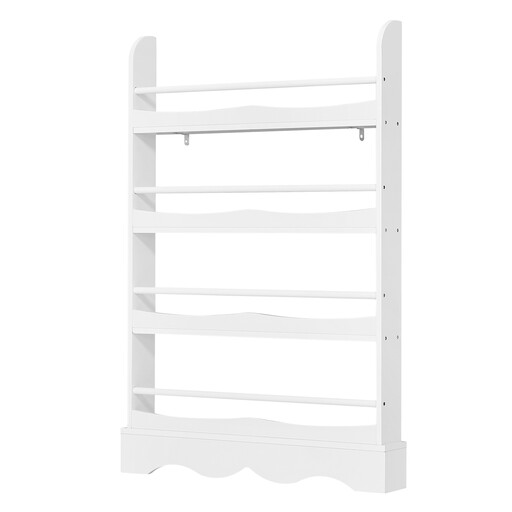
Why This Fits Their Persona: Ideal for families living in smaller apartments or those looking to make the most of a narrow space in a child's room or playroom. It offers the benefits of a Montessori shelf without taking up much floor space.
Despite its shallow depth, it provides a child-friendly design with its front-facing book display. The included anti-tip kit addresses the stability risk common with narrow furniture.
Extremely shallow depth of just 12 cm, making it incredibly space-efficient. Made from P2-class MDF panels with rounded corners.
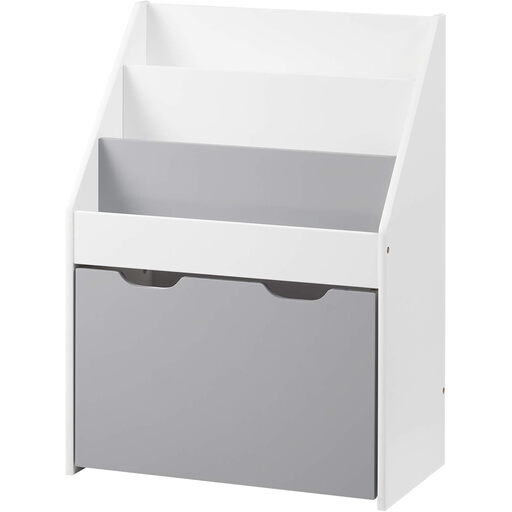
Why This Fits Their Persona: Perfect for parents seeking an all-in-one solution to neatly store both books and toys. It encourages tidying up by providing a designated spot for everything.
Its trapezoidal design (wider at the bottom, narrower at the top) ensures high stability and minimises the tipping hazard. The edges are carefully sanded to prevent injuries.
Combines a bookshelf with a large toy box on wheels. The tiered shelves are suitable for various book sizes.
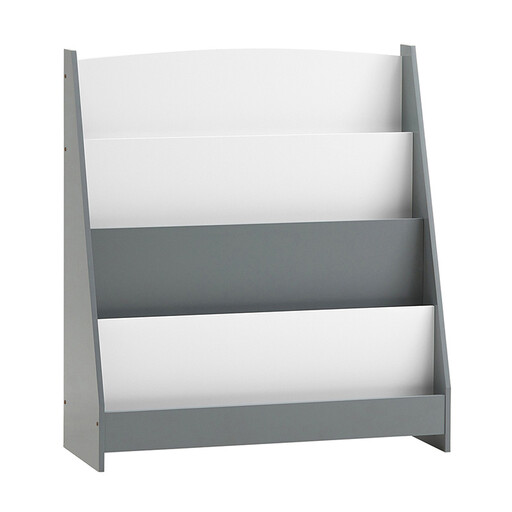
Why This Fits Their Persona: For parents and educators who want to consistently apply the Montessori educational approach. This shelf is designed to give children maximum autonomy in handling their books.
It avoids the impractical design of traditional shelves with its consistent front-facing book display and an optimal height of 88 cm for young children.
Classic Montessori design to promote independence. Equipped with rounded corners and an anti-tip kit for enhanced safety.
We have compiled a complete, up-to-date list of products that fully meet these strict selection criteria and safety regulations.
1. At what age is a Montessori bookshelf useful? A shelf like this is useful as soon as a child begins to sit independently and shows interest in picture books, typically between 1 and 2 years old. The low height and visible book covers allow even the youngest children to choose a book on their own, fostering early decision-making skills and a love for reading.
2. How do I securely attach a kids' bookshelf to the wall? Every shelf that comes with an anti-tip kit usually includes one or more brackets and screws. Attach the bracket to the top edge of the shelf and to the wall. For wall mounting, use wall anchors and screws appropriate for your wall type (e.g., drywall, concrete, brick). The manufacturer's assembly instructions will provide specific guidance.
3. How many books fit on a shelf like this? The capacity depends on the size and thickness of the books. Since the books are displayed with their covers facing forward, fewer books will fit compared to a traditional shelf. A typical shelf 60-80 cm wide can hold about 5-8 thin picture books per tier. The advantage here isn't quantity, but a curated, uncluttered presentation that doesn't overwhelm the child.