
Lieferung heute & morgen

Qualitätsgarantie

Willkommens-Angebote freischalten: KOSTENLOSE Lieferung | Bis zu 80 % RABATT | Kostenlose 30-Tage-JoyPlus-Testphase
App herunterladen
By Joybuy Product Recommendation Officer, August 30, 2026
A learning tower, often called a kitchen helper for kids, allows toddlers to safely participate in family life at eye level. Whether cooking together in the kitchen or washing hands at the sink, a good observation tower fosters independence and curiosity. However, the market is crowded, and not every model lives up to its promise. Many parents invest in a product that quickly proves to be impractical or even unsafe.
This guide will help you identify the common pitfalls and make an informed decision. We focus on the objective features that define a functional and durable learning tower, ensuring your investment pays off in the long run.
Before we dive into the important features, let's highlight the three most common issues that lead to disappointment. By understanding these, you can specifically look for better alternatives.
To avoid the traps mentioned above, you should prioritise the following three criteria in your decision. These define the safety, durability, and functionality of a learning tower.
The most important characteristic of a learning tower is its stability. You can identify a safe model by the following features:
A good Montessori tower grows with your child. This is achieved through a height-adjustable standing platform.
The material affects not only the appearance but also the safety and longevity.
Based on the criteria above, we have identified a few models that represent a considered choice for different needs and households.
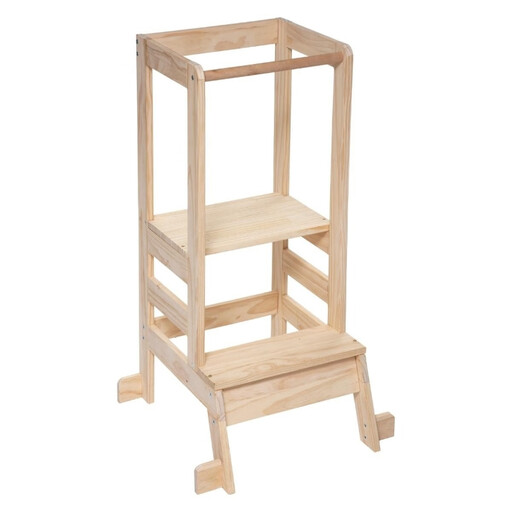
Why This Fits Their Persona: A solid and functional choice for families looking for a simple and reliable kitchen helper for kids made from solid wood, without a large investment. The minimalist design focuses on the core function.
The design is reinforced with four stabilisers on the feet, which counteracts the stability trap (Trap 1) and provides enhanced anti-tip security.
Made from solid, FSC-certified pine wood, representing a sustainable and robust material choice. The fixed safety rail offers clear protection.
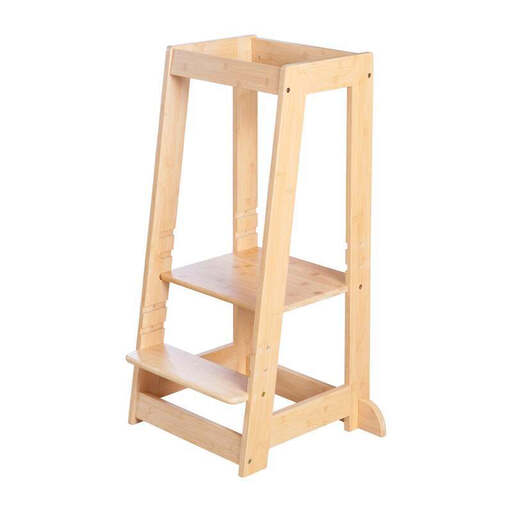
Why This Fits Their Persona: Ideal for parents who value sustainable materials, high durability, and a well-thought-out safety concept. The natural bamboo look blends harmoniously into modern living spaces.
This model bypasses the one-size-fits-all trap (Trap 2) with its height-adjustable standing platform and footrest. The widened feet also ensure high tip-over resistance (Trap 1).
Made from FSC-certified bamboo, a very hard and rapidly renewable resource. The construction is designed for long-term use and high load capacity.
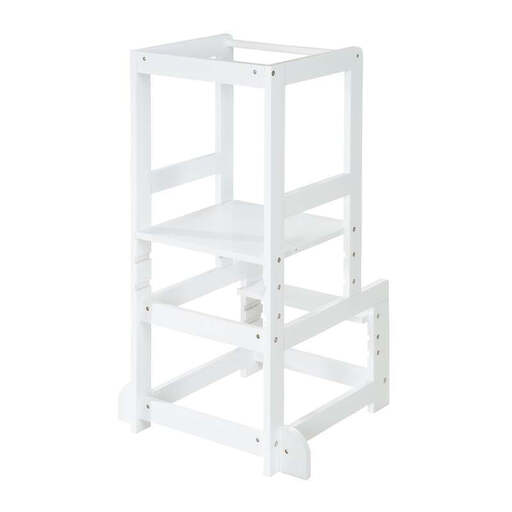
Why This Fits Their Persona: Perfect for parents looking for a ready-to-use solution with no assembly required. The modern, white-painted finish complements many kitchen and interior styles.
The height-adjustability of the standing platform and footrest ensures long-term usability and bypasses the one-size-fits-all trap (Trap 2). The robust construction provides the necessary stability.
No assembly required. The learning tower is delivered fully assembled and is ready to use right out of the box, saving time and effort.
We have compiled a complete, up-to-date list of products that meet these strict selection criteria and German safety requirements.
A learning tower is generally useful once a child can stand independently and securely. This is usually between 12 and 18 months of age. It is important that the child does not misuse the tower as a climbing frame and that it is always used under adult supervision.
Most learning towers made of wood or engineered wood can be easily wiped down with a slightly damp cloth. Avoid aggressive cleaning agents, as they could damage the paint or the material. For tougher stains, a mild soap solution can be used. Always follow the manufacturer's care instructions.
A simple step stool for the kids' kitchen can be an alternative for older, more stable children to briefly reach higher surfaces. However, unlike a learning tower, a step stool does not offer a surrounding safety rail to prevent falls. For toddlers who are actively participating and moving around, an observation tower provides a significantly higher level of safety.