
Lieferung heute & morgen

Qualitätsgarantie

Willkommens-Angebote freischalten: KOSTENLOSE Lieferung | Bis zu 80 % RABATT | Kostenlose 30-Tage-JoyPlus-Testphase
App herunterladen
As a Joybuy Product Recommendation Officer, I see the challenge parents and gift-givers face every day: finding the right toy in a vast market that not only provides short-term entertainment but also offers long-term support for a child's development. Many are looking for an alternative to overstimulating, noisy plastic toys and come across the term Montessori toys.
This article serves as a guide. It explains what to look for when making a selection and presents a range of products based on the principles of Montessori education—simple, functional, and tailored to a child's natural curiosity.
An informed decision is based on objective criteria. The following points will help you assess the quality and educational value of a toy.
Especially for baby and toddler toys, the material and craftsmanship are crucial. Educational wooden toys are often a preferred choice, as wood is a natural, durable, and tactile material. Look for the following features:
Montessori toys are designed to isolate and nurture a specific skill without overstimulating the child. The choice should therefore always be based on the child's current developmental stage.
Based on the criteria above, we have curated a selection of toys that embody Montessori principles in various ways.
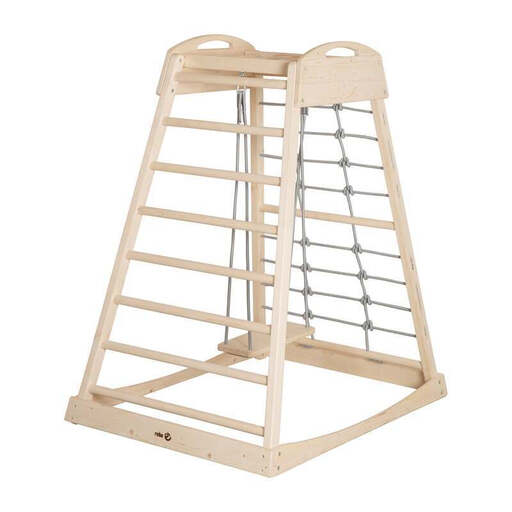
Why it stands out: This play tower is more than just an indoor climbing frame. It combines various activity elements like climbing ropes, gymnastic rings, and a solid wood swing. The natural wood design is minimalist and blends harmoniously into living spaces, while offering children a safe area for active play. The structure is designed for a load capacity of up to 70 kg.
Benefits:
Who is it for? Ideal for active toddlers from 24 months who want to safely satisfy their need for physical activity, even in bad weather. It supports independent discovery and the testing of physical abilities.
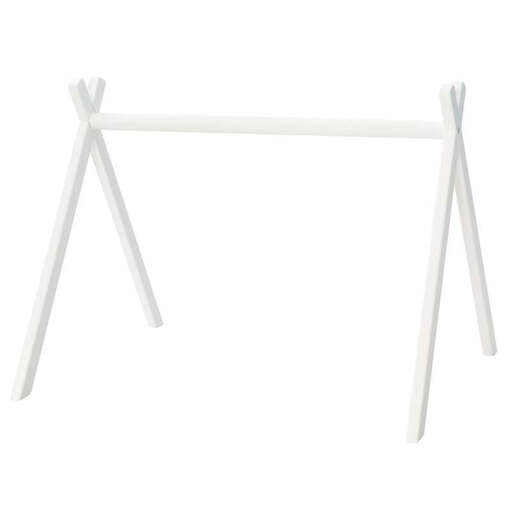
Why it stands out: This wooden play gym intentionally avoids flashing lights and sounds. Its simple, white-lacquered wooden structure directs the baby's focus to the essentials: grasping, touching, and discovering. It serves as a universal frame where various grasping toys can be attached to promote hand-eye coordination from birth.
Benefits:
Who is it for? Perfect for newborns and babies from their first few months. It creates a low-stimulation environment that allows the child to concentrate on their first motor exercises.
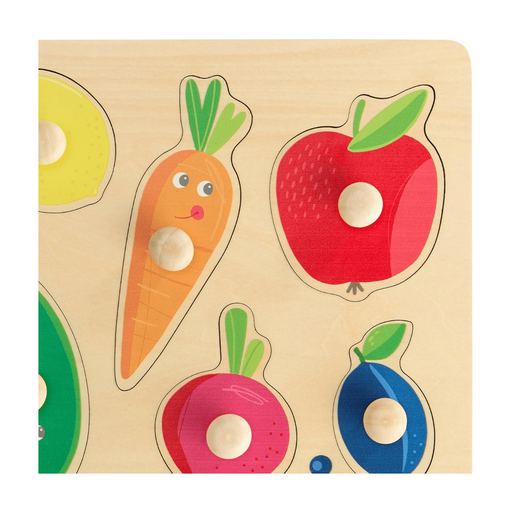
Why it stands out: This wooden baby puzzle is a classic example of a thoughtfully designed developmental toy. The large, easy-to-grip wooden knobs are specially designed for small children's hands. The puzzle isolates a clear task: matching shapes. At the same time, children playfully learn their first fruits and colours. The wood construction and sustainable foil printing represent high product quality.
Benefits:
Who is it for? An ideal toy for children aged 1 and up. It offers toddlers a suitable challenge to develop their fine motor skills and their understanding of relationships.
Our selection provides a starting point for various age and developmental stages. If you are specifically looking for more educational wooden toys for children aged three and up or want to compare other play concepts, you will find a broader collection in our category.
Discover more educational wooden toys for three-year-olds
Montessori toys are typically characterised by simplicity, natural materials, and a clear purpose. They focus on a single skill, are based on real-world objects and activities, and encourage the child to learn independently and at their own pace. The goal is to foster concentration, independence, and self-confidence.
Montessori education offers approaches for every age group, starting from birth. For newborns, there are mobiles that train visual perception. For babies, grasping toys and simple puzzles are suitable. For toddlers, there are more complex materials to promote motor skills, language, and logical thinking. The key is to select a toy that matches the child's current developmental stage.
You can identify safe wooden toys by several features: The surfaces should be smooth and splinter-free, with all edges rounded. Ensure that only non-toxic, saliva- and sweat-resistant paints and varnishes have been used, especially for toys intended for children under three. A sturdy construction with no small loose parts (choking hazard) is also a critical safety criterion. The CE mark on the packaging confirms that the product meets the basic safety requirements of the EU.