
Lieferung heute & morgen

Qualitätsgarantie

Willkommens-Angebote freischalten: KOSTENLOSE Lieferung | Bis zu 80 % RABATT | Kostenlose 30-Tage-JoyPlus-Testphase
App herunterladen
The range of toys for three-year-olds is vast, and the term "Montessori" is often used as a marketing buzzword. This makes it difficult for parents and grandparents to find products that not only provide short-term entertainment but also support a child's long-term development. Many well-intentioned purchases turn out to be poor investments, left untouched after a short time. This guide highlights the most common pitfalls and explains the objective criteria you should look for when choosing Montessori toys for ages 3 and up.
Before deciding on a product, it's helpful to understand the typical issues that can lead to disappointment.
To avoid these pitfalls, focus on three verifiable characteristics. These will help you objectively assess a toy's quality and educational value.
An educationally valuable wooden toy is distinguished by its robust and child-safe construction. Pay attention to the following points:
A good educational toy for 3-year-olds should challenge the child without causing frustration. It should be designed to present a clear task that the child can solve independently. Ideally, the toy offers opportunities for extension. For example, a set for learning numbers and colours could initially be used just for colour sorting. Later, the child can use it to practise counting and solve simple arithmetic problems. This multi-stage usability ensures long-term engagement.
Montessori materials are designed to isolate and train a specific skill. This promotes concentration and allows the child to have deep learning experiences. A good fine motor skills toy made of wood, such as a magnetic maze, focuses on hand-eye coordination and the precise control of a stylus. Additional, distracting elements like lights or sounds are counterproductive here.
Based on the criteria above, we have identified several products that are well-suited for different needs and developmental priorities.
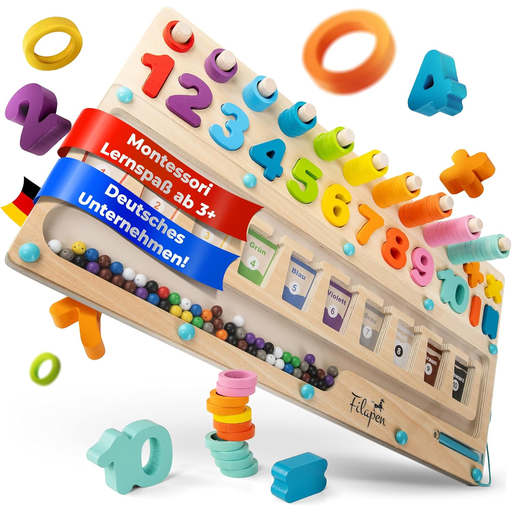
Why This Fits Their Persona: Ideal for parents seeking a multifunctional toy that combines several core skills like fine motor control, colour recognition, and an initial understanding of numbers in one product. It's a classic gift for a 3-year-old that remains relevant for a long time.
The toy grows with the child: first, the magnetic maze, then colour matching, and later, inserting the numbers. This avoids the short-lifespan trap.
Combines three learning areas (fine motor skills, colours, numbers) on one sturdy wooden board. The magnetic stylus is tethered to the board, so no small parts can be lost.
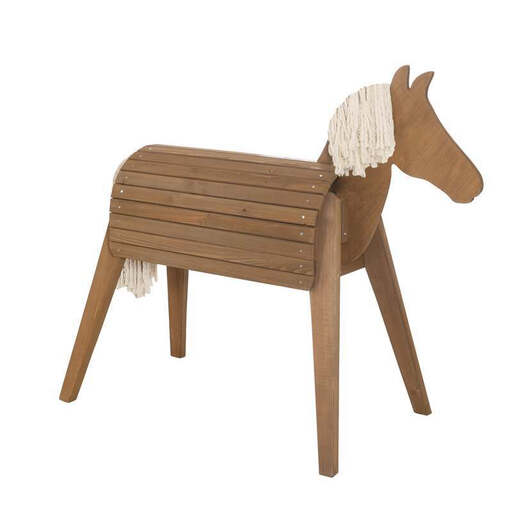
Why This Fits Their Persona: Perfect for families who want to encourage their child's natural urge to move and use their imagination in the garden. It focuses on gross motor skills, balance, and role-playing in the fresh air.
Instead of a short-lived plastic toy, this horse made of weather-resistant solid wood provides an extremely stable and durable base for years of active play.
Promotes gross motor skills, balance, and coordination. The robust construction from sustainable forestry is designed for outdoor use.

Why This Fits Their Persona: A practical solution for parents looking for a clean and lightweight activity for travel, restaurant visits, or waiting times. It encourages creativity and early writing attempts without the mess of paper and pens.
Unlike cluttered educational tablets, this device focuses on a single function: drawing and writing. It is free from distracting apps or sounds, thereby promoting focus.
Extremely lightweight (106 g) and durable. The screen is cleared instantly at the touch of a button, allowing for endless reuse without mess or waste.
We have compiled a complete, real-time list of products that fully satisfy these strict selection criteria and UK safety regulations.
Look for four basic principles:
Not necessarily. High-quality, certified wooden toys are durable, sustainable, and offer a pleasant tactile feel. However, toys made from high-quality, tested plastic (e.g., BPA-free) can also have advantages: they are often lighter, easier to clean, and may be better suited for certain functions (like interlocking systems). The crucial factors are the safety certification (EN 71), the quality of construction, and the educational purpose, not just the material alone.
To clean wooden toys, a slightly damp cloth is usually sufficient. For heavier soiling, a mild soap solution can be used. It is important to wipe the wood dry immediately afterwards and never to fully submerge it in water or clean it in a dishwasher, as it can swell and crack. Regularly inspect the toy for any splinters or rough spots.